
How to Remove Odors From a Steering Wheel Cover
Quick Answer
To remove odors from a steering wheel cover, clean it with a material-appropriate cleaner, wipe away residue, and let it dry completely before driving. Most smells come from sweat, skin oils, food residue, moisture, or the cover’s own materials. For stubborn odors, remove the cover only if its design allows safe removal, then clean and dry it separately.
What works best?
- Leather covers: Use a leather-safe cleaner or mild soap solution approved for the finish.
- Fabric covers: Follow the care label and use a suitable fabric cleaner.
- Rubber or silicone: Wipe with mild soap and water, then remove all residue.
- New-cover smell: Ventilate the car and allow the cover to air out in a shaded, well-ventilated place.
- Persistent odor: Check for trapped moisture, mold, or a smell coming from another part of the cabin.
Keep the steering wheel safe
- Never soak the steering wheel, spray cleaner into its seams, or use bleach, harsh solvents, or strong fragrances to mask an odor.
- Before driving, confirm the cover is completely dry, secure, and unable to slip around the wheel.
A smelly steering wheel cover can make every drive unpleasant, especially when heat brings out trapped sweat, oils, or the scent of new synthetic materials. I’ll explain how to identify the source, clean different cover materials, and remove stubborn odors without damaging your steering wheel.
This guide also covers when airing out a cover is enough, when replacement makes more sense, and how to keep the smell from returning.
In This Guide
- Why does my steering wheel cover smell?
- How do you identify the cover material before cleaning?
- How do you remove odors from a steering wheel cover step by step?
- Which cleaning method works best for each cover material?
- How do you handle stubborn smells and new-cover odors?
- How can you prevent steering wheel cover odors?
- When should you replace a smelly steering wheel cover?
- Frequently asked questions
Why Does My Steering Wheel Cover Smell?
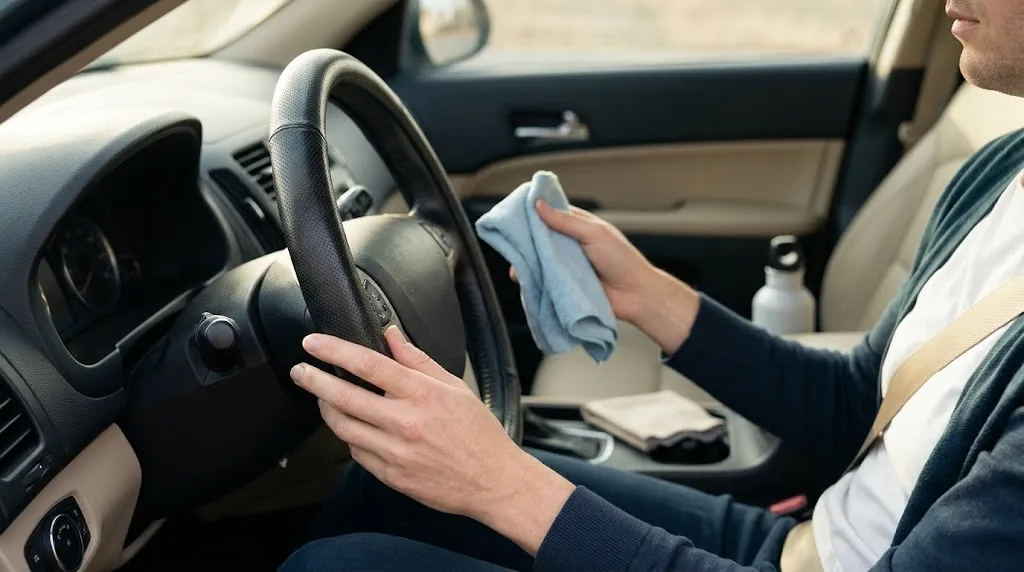
A steering wheel cover usually develops an unpleasant odor because sweat, skin oils, dirt, moisture, or chemical compounds accumulate on its surface. Identifying the smell first helps you choose the right cleaning method instead of damaging the material.
Common causes of steering wheel cover odors
- Sweat and skin oils: Frequent driving transfers perspiration, natural oils, and dead skin cells onto the grip surface.
- Food and drink residue: Small spills or sticky fingers can leave organic residue that develops an unpleasant smell.
- Trapped moisture: Damp hands, humid weather, and incomplete drying can encourage musty odors.
- New-material smell: Some rubber, synthetic leather, adhesives, and foam components release noticeable odors when new.
- Cleaning-product buildup: Excess detergent, fragranced sprays, or oily dressings can leave residue that attracts dirt.
- Material deterioration: Cracking, peeling, or breakdown of the cover’s inner lining can create persistent chemical or musty smells.
Heat can make an existing smell more noticeable. A car parked in direct sunlight warms the steering wheel and may increase the release of volatile compounds from certain synthetic materials.
For general vehicle odor removal, Consumer Reports’ car odor guidance recommends tracking down the source instead of simply covering the smell with fragrance.
What does the smell tell you?
| Smell | Possible cause | Best first action |
|---|---|---|
| Sweaty or sour | Body oils and surface grime | Clean with a material-safe product |
| Musty or damp | Trapped moisture or possible mold | Dry thoroughly and inspect for moisture |
| Chemical or plastic-like | New materials or material breakdown | Ventilate and inspect the cover |
| Sweet or perfumed | Fragrance or cleaner residue | Remove residue with an approved cleaner |
| Persistent mildew | Contamination inside the cover or cabin | Inspect the cover and surrounding interior |
If the smell resembles burning plastic, electrical insulation, or overheated wiring, don’t assume the cover is responsible. Stop using the vehicle if you suspect an electrical fault or smoke, and arrange a professional inspection.
Section takeaway: Identify the odor before cleaning. A surface-cleaning job can solve sweat and grime, but a deteriorating or moisture-contaminated cover may need replacement.
How Do You Identify the Cover Material Before Cleaning?
A steering wheel cover is a removable or fitted layer of material placed over the original steering wheel to change its grip, appearance, or comfort. Common materials include leather, synthetic leather, fabric, suede-like microfiber, rubber, and silicone, each with different cleaning needs.
Before applying any cleaner, check the packaging, care label, or manufacturer’s instructions. A product that works on rubber may stain suede or strip the protective finish from leather.
How to recognize common materials
- Genuine leather: Often has a natural grain and a less uniform appearance, although coatings can make identification difficult.
- PU or synthetic leather: Usually has a more consistent texture and may have a plastic-like backing.
- Fabric: Woven fibers can absorb sweat and liquid, allowing odors to linger below the surface.
- Suede or microfiber: Has a soft, textured surface that can flatten, stain, or become damaged by aggressive brushing.
- Rubber or silicone: Often has a smooth, flexible, or slightly tacky feel and generally tolerates gentle soap-and-water cleaning.
Don’t rely on appearance alone. Some synthetic covers closely resemble genuine leather, and some microfiber products imitate suede.
What supplies should you prepare?
For most routine cleaning jobs, a small set of basic supplies is enough. Start gently rather than buying a collection of strong chemicals.
- Two clean microfiber cloths.
- A small bowl of lukewarm water.
- A mild, material-compatible cleaner.
- A soft detailing brush, if the cover’s care instructions allow one.
- A dry towel for removing remaining moisture.
- A well-ventilated, shaded area for drying a removable cover.
Test the cleaner on a small, inconspicuous area first and check for color transfer, tackiness, fading, or texture changes. Never mix cleaning products, and avoid bleach, hydrogen peroxide, harsh solvents, abrasive pads, and heavy fragrance sprays.
Section takeaway: Match the cleaner to the material. When the cover’s composition is uncertain, use the manufacturer’s care instructions or choose a suitable professional detailing product.
How Do You Remove Odors From a Steering Wheel Cover Step by Step?
The safest approach is to remove surface contamination, use as little moisture as practical, and dry the cover completely. For an installed cover, clean it in place unless its design permits safe removal.
Step 1: Park safely and inspect the cover
Park the vehicle, switch it off, and allow the steering wheel to cool. Check for peeling material, cracks, loose stitching, sticky residue, or signs of moisture beneath the cover.
If the cover slips, twists, or obstructs the controls, don’t drive with it in that condition. Follow the cover manufacturer’s removal instructions before attempting to clean or refit it.
Step 2: Remove loose dirt
Wipe the entire gripping surface with a clean, dry microfiber cloth. Pay particular attention to the inner rim, stitching, finger grooves, and textured sections where grime collects.
Use a soft brush only where appropriate for the material. Avoid pushing debris into seams or scratching the underlying steering wheel.
Step 3: Apply a suitable cleaner
Put a small amount of the approved cleaner onto the microfiber cloth rather than spraying directly onto the wheel. Work across a small area at a time, using gentle pressure and following the product’s directions.
For compatible hard-wearing materials, a cloth lightly dampened with mild soap and water may be sufficient. For leather, use a cleaner designed for the specific finish instead of assuming every leather product is suitable.
Step 4: Remove cleaner residue
Use a second cloth lightly dampened with clean water if the cleaner’s directions call for wiping away residue. Keep moisture away from stitching openings, electrical controls, buttons, and the center airbag cover.
Repeat the process only where needed. Heavy scrubbing can wear coatings, flatten textured surfaces, or damage stitching.
Step 5: Dry the cover completely
Blot away moisture with a dry microfiber towel, then let the surface air-dry. If you can remove the cover safely, dry it separately according to its care instructions.
Do not use a heat gun, hair dryer on a hot setting, or direct high heat to speed up drying. Excessive heat can deform synthetic materials, weaken adhesives, and damage leather finishes.
Step 6: Check whether the odor has gone
Once the cover is fully dry, smell the surface and inspect it for discoloration, tackiness, or remaining residue. If the odor has improved but remains faint, allow additional ventilation before applying another cleaning treatment.
Don’t keep adding products when the first treatment fails. Persistent odor may come from the inner lining, a damaged surface, or moisture elsewhere in the cabin.
Important safety note
Never remove the steering wheel itself to clean a cover. The steering wheel may contain an airbag, wiring, and a clock spring that maintains electrical connections as the wheel turns. If deeper access requires steering wheel disassembly, leave the job to a qualified technician.
Section takeaway: Clean gently, then dry thoroughly. Most surface odors don’t require disassembly, soaking, or aggressive chemicals.
Which Cleaning Method Works Best for Each Cover Material?
The best odor-removal method depends on how the cover absorbs moisture and responds to cleaning products. Use the least aggressive method that the manufacturer approves.
| Material | Recommended approach | Avoid |
|---|---|---|
| Genuine leather | Leather-safe cleaner and a soft cloth | Soaking, harsh degreasers, abrasive scrubbing |
| PU leather | Mild soap solution if permitted, followed by careful drying | Strong solvents and excessive heat |
| Fabric | Approved upholstery cleaner and controlled moisture | Saturating foam or leaving it damp |
| Suede or microfiber | Material-specific cleaner and a soft brush if permitted | Aggressive rubbing and unapproved wet cleaning |
| Rubber or silicone | Mild soap and water, followed by a clean wipe | Oily dressings that leave a slippery grip |
Can you use vinegar or baking soda?
Neither is a universal solution for steering wheel covers. Vinegar may affect certain finishes, adhesives, and materials, while dry baking soda can leave powder in seams or textured surfaces.
For a removable fabric cover, use a home remedy only if the manufacturer permits it and you can remove all residue. Don’t sprinkle powder onto an installed cover where it can fall into controls or airbag seams.
Should you use disinfectant or rubbing alcohol?
Don’t assume that a household disinfectant or rubbing alcohol is safe for every steering wheel cover. Some products can dry out leather, discolor synthetic finishes, or damage coatings.
Consumer Reports’ car-interior cleaning advice emphasizes gentle cleaning for protected leather and vinyl surfaces. Follow your cover and vehicle manufacturers’ instructions before using a disinfectant.
Section takeaway: Material compatibility matters more than cleaning strength. A gentle cleaner that leaves no residue is preferable to a harsh product that removes the smell but damages the grip.
How Do You Handle Stubborn Smells and New-Cover Odors?
When an odor survives a proper surface cleaning, the source may sit deeper in the cover or elsewhere in the vehicle. Repeatedly cleaning the same surface won’t solve a smell caused by trapped moisture or deteriorating material.
What if the cover smells musty?
A musty smell can indicate lingering moisture, especially in humid conditions. Remove the cover only if its design allows it, inspect both sides, and check whether the underlying steering wheel is damp.
If you see visible mold or the material smells musty throughout, avoid dry brushing that could spread contaminated particles. Follow manufacturer guidance or replace the cover if it cannot be cleaned safely.
If the vehicle interior also smells damp, inspect for wet floor mats, spilled liquids, water leaks, and other moisture sources. Persistent cabin odors can sometimes involve an air-conditioning drain or cabin air filter rather than the steering wheel cover.
What if a new steering wheel cover smells like plastic?
A noticeable new-material smell may fade with ventilation as some volatile compounds dissipate. Remove the cover from its packaging, if safe to do so, and air it out in a shaded, well-ventilated place according to the manufacturer’s instructions.
- Keep the cover away from open flames and high heat.
- Don’t bake it in direct sunlight to speed up deodorizing.
- Avoid perfume, air freshener, and chemical sprays that only mask the smell.
- Check the product instructions for any recommended airing period.
If the odor is unusually strong, causes irritation, or persists despite ventilation, stop using the cover and contact the seller or manufacturer. Replace it if the material appears to be breaking down or you cannot tolerate the smell.
What if the odor returns after cleaning?
A recurring smell usually means the original cause remains. Check whether the cover has an absorbent backing, whether it dried completely, and whether perspiration or spills are continually reintroducing residue.
If the cover is removable, cleaning the outside alone may not reach contamination trapped underneath. If it is not safely removable, avoid forcing it off or pouring cleaner between the cover and the wheel.
Section takeaway: Persistent odors need source control. Investigate hidden moisture, degraded materials, or cabin contamination before trying another cleaner.
How Can You Prevent Steering Wheel Cover Odors?
Regular, gentle cleaning prevents sweat, oils, and dirt from building up enough to create a stubborn smell. The right schedule depends on how often you drive, your climate, and the cover material.
Build a simple maintenance routine
- After heavy use: Wipe the grip surface with a clean microfiber cloth when it looks oily or dirty.
- Every week or two: Inspect the cover and clean it when needed, using a suitable product rather than following a rigid schedule.
- After spills: Blot the affected area promptly and follow the material’s cleaning instructions.
- After exposure to moisture: Dry the cover thoroughly before using the car again.
- During hot weather: Ventilate the cabin when conditions permit and avoid leaving damp items against the steering wheel.
Don’t apply greasy interior dressings to the grip surface unless the manufacturer specifically approves them. A slippery steering wheel cover can compromise control, even if it smells clean.
Keep the rest of the cabin fresh
Odors from food, drink, damp carpets, and other interior surfaces can make a clean cover seem smelly again. Remove rubbish, clean spills promptly, and check floor mats and upholstery if the odor persists.
Use a suitable automotive cleaner for each surface, and dry cleaned materials completely. Avoid saturating upholstery or leaving damp cloths in the car.
Choose a cover that is easier to maintain
If you regularly deal with sweat or humidity, consider a cover with a smooth, wipe-clean surface and clear care instructions. Textured fabric and suede-like materials can offer a different feel, but they may require more careful maintenance.
Check the cover’s compatibility with your steering wheel diameter and grip thickness before buying a replacement. The cover should fit securely without interfering with steering controls or the driver’s grip.
Section takeaway: Small cleaning habits prevent bigger odor problems. Keep the surface clean, remove moisture promptly, and avoid products that leave an oily film.
When Should You Replace a Smelly Steering Wheel Cover?
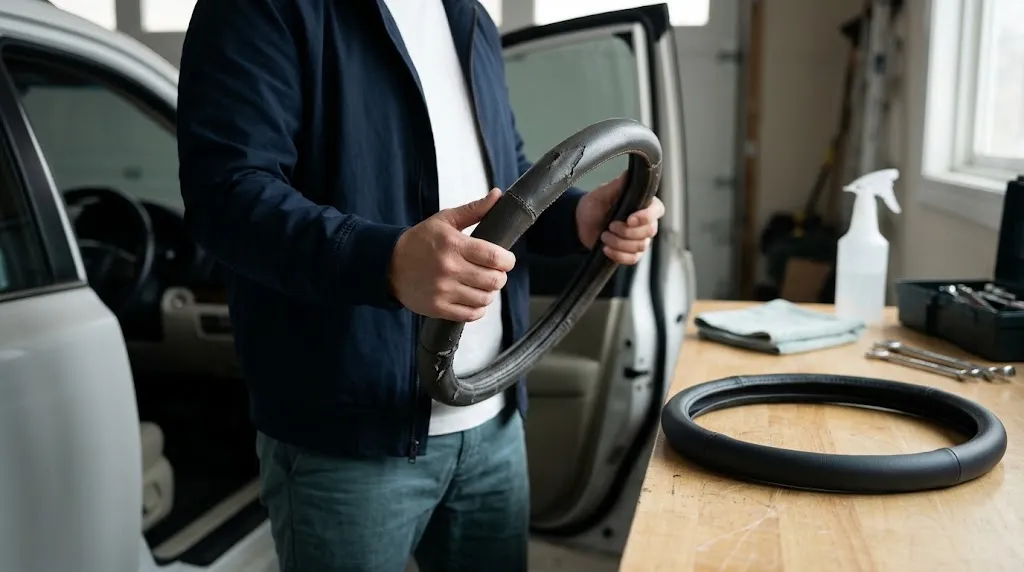
Replace the cover when its odor persists after appropriate cleaning, the material deteriorates, or the fit becomes unsafe. Cleaning is worthwhile for ordinary surface grime, but it cannot reliably restore every damaged or contaminated cover.
Signs that replacement makes more sense
- Persistent chemical odor: The smell remains strong after reasonable ventilation, or the material seems to be breaking down.
- Visible deterioration: The cover has peeling layers, crumbling foam, cracked surfaces, or damaged stitching.
- Recurring mustiness: The odor returns after cleaning and complete drying, suggesting contamination within the material.
- Loose fit: The cover twists, shifts, or prevents a secure grip.
- Uncleanable contamination: A spill or mold problem cannot be addressed using an approved cleaning method.
Before purchasing a replacement, measure the steering wheel as directed by the cover manufacturer and verify compatibility with your vehicle. An oversized or undersized cover can slip or create an uncomfortable grip.
When should you get professional help?
Seek professional detailing advice if the smell extends beyond the cover, visible mold affects surrounding interior materials, or the source remains unclear after cleaning. A technician can help distinguish a contaminated accessory from a broader interior moisture problem.
Never remove the steering wheel or airbag assembly simply to reach a hidden odor source. For information about airbag-related safety, consult the National Highway Traffic Safety Administration’s airbag guidance.
Pro tip: Follow the vehicle owner’s manual and the cover manufacturer’s instructions, and leave steering wheel or airbag disassembly to a qualified technician.
Section takeaway: Safety and material condition come first. A replacement is the better choice when a cover remains smelly, damaged, or insecure after proper care.
Frequently Asked Questions
1. How do you get sweat smell out of a steering wheel cover?
Wipe the cover with a material-safe cleaner and a clean microfiber cloth, removing sweat, skin oils, and residue. Dry it completely before driving. If the odor persists, inspect for contamination inside the cover or replace it if the material cannot be cleaned safely.
2. Can I use baking soda to remove steering wheel cover odors?
Baking soda is not suitable for every cover and may leave powder in seams or textured materials. Don’t sprinkle it onto an installed cover or around steering wheel controls. Use it only if the manufacturer’s instructions permit the method and you can remove all residue.
3. Why does my steering wheel cover smell worse when the car gets hot?
Heat can make existing odors more noticeable and increase the release of volatile compounds from some synthetic materials. Sweat, cleaning residue, and deteriorating foam can also smell stronger in a warm cabin. Ventilate the car and inspect the cover if the odor persists.
4. Can I wash a steering wheel cover in a washing machine?
Only wash a removable cover in a washing machine if its manufacturer explicitly allows machine washing. Some covers contain foam, adhesives, leather, or structural layers that may deform or deteriorate. When instructions are unavailable, choose a gentle, material-appropriate surface-cleaning method instead.
5. How long does a new steering wheel cover smell last?
There is no universal timeframe because materials, manufacturing processes, packaging, and storage conditions differ. Mild new-material odors may fade with ventilation. If the smell remains strong, causes irritation, or suggests material breakdown, stop using the cover and contact the manufacturer or seller.
6. Is it safe to spray air freshener on a steering wheel cover?
Air freshener can mask odors without removing their source, and some formulas may leave a slippery film or damage the cover’s finish. Clean the surface with a compatible product instead. Keep all sprays away from steering wheel controls, seams, and the airbag cover.
7. Should I remove the steering wheel to clean a smelly cover?
No. Routine cover cleaning should not require steering wheel or airbag removal. Remove only the cover itself when its design allows safe removal. Steering wheel disassembly involves safety-critical components and should be handled by a qualified technician.
Keep Your Steering Wheel Cover Fresh
The best way to remove odors from a steering wheel cover is to identify the source, choose a cleaner that suits the material, and allow the surface to dry completely. Avoid harsh chemicals, excessive moisture, and fragrances that hide the smell instead of solving it.
Start with a gentle wipe and inspect the cover once it dries. If the odor returns, the material deteriorates, or the cover slips on the wheel, replacement is often the more sensible option.
A clean, dry, securely fitted cover helps keep your car comfortable without compromising your grip or steering safety.

Daniel Brooks is an automotive writer and product researcher focused on car accessories, car tech, maintenance, and practical driving guides. At Plug-in Car World, he helps drivers make smarter automotive decisions through honest reviews and research-driven content.
