
How to Use a Car Seat on an Airplane: A Complete Parent’s Guide
Quick Answer
To use a car seat on an airplane, choose an aircraft-approved child restraint, reserve a separate seat for your child, and install it with the airplane’s lap belt. Follow your car seat’s aircraft installation instructions and secure your child in the harness. The Federal Aviation Administration’s child safety guidance recommends an approved restraint instead of holding young children on your lap.
Six essential steps
- Check approval: Find the aircraft certification label and confirm your child fits the seat’s limits.
- Reserve a seat: Purchase an individual ticket for your child and confirm the airline’s restraint policy.
- Choose the location: Request a window position that doesn’t block another passenger’s exit.
- Position correctly: Use rear-facing or forward-facing mode according to your child’s size and the manufacturer.
- Secure the restraint: Route and tighten the aircraft lap belt through the correct belt path.
- Buckle your child: Adjust the harness snugly and keep it fastened during the flight.
Safety reminder: Never use an ordinary belt-positioning booster as an aircraft child restraint. Check both the airline’s policy and your car seat manual before traveling.
Learning how to use a car seat on an airplane can make flying with a baby or toddler much less stressful. The important part isn’t carrying the seat through the airport; it’s making sure you can install it safely.
I prefer to approach airplane car seat installation like any other safety-critical job: check compatibility first, understand the instructions, and verify the finished installation.
This guide covers aircraft approval labels, seat selection, rear-facing and forward-facing installation, common problems, and practical travel tips.
In This Guide
- Is Your Car Seat Approved for Airplane Use?
- How Should You Prepare Before Flying With a Car Seat?
- How Do You Install a Rear-Facing Car Seat on an Airplane?
- How Do You Install a Forward-Facing Car Seat on an Airplane?
- How Do You Keep Your Child Safe During the Flight?
- What Alternatives and Common Mistakes Should Parents Know?
- Frequently Asked Questions
Is Your Car Seat Approved for Airplane Use?
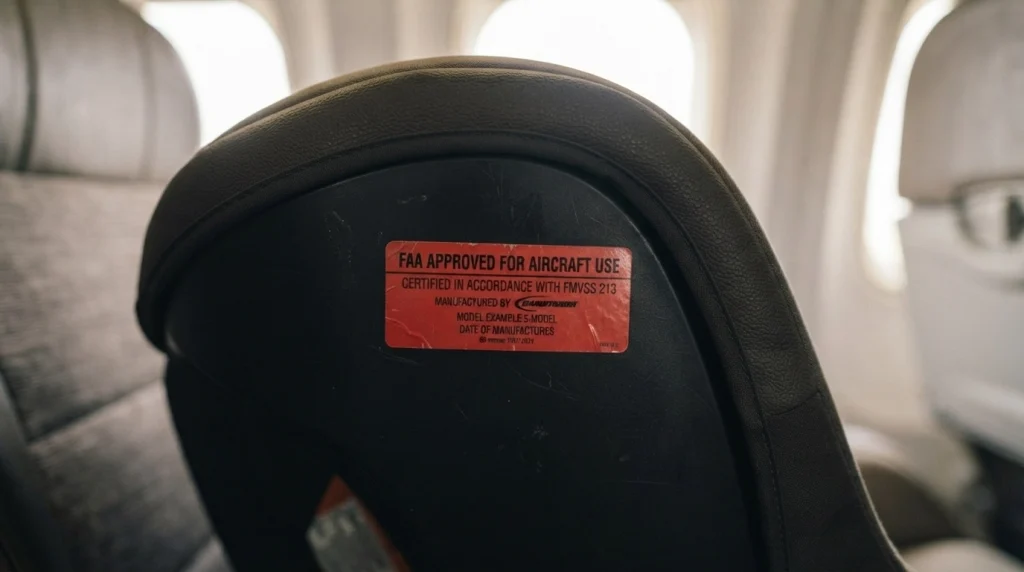
Not every car seat can be used on an airplane. An acceptable child restraint needs the appropriate certification, a suitable design, and an installation method compatible with the aircraft.
A child restraint system (CRS) is a safety device that secures a child in a dedicated seat. An aircraft-approved car seat typically has a rigid shell and an integrated harness.
How to check the FAA approval label
For most modern U.S.-standard car seats, look for this statement on the seat itself:
“This restraint is certified for use in motor vehicles and aircraft.”
The certification wording commonly appears in red lettering on a label attached to the seat shell. The label may be located on the side, back, or bottom.
Some child restraints use qualifying foreign government or United Nations approval markings instead. Confirm acceptance with the airline if you’re using a non-U.S. seat.
The seat must also accommodate your child’s height and weight. Aircraft approval doesn’t override the manufacturer’s child-size limits.
Which types of car seats work on airplanes?
- Rear-facing infant seats: Often suitable when aircraft-certified and installed according to their manual.
- Convertible car seats: May support rear-facing or forward-facing aircraft installation.
- Forward-facing harnessed seats: Can work when the seat has aircraft approval and appropriate instructions.
- All-in-one seats: May be approved in harness mode but not in booster mode.
- Belt-positioning boosters: Cannot serve as approved aircraft restraints during taxi, takeoff, or landing.
Does an airplane car seat need a special cover?
No special cover is required for an approved car seat during flight. Keep the original manufacturer-approved padding and fabric installed as directed.
Be cautious with aftermarket car seat covers, extra cushions, harness pads, and inserts. Some accessories can interfere with harness fit or change how the restraint performs.
The National Highway Traffic Safety Administration’s guidance on aftermarket seat covers explains why these products require careful consideration.
A carrying bag can protect your car seat while moving through the airport. Remove it before installation unless the manufacturer explicitly permits another arrangement.
Pro tip: Photograph the approval label before leaving home. Keep the seat manual available so you can quickly show installation instructions if a flight attendant asks.
Section Takeaway: Aircraft approval, correct child fit, and manufacturer instructions matter more than a car seat’s brand or price.
How Should You Prepare Before Flying With a Car Seat?
Preparation starts before you book the flight. Confirming the airline’s requirements early can prevent installation problems at boarding.
1. Book a separate seat for your child
Under U.S. rules, children younger than two may travel on an adult’s lap. However, the FAA strongly recommends using an approved restraint in the child’s own seat.
Buying a ticket is the way to guarantee space for your child’s car seat. Don’t assume an empty neighboring seat will be available.
The American Academy of Pediatrics’ flying-with-baby guidance also encourages families to use an appropriate child restraint.
2. Choose the correct airplane seat
A window position is usually the preferred location for a child restraint. This helps prevent the car seat from blocking other passengers during an emergency evacuation.
- Window seat: Usually the best choice for installation.
- Middle seat: May be acceptable when it doesn’t obstruct another passenger’s exit.
- Aisle seat: Often unsuitable because a child restraint can obstruct access.
- Exit row: Child restraints are not permitted.
- Special cabin seats: Bulkheads and premium-cabin layouts may have additional restrictions.
Airline restrictions vary by aircraft configuration. Confirm your seating arrangement before departure.
3. Check the car seat’s dimensions
Airplane seat widths differ by airline, aircraft, and cabin. Measure the widest part of your car seat before booking.
Compare that measurement with the airline’s published seat dimensions. Don’t assume a particular economy seat width applies to every airplane.
Some car seats also need clearance for the proper recline angle. A rear-facing seat may affect the space available to the passenger in front.
4. Practice using a lap belt
Many parents normally install their car seats using LATCH, which stands for Lower Anchors and Tethers for Children. Standard passenger airplane seats generally don’t provide those vehicle anchor points.
Instead, aircraft installation typically uses a two-point lap belt. Review your restraint’s aircraft instructions before traveling.
I recommend practicing the seat-belt installation method with the manual beforehand. Remember that an aircraft buckle may sit differently from a vehicle buckle.
5. Pack the right accessories
- Aircraft-approved car seat with all required components.
- Car seat instruction manual or official digital copy.
- Photograph of the aircraft approval label.
- Lightweight travel bag or carrying strap for transport.
- Diapers, wipes, snacks, and feeding supplies.
- Small, soft toys and age-appropriate entertainment.
- Child’s travel documents and booking confirmation.
A folding luggage cart or compatible car seat transporter may simplify airport travel. Check that it doesn’t damage the restraint or interfere with its components.
6. Allow time for airport security
At U.S. airports, car seats must pass through security screening. Large seats that don’t fit the X-ray machine may require physical inspection.
Follow the instructions in the Transportation Security Administration’s traveling-with-children guidance.
Remove your child from the car seat when directed by screening officers. Keep the restraint’s straps secured so loose parts don’t become tangled during transport.
If your airline offers family or early boarding, consider using it. Extra boarding time makes correct installation easier.
Section Takeaway: Reserve the child’s seat, check approval and dimensions, practice the belt routing, and carry the manual.
How Do You Install a Rear-Facing Car Seat on an Airplane?
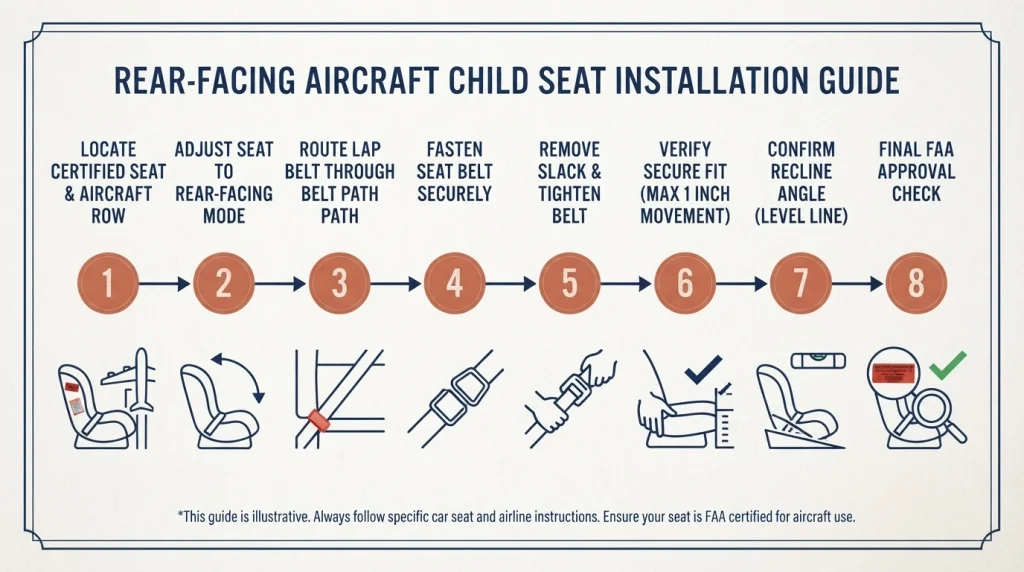
Install a rear-facing car seat with the aircraft lap belt, using the manufacturer’s designated rear-facing belt path. Maintain the approved recline angle and secure the child with the built-in harness.
Rear-facing travel remains appropriate until your child reaches the manufacturer’s rear-facing height or weight limit. Flying isn’t a reason to switch a child forward-facing early.
Step-by-step rear-facing installation
- Confirm the seating position. Ask the flight attendant to verify that your assigned seat permits the restraint.
- Prepare the airplane seat. Position the seatback upright and move the armrest if permitted and necessary.
- Position the child restraint. Place it rear-facing on the aircraft seat, as specified in the car seat manual.
- Locate the correct belt path. Identify the rear-facing belt guides and keep the aircraft belt flat.
- Thread and buckle the lap belt. Route it exactly as the manufacturer describes, without twisting the webbing.
- Tighten the installation. Remove slack while maintaining the permitted recline angle.
- Check stability. Test movement at the belt path and follow the manufacturer’s installation tolerance.
- Secure your child. Position the harness correctly, fasten the buckle, and adjust the straps snugly.
Can you install an infant car seat without its base?
Many infant carriers support seat-belt installation without their detachable vehicle bases. However, the manufacturer must explicitly permit that method.
Some products have different aircraft instructions from their vehicle instructions. Don’t bring or install a base unless the manufacturer approves it for that airplane installation.
How do you check the recline angle?
Rear-facing seats must maintain the recline position required for the child’s age, size, and restraint model. An incorrect angle may create positioning problems, especially for infants.
Use the seat’s approved angle indicator or follow its manual. Never improvise by placing unapproved cushions beneath the restraint.
When checking harness fit, use these general principles:
- Position rear-facing shoulder straps at or below the child’s shoulders, as directed.
- Keep the harness flat and free from twists.
- Remove excess harness slack using the manufacturer’s instructions.
- Place the chest clip at armpit height when the seat has one.
- Avoid bulky jackets or thick material under the harness.
Pro tip: Use the restraint’s aircraft installation section rather than relying on a generic tutorial. If the seat won’t remain secure, ask the cabin crew for an alternative approved location.
How Do You Install a Forward-Facing Car Seat on an Airplane?
A forward-facing car seat uses the airplane’s lap belt through its designated forward-facing belt path. Use this position only when your child meets the seat manufacturer’s forward-facing requirements.
Step-by-step forward-facing installation
- Place the restraint on the airplane seat. Face the car seat toward the front of the aircraft.
- Identify the forward-facing belt path. Follow the markings or instructions for the exact restraint model.
- Thread the aircraft lap belt. Route it through the correct opening without twisting it.
- Connect the buckle. Ensure the buckle and belt lie in positions permitted by the manual.
- Tighten securely. Remove slack and verify the restraint remains stable at the belt path.
- Check harness height. For typical forward-facing harnessed seats, straps should be at or above the shoulders.
- Buckle your child. Tighten the harness and position the chest clip according to the manual.
What happens to the top tether?
A top tether is an additional strap used with many forward-facing car seats in vehicles. It helps control the seat’s movement in a crash.
Ordinary passenger airplane seats generally don’t provide a vehicle-style top tether anchor. Follow the manufacturer’s specific aircraft instructions instead of attaching the tether to an unsuitable object.
Never connect the tether to an armrest, tray table, or nearby seat component unless explicitly authorized through an approved installation procedure.
What if the airplane buckle presses against the car seat?
Aircraft lap belts use different buckle arrangements from many vehicle belts. A buckle can sometimes end up in an awkward location inside the belt path.
Don’t change the routing or add padding to solve the problem. Ask the crew for assistance and follow the manufacturer’s permitted alternatives.
If you cannot achieve a proper installation, request another suitable seat. Don’t continue with a loose or incompatible restraint.
How Do You Keep Your Child Safe During the Flight?
Keep your child correctly harnessed whenever they’re seated, especially during taxi, takeoff, landing, and turbulence. A properly installed car seat helps protect the child from unexpected aircraft movement.
According to the CDC’s guidance on traveling safely with infants and children, an approved child restraint is the safest option during flight.
Keep the harness securely fastened
A child can appear comfortable while sitting in an unbuckled car seat. However, sudden turbulence may occur without warning.
Recheck the harness after feeding, changing clothes, or taking the child out. Make sure every buckle is properly latched before continuing the flight.
Manage feeding and sleep safely
Plan feeding around the flight’s conditions and cabin crew instructions. Keep the child securely restrained when the seat belt sign requires it.
If your infant falls asleep, check their head position and breathing. Their face should remain unobstructed, and their body should stay properly supported.
A car seat isn’t a substitute for a safe, flat infant sleep surface outside its intended travel use. Follow the restraint manufacturer’s guidance throughout the journey.
Avoid extra padding and loose accessories
Soft accessories can seem useful on a long flight. However, extra cushions or thick car seat covers may interfere with proper harness tension or positioning.
- Use the manufacturer’s approved seat cover and inserts.
- Keep loose blankets outside the fastened harness.
- Avoid attaching hard toys to the restraint.
- Don’t cover the child’s nose or mouth.
- Keep emergency access and seat belts unobstructed.
What if your child becomes uncomfortable?
First, check the harness and seating position. Look for twisted straps, incorrect clothing placement, or a headrest adjustment problem.
Don’t loosen the harness beyond the manufacturer’s instructions to make the child more comfortable. When conditions allow, ask the crew before removing your child for a brief break.
What should you do after landing?
Keep your child secured until it’s safe to unbuckle and the aircraft has stopped. Avoid rushing to remove the restraint while passengers are standing or retrieving luggage.
Once off the aircraft, inspect the seat before installing it in a rental car or family vehicle.
- Look for cracks or damage to the shell.
- Check the harness webbing and buckle.
- Confirm no parts were lost during transport.
- Restore the correct vehicle installation configuration.
- Reinstall the seat using the vehicle and car seat manuals.
Section Takeaway: Correct installation is only the beginning. Proper harness use and continuous attention to your child’s position are equally important.
What Alternatives and Common Mistakes Should Parents Know?
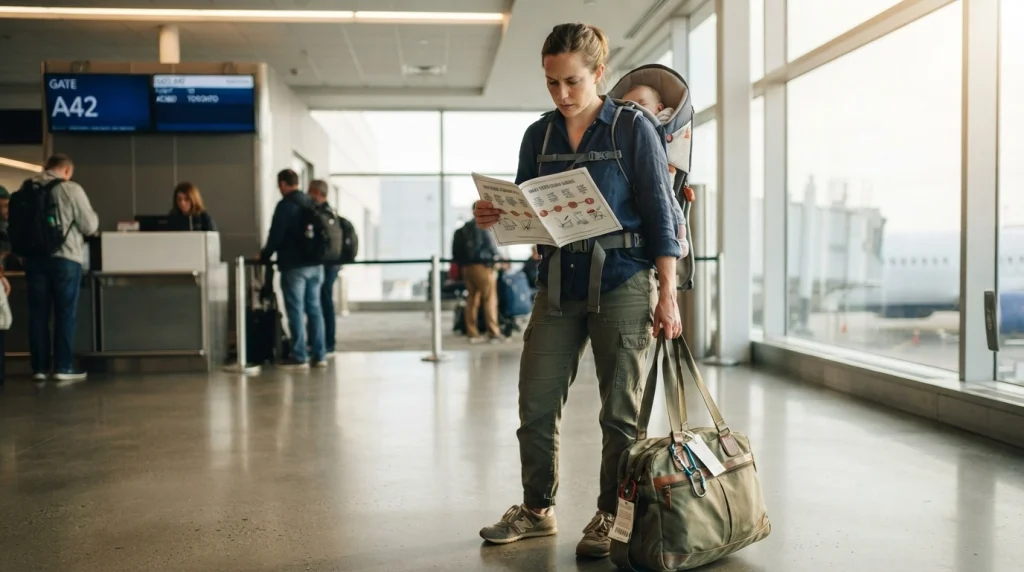
An approved car seat is an excellent option for young children, but it isn’t the only aircraft restraint. Your child’s size and the airline’s rules determine which alternatives are appropriate.
Car seat vs. CARES harness vs. airplane seat belt
| Restraint option | Suitable use | Key consideration |
|---|---|---|
| Rear-facing car seat | Infants and rear-facing children within the seat’s limits | Requires aircraft approval and correct belt installation |
| Forward-facing harnessed seat | Children meeting forward-facing harness requirements | Must fit the aircraft seat and use the approved installation method |
| CARES aviation harness | Children weighing 22–44 lb and measuring up to 40 inches, who can sit upright | Approved for aircraft use, not motor vehicles |
| Aircraft lap belt | Children large enough for a proper fit | May not provide suitable restraint for small children |
| Belt-positioning booster | Not an approved in-flight child restraint for taxi, takeoff, or landing | Transport it for use in vehicles at your destination |
Is a CARES harness better than a car seat?
The CARES child aviation restraint system offers a lightweight alternative for eligible children. It works with the aircraft lap belt and provides an upper-body restraint.
The FAA-certified CARES device is intended for children weighing 22–44 pounds and measuring no more than 40 inches tall. Children must also be able to sit upright independently.
It isn’t suitable for small infants and doesn’t replace a vehicle car seat. Use an authentic, correctly labeled device according to its instructions.
Common airplane car seat mistakes
- Skipping the approval check: A car seat can meet vehicle standards without qualifying for aircraft use.
- Using the wrong belt path: Rear-facing and forward-facing modes may require different routing.
- Assuming LATCH is available: Normal passenger aircraft seats generally rely on lap belts.
- Installing in an exit row: Child restraints cannot occupy exit-row positions.
- Using unauthorized accessories: Aftermarket covers and inserts may affect safety.
- Ignoring child-size limits: Aircraft approval doesn’t make an outgrown restraint suitable.
- Leaving the harness loose: A seat secured to the plane still needs to restrain the child properly.
Should you check the car seat as baggage?
Using the restraint on the aircraft is preferable when you have an appropriate ticketed seat and approved installation. If you won’t use it onboard, ask the airline about gate-checking or baggage options.
Car seats are often accepted without standard baggage charges, but policies vary. Confirm the airline’s current rules before departure.
Use protective packaging if checking the restraint, and inspect it afterward. Contact the manufacturer if you discover damage or have concerns about continued use.
What if the flight attendant questions your car seat?
Show the aircraft certification label and the relevant manual instructions. Explain the intended installation calmly and ask whether another approved location is available.
For a properly approved restraint with a purchased seat, U.S. airline rules provide important protections. However, the restraint must fit safely and comply with applicable seating restrictions.
The FAA states that an airline must accommodate an approved, ticketed child restraint in another seat within the same class if it doesn’t fit the original location.
Keep in mind that international airlines may operate under different rules. Always check the policies of the airline operating your flight.
Pro tip: Before traveling, save the manufacturer’s airplane installation instructions and your airline’s child restraint policy. These documents are more reliable than general travel advice.
Section Takeaway: Choose the restraint based on the child, not convenience alone. A correct fit and approved installation remain essential.
Frequently Asked Questions About Using a Car Seat on an Airplane
1. Can I take my child’s regular car seat on an airplane?
Yes, if the restraint has the required aircraft approval and fits your child and the airplane seat. Check its certification label, aircraft installation instructions, and your airline’s policy. A regular vehicle car seat without qualifying aircraft approval cannot automatically be used during the flight.
2. Do I have to buy an airplane ticket for a baby under two?
Under U.S. regulations, children younger than two may travel on an adult’s lap. However, the FAA strongly recommends a separate seat with an approved child restraint. Purchasing an individual ticket guarantees space for the child rather than relying on an unoccupied airline seat.
3. Can I install a rear-facing car seat on an airplane?
Yes, provided the restraint is approved for aircraft use and the child remains within its rear-facing limits. Install it using the approved aircraft belt path and recline position. Follow the manufacturer instructions and choose an airline-approved seating location.
4. Can I use an infant car seat without its base on a plane?
Many infant carriers permit installation without the base using an aircraft lap belt. However, not every product supports the same procedure. Check the seat’s manual for aircraft-specific directions and use only the installation method approved for that exact model.
5. Can I use a booster seat on an airplane?
An ordinary belt-positioning booster isn’t approved for use as an aircraft child restraint during taxi, takeoff, or landing. A combination seat may be acceptable in its aircraft-approved internal-harness mode. Always check the product’s approval label and instructions before flying.
6. Where should I install a car seat on an airplane?
A window seat is usually the preferred position because it helps preserve the escape path for other passengers. Exit-row installation is prohibited, and other seating restrictions may apply. Contact your airline to confirm an acceptable location for your particular aircraft.
7. What if my car seat’s aircraft approval label is missing?
Contact the manufacturer for documentation identifying the exact model and its aircraft certification. FAA guidance recognizes appropriate manufacturer documentation or manual evidence in certain cases. However, you should confirm the airline’s requirements before traveling because an unreadable label can cause boarding difficulties.
Final Takeaway: Make Safety Part of Your Flight Plan
Using a car seat on an airplane doesn’t have to be complicated. The key is choosing an approved restraint, confirming airline compatibility, and following the correct installation instructions.
Keep your child properly harnessed, avoid unsupported accessories, and ask the cabin crew for help when something doesn’t fit.
Before your next trip, check the approval label, review the manual, and confirm your child’s seating arrangement. A little preparation makes family air travel safer and easier to manage.

Daniel Brooks is an automotive writer and product researcher focused on car accessories, car tech, maintenance, and practical driving guides. At Plug-in Car World, he helps drivers make smarter automotive decisions through honest reviews and research-driven content.
