
How to Travel by Air With an Infant Car Seat: Complete Guide
Quick Answer
To travel by air with an infant car seat, confirm that your car seat is certified for aircraft use, purchase a separate airplane seat for your baby, and install the restraint using the aircraft lap belt according to its manual. The Federal Aviation Administration’s child safety guidance recommends an approved child restraint system instead of holding an infant on your lap.
Essential Steps for Flying With an Infant Car Seat
- Check certification: Find the aircraft-use certification label on your car seat.
- Reserve a seat: Book a separate ticket to guarantee your baby can use the restraint.
- Confirm compatibility: Compare your car seat’s dimensions with the airline’s seat measurements.
- Prepare for security: Remove your baby before the car seat goes through airport screening.
- Install correctly: Follow the manufacturer’s aircraft installation instructions and secure the harness.
- Plan ground transportation: Keep an appropriate car seat available for travel after landing.
Important Safety Reminder
- Never improvise: Don’t use an unapproved restraint, modify the car seat, or install it against the manufacturer’s instructions.
Flying with a baby changes how you pack, board, and manage your travel day. Adding an infant car seat makes preparation especially important.
I recommend treating the car seat as essential safety equipment, not simply another piece of luggage. This guide explains aircraft approval, airline policies, airport security, installation, and the decisions that make traveling easier.
In This Guide
- Can You Bring an Infant Car Seat on a Plane?
- How Do You Know If an Infant Car Seat Is Aircraft-Approved?
- How Do You Prepare an Infant Car Seat for Air Travel?
- How Do You Install an Infant Car Seat on an Airplane?
- Should You Check Your Car Seat or Use It on the Plane?
- What Mistakes Should You Avoid When Flying With a Car Seat?
- Frequently Asked Questions
Can You Bring an Infant Car Seat on a Plane?
Yes, you can bring an infant car seat onto many commercial flights. To use it during the flight, the seat must meet the applicable aircraft certification requirements and your airline’s seating rules.
An infant car seat is a rear-facing child restraint designed to protect babies while traveling. Many rear-facing-only infant seats can also secure a baby in an aircraft passenger seat.
Is an Infant Car Seat Required on an Airplane?
In the United States, the FAA generally permits children under two years old to travel on an adult’s lap. However, it strongly recommends using an approved child restraint in a separate airplane seat.
The main concern is unexpected turbulence. Even a careful adult may struggle to hold an infant securely during sudden aircraft movement.
A properly installed car seat provides a dedicated restraint that doesn’t depend on an adult’s grip.
Do You Need to Buy an Airplane Ticket for Your Baby?
If you want guaranteed use of an infant car seat, purchase a separate ticket. An assigned seat gives your baby their own place for an approved child restraint.
Some airlines allow lap infants to use an empty adjacent seat when one is available. However, you shouldn’t rely on a vacant seat when booking.
Before purchasing tickets, confirm these details:
- Your airline’s infant ticket and seating policies.
- Whether the selected aircraft accommodates your car seat.
- Where child restraints may be installed.
- Whether the airline offers family boarding.
- Requirements for connecting or international flights.
What Is the Best Airplane Seat Location for an Infant Car Seat?
A window seat is generally the preferred location for an infant car seat. This arrangement helps prevent the restraint from blocking another passenger’s exit.
Exit rows aren’t permitted for infant car seats. Some other locations may also have restrictions because of seat design or emergency evacuation requirements.
Airline staff can help identify an appropriate seating position.
Section Takeaway: Flying with an infant car seat is possible, but buying a separate ticket and confirming airline compatibility removes much of the uncertainty.
How Do You Know If an Infant Car Seat Is Aircraft-Approved?
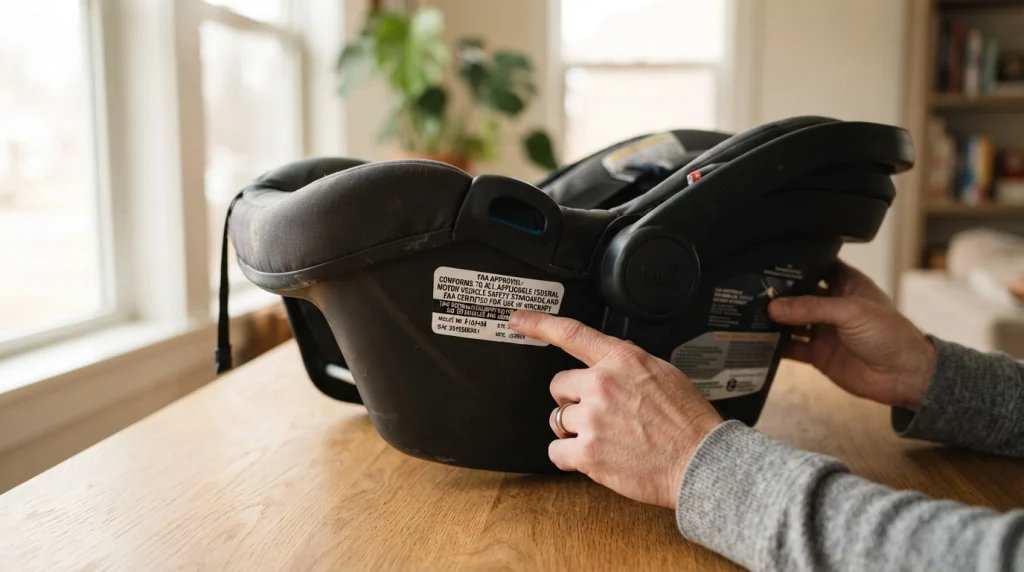
An aircraft-approved infant car seat has the required certification marking and supports installation using an airplane seat belt. Not every car seat qualifies.
Check the physical seat and manufacturer’s instructions before your travel date.
Find the Aircraft Certification Label
Most U.S.-certified car seats intended for aircraft use carry this statement:
“This restraint is certified for use in motor vehicles and aircraft.”
The wording normally appears on a label attached to the seat shell. Its location varies by manufacturer and model.
Some non-U.S. child restraints use different approved markings. Confirm whether those markings satisfy the requirements of the airline and aviation authority governing your flight.
Don’t assume that every car seat described as travel-friendly has aircraft certification.
Check the Car Seat’s Size and Weight
Aircraft passenger seats vary by plane and cabin. A restraint that fits one aircraft may be too wide for another.
Measure the widest part of your car seat and compare it with the airline’s published seat dimensions.
For example, a car seat measuring 17 inches across needs sufficient usable space between the aircraft seat’s armrests. The exact clearance depends on the airplane.
Weight also matters when carrying the seat through a large airport.
- Width: Measure the car seat’s widest point, including protruding parts.
- Weight: Account for carrying the restraint without its vehicle base.
- Height: Check whether the seat fits the available passenger space.
- Installation: Confirm that an aircraft lap belt can secure the restraint.
- Child fit: Verify your baby’s current height and weight are within the manufacturer’s limits.
Infant Car Seat Types Compared for Air Travel
| Restraint Type | Aircraft Use | Key Consideration |
|---|---|---|
| Rear-facing infant car seat | Often permitted when certified | Check aircraft belt installation and infant weight limits. |
| Convertible car seat | Many models are certified | Can be bulky and harder to transport. |
| Booster seat | Not approved as an in-flight booster restraint | Designed for older children and vehicle shoulder belts. |
| CARES aviation harness | Approved within specified limits | For eligible older children, not small infants. |
Can You Use an Infant Car Seat Without Its Base?
Many rear-facing infant carriers allow installation without their detachable vehicle bases. However, this depends entirely on the specific model.
Look for a dedicated baseless seat-belt installation method in your car seat manual.
If the manufacturer permits baseless installation, you may be able to leave the heavy base at home. This makes airport transportation easier.
Never remove required components or improvise an installation method that the manufacturer doesn’t approve.
Before flying, check the restraint’s model information through the NHTSA safety recall database. An unresolved safety recall may require action before you use the car seat.
Pro tip: Keep a digital copy of the car seat instruction manual on your phone. You’ll have its aircraft installation instructions available even without internet access.
Section Takeaway: Aircraft certification, correct child fit, and a permitted seat-belt installation method matter more than a car seat’s marketing claims.
How Do You Prepare an Infant Car Seat for Air Travel?
Prepare your infant car seat before reaching the airport. That includes reviewing its instructions, checking airline requirements, and organizing your travel equipment.
A simple checklist can prevent several avoidable problems during boarding.
What Should You Check Before Leaving Home?
I recommend completing these checks several days before departure rather than at the airport counter.
- Inspect the seat: Look for damage, missing components, and worn harness straps.
- Check certification: Locate the aircraft-use label and confirm it remains readable.
- Read the manual: Identify the correct lap-belt installation procedure.
- Measure the restraint: Compare its dimensions with your airline’s seating information.
- Check the airline: Verify child restraint policies for every flight segment.
- Plan transportation: Decide how you’ll move the seat through the terminal.
- Prepare documentation: Keep the manual, booking confirmation, and any required infant travel documents accessible.
Practice the approved baseless installation method at home if your seat supports one. Familiarity with the belt routing can help when boarding gets busy.
How Do You Carry an Infant Car Seat Through the Airport?
Carrying a car seat becomes difficult when you’re also managing luggage, documents, and your baby.
The right transportation method depends on the restraint’s shape and your available luggage space.
- Compatible stroller: Attach the infant carrier to a manufacturer-approved stroller or travel system.
- Car seat travel bag: Use a fitted bag to protect the seat from dirt while transporting it.
- Car seat carrier: Choose a manufacturer-compatible carrying system.
- Luggage cart: Secure the car seat appropriately while moving between terminals.
Never attach a car seat to an incompatible stroller or unstable luggage handle. A top-heavy setup can tip over.
If your baby is sitting in the carrier, follow the manufacturer-approved carrying and stroller configurations.
What Happens to Your Car Seat at Airport Security?
At U.S. airports, the Transportation Security Administration screens car seats and other child travel equipment.
You must remove your baby from the car seat before screening.
According to TSA guidance for traveling with children, car seats generally pass through X-ray screening. Equipment that cannot fit may receive a physical inspection.
Follow these practical steps:
- Remove your baby from the car seat.
- Empty loose objects from the carrier or travel bag.
- Prepare the car seat for the screening equipment.
- Follow the security officer’s instructions.
- Collect the seat and inspect its straps and accessories before leaving.
Keep your baby’s essential supplies separate from bulky car seat equipment. This makes them easier to access during security screening.
In the United States, formula and breast milk can generally exceed the ordinary 3.4-ounce liquid limit when presented for the required screening.
Notify security personnel about those liquids before screening begins.
How Early Should You Arrive at the Airport?
The airport’s recommended arrival time remains your starting point. Add extra flexibility for carrying, inspecting, and preparing your car seat.
Family boarding can be especially useful because it provides additional time to install the restraint.
Don’t count on receiving early boarding automatically. Ask the airline about its family boarding arrangements before departure.
Section Takeaway: Airport travel becomes more manageable when your equipment is organized, the car seat is inspected, and its installation method is familiar.
How Do You Install an Infant Car Seat on an Airplane?
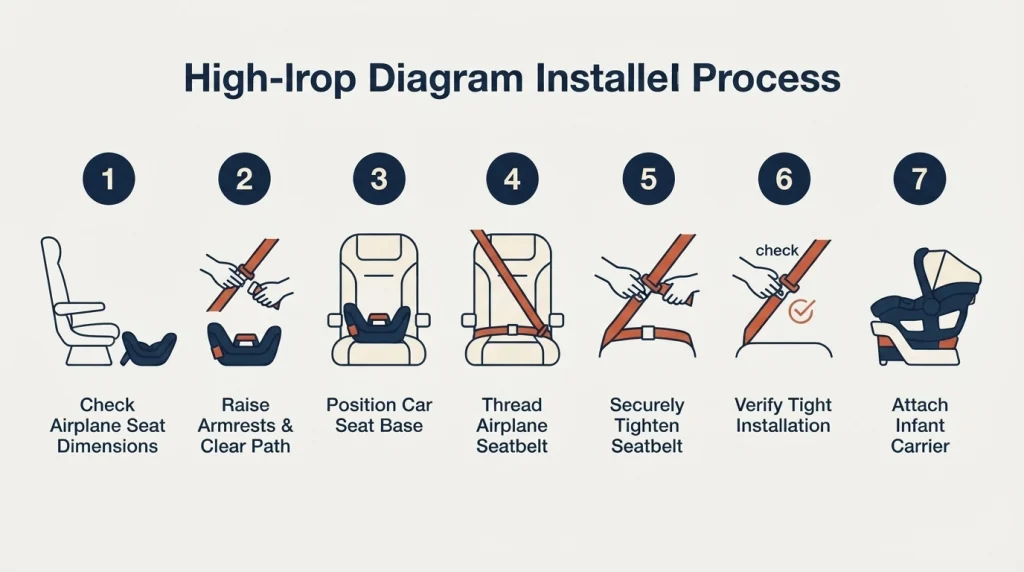
Install an approved infant car seat using the aircraft’s seat belt and the restraint manufacturer’s instructions. The installation must match the correct configuration for your baby’s size.
Most infant carriers are rear-facing, but always follow the specific model’s directions.
Step 1: Confirm Your Assigned Airplane Seat
Check that your baby’s assigned seat permits a child restraint. Window seats are generally preferred because they don’t obstruct another passenger’s access to the aisle.
If your airline assigned an unsuitable location, speak with the cabin crew before beginning installation.
Step 2: Position the Infant Car Seat Correctly
Place the infant car seat on the aircraft passenger cushion in the required rear-facing position.
Maintain the recline angle specified in the manufacturer’s aircraft installation instructions.
The correct angle matters for supporting an infant’s head and maintaining an open airway.
Don’t add towels, pillows, wedges, or other positioning materials unless the manufacturer expressly permits them.
Step 3: Route the Airplane Lap Belt
Locate the correct belt path identified in your car seat manual.
Thread the airplane’s lap belt through that path, keeping the webbing flat and untwisted.
Aircraft passenger seats normally use a lap belt rather than the lap-and-shoulder belt found in many vehicles.
That difference is why following the aircraft-specific instructions matters.
Step 4: Buckle and Tighten the Seat Belt
Connect the aircraft seat-belt buckle and tighten the belt as the manufacturer directs.
Apply pressure to the restraint where instructed while removing excess belt slack.
Make sure the buckle’s position doesn’t interfere with the car seat or prevent proper tightening.
If the buckle becomes trapped or installation doesn’t seem secure, ask the cabin crew for assistance.
Step 5: Check the Installation
Check the restraint at its belt path according to the manufacturer’s instructions. It should remain securely positioned.
Recheck the required recline angle after tightening.
A rear-facing infant seat must not rest in a position that conflicts with its approved installation instructions.
Step 6: Secure Your Baby in the Harness
Once the seat is correctly installed, place your infant in the restraint and secure the harness.
For most rear-facing seats, the harness straps belong at or below the baby’s shoulders.
Follow the manufacturer’s directions for chest-clip position, harness snugness, and clothing.
Remove bulky coats or padded clothing that could prevent the harness from fitting securely.
Step 7: Keep the Restraint Secure During Flight
Keep your baby properly restrained whenever possible, especially during taxiing, takeoff, landing, and turbulence.
Follow cabin crew instructions throughout the flight.
If feeding, changing, or comforting your baby requires removing them, follow the crew’s guidance and resecure the harness afterward.
Pro tip: Never use the vehicle’s lower-anchor connectors as a substitute for the aircraft seat belt. Aircraft installation must follow the restraint manufacturer’s approved instructions.
Section Takeaway: A correct aircraft installation depends on the approved belt path, secure attachment, proper recline angle, and a snug infant harness.
Should You Check Your Car Seat or Use It on the Plane?
Using an approved car seat during the flight offers better protection for your baby than traveling unrestrained on an adult’s lap.
Checking the car seat can make airport movement simpler, but it introduces baggage-handling considerations.
Using the Car Seat During the Flight
This is the preferred option when your infant has a separate ticket and the seat is compatible with the airplane.
It also means the restraint stays with you instead of traveling through the baggage system.
Advantages include:
- Your infant has a dedicated child restraint.
- The car seat remains under your supervision.
- You avoid normal checked-baggage handling for the restraint.
- The same seat may be available for ground transportation after landing.
The main disadvantages are the cost of another ticket and the effort involved in transporting and installing the seat.
Checking the Infant Car Seat at the Ticket Counter
Some families choose to check their infant car seat before security.
This removes bulky equipment from the terminal, but your car seat will be handled as baggage.
Use a protective travel bag when possible. Remove loose accessories and label the bag with your contact information.
A travel bag can reduce dirt and scuffs, but it cannot guarantee protection against handling damage.
Gate-Checking an Infant Car Seat
Gate-checking generally allows you to carry the seat through security and hand it to airline staff near boarding.
It may be useful when you need the infant carrier or compatible stroller in the terminal.
Ask where the seat will be returned because some airlines deliver gate-checked equipment at the aircraft door, while others send it to baggage claim.
Car Seat Travel Options Compared
| Travel Method | Main Advantage | Main Drawback |
|---|---|---|
| Use on airplane | Provides an approved restraint for the infant | Requires a suitable separate seat |
| Gate-check | Equipment remains available through the terminal | Still involves baggage handling |
| Counter-check | Less equipment to carry after check-in | Seat is unavailable during the flight |
Does an Infant Car Seat Count as Checked Baggage?
Many airlines transport car seats separately from standard checked-baggage allowances. However, policies vary by airline, route, and ticket type.
Don’t assume every carrier allows free car seat checking.
Check the official baggage policy for each airline on your itinerary, particularly when flying internationally.
What Should You Do If Your Checked Car Seat Is Damaged?
Inspect the restraint before placing your baby in it after arrival.
Look for visible shell damage, damaged harness components, missing parts, and signs of heavy impact.
If you suspect structural damage, don’t use the seat until its manufacturer confirms whether it remains safe.
Report baggage damage to the airline promptly and retain photographs and documentation.
Section Takeaway: Using an approved infant car seat in a purchased airplane seat provides the strongest in-flight restraint option; checking introduces handling risks.
What Mistakes Should You Avoid When Flying With a Car Seat?
Most avoidable travel problems begin with assumptions about equipment or airline policies.
Several checks can make a significant difference in both safety and convenience.
Mistake 1: Assuming Every Car Seat Is Approved for Aircraft Use
Some car seats are suitable for vehicles but not for aircraft installation.
Always verify the seat’s certification label and instruction manual before your departure date.
Mistake 2: Forgetting to Check the Airline’s Seat Dimensions
A certified restraint may still be difficult to position in a narrow aircraft passenger seat.
Compare actual dimensions rather than relying on product descriptions such as compact or lightweight.
Mistake 3: Depending on a Free Airplane Seat
Flights may be fully booked, and an infant traveling as a lap passenger doesn’t have a guaranteed separate seat.
Purchase a ticket if you want to ensure your infant can use the approved car seat.
Mistake 4: Using Unapproved Harnesses or Accessories
Not every baby carrier, travel harness, or padded accessory is an approved aircraft child restraint.
The CARES aviation harness, for example, is intended for eligible children weighing 22–44 pounds and measuring no more than 40 inches tall. It isn’t a replacement for a rear-facing infant seat.
Avoid aftermarket padding, unsupported belt-routing devices, and restraint modifications unless the seat manufacturer approves them.
Mistake 5: Ignoring the Baby’s Comfort and Breathing Position
A correct recline angle is especially important for young infants.
Check your baby’s head and neck position, keep their face uncovered, and follow their pediatrician’s guidance for any relevant medical concerns.
For a long flight, monitor your baby regularly and plan breaks from the seated position when conditions safely permit.
Mistake 6: Forgetting About Transportation After Landing
Your airport transfer may require a suitable child restraint, whether you’re using a rental car, taxi, or family vehicle.
Confirm that the restraint you bring can be installed legally and correctly in your destination vehicle.
The NHTSA car seat safety guide explains child restraint selection, correct installation, and age-appropriate use in vehicles.
Mistake 7: Assuming U.S. Rules Apply Everywhere
International airlines and aviation authorities may recognize different certification markings and seating arrangements.
For connecting flights, confirm compatibility with every operating airline rather than relying only on the original booking carrier.
Some international services also have different infant restraint, bassinet, and seat assignment policies.
My Recommended Preflight Checklist
I find that separating safety checks from packing decisions makes the preparation more manageable.
- Confirm the aircraft certification label.
- Check the baby’s height and weight against the seat limits.
- Download the manufacturer’s installation manual.
- Verify the aircraft passenger seat dimensions.
- Reserve an appropriate seat for your baby.
- Prepare the car seat carrier or protective travel bag.
- Review airport security procedures.
- Confirm car seat arrangements at the destination.
For additional parent-focused flying advice, the American Academy of Pediatrics’ flying-with-baby guide discusses restraints, seating, feeding, and infant travel safety.
Section Takeaway: Verify the restraint, airline rules, and destination transportation before departure. Never rely on an improvised child restraint installation.
Frequently Asked Questions
1. Can I Take an Infant Car Seat on an Airplane for Free?
Many airlines allow parents to check an infant car seat without an additional baggage charge. However, policies differ between airlines and routes. Using the seat during the flight generally requires a separate passenger seat for your infant, so check the ticket and baggage policies before booking.
2. Does My Baby Need a Car Seat on an Airplane?
On U.S. commercial flights, children younger than two may generally travel on an adult’s lap. However, the FAA strongly recommends placing infants in an approved child restraint within their own assigned seat. This provides better protection during unexpected turbulence.
3. Can I Use a Rear-Facing Infant Car Seat on a Plane?
Yes, if the car seat has the appropriate aircraft certification and permits aircraft installation. Rear-facing infant seats are commonly suitable for this purpose. Follow the manufacturer’s instructions for lap-belt routing, recline angle, and the correct installation configuration.
4. Can I Bring an Infant Car Seat and a Stroller?
Many airlines allow families to travel with both a stroller and an infant car seat. Depending on airline policy, these items may be checked at the ticket counter or gate. Confirm whether fees apply and where the equipment will be returned after landing.
5. What If My Infant Car Seat Doesn’t Fit the Airplane Seat?
Notify the cabin crew instead of forcing the restraint into place. On covered U.S. flights, the airline must accommodate a properly approved, ticketed child restraint in another suitable seat within the same class when necessary. Rules may differ on international services.
6. Is It Better to Gate-Check or Carry an Infant Car Seat Onboard?
Using an approved car seat onboard is preferable for infant restraint safety when your baby has a suitable assigned seat. Gate-checking may be convenient if the seat isn’t being used onboard, but it still exposes the restraint to baggage handling.
7. Can I Use a Travel Car Seat Without a Base on the Plane?
Yes, but only if the manufacturer explicitly allows baseless installation using an aircraft lap belt. Many infant carriers support this method, while others have different requirements. Read the instructions for your exact model and never improvise belt routing.
Final Thoughts: Making Air Travel Safer With an Infant Car Seat
Traveling by air with an infant car seat requires preparation, but the process becomes easier when you understand the rules.
Start by confirming aircraft certification and booking a suitable airplane seat. Then prepare for security screening and practice the manufacturer’s approved installation method.
The most important goal is keeping your baby properly restrained during the flight and protected during ground transportation.
Before your next trip, check your car seat manual, review your airline’s policies, and verify your baby’s seating arrangements. Those simple steps can prevent stressful surprises and support safer family travel.

Daniel Brooks is an automotive writer and product researcher focused on car accessories, car tech, maintenance, and practical driving guides. At Plug-in Car World, he helps drivers make smarter automotive decisions through honest reviews and research-driven content.
