
When Should You Switch From an Infant Car Seat?
Quick Answer
You should switch from an infant car seat when your baby reaches its maximum height or weight limit, or no longer meets its manufacturer’s fit requirements. Many babies outgrow infant seats around their first birthday, but there is no universal switching age. Move your child into a convertible car seat and continue using it rear-facing. Follow the American Academy of Pediatrics rear-facing guidance.
Signs Your Baby Has Outgrown an Infant Car Seat
- Weight limit reached: Your baby reaches the maximum weight printed on the seat label.
- Height limit reached: Your child exceeds the manufacturer’s maximum height.
- Head clearance: Your baby’s head no longer meets the required clearance from the top of the seat shell or headrest.
- Fit requirements: Your child no longer fits the seat according to its instruction manual.
- Expiration reached: The seat has reached its stated useful life and must be replaced.
- Damage or recall: A crash, damage, or safety recall may require the seat’s immediate replacement.
Before Switching
- Choose the next stage: Select a convertible or all-in-one seat that fits your child and vehicle.
- Keep facing backward: Do not switch to forward-facing simply because your baby has outgrown the infant carrier.
Watching your baby outgrow that first car seat can feel like another big parenting milestone. The carrier that once made every trip easier eventually becomes too small.
I’m Daniel Brooks, and this guide explains how to recognize the right time to change seats without rushing your child’s next safety stage. I’ll cover size limits, head clearance, convertible seats, installation, and common mistakes that can make the transition confusing.
What Does Switching From an Infant Car Seat Mean?
Switching from an infant car seat means moving your child from a rear-facing-only carrier into another suitable rear-facing child restraint, usually a convertible or all-in-one car seat. It does not mean your child is automatically ready to face forward.
An infant car seat is a portable restraint designed specifically for babies. Most models have a detachable carrier, a carrying handle, and a separate vehicle base.
A convertible car seat works differently. It stays installed in the vehicle and can accommodate a growing child in rear-facing and later forward-facing configurations, within its approved limits.
The important distinction is that outgrowing an infant carrier does not mean outgrowing rear-facing protection. A larger convertible seat can provide additional room while keeping your child facing the rear of the vehicle.
At What Age Do Babies Usually Outgrow Infant Car Seats?
Many babies outgrow their infant car seats somewhere around their first birthday, although some need a replacement earlier or later. Their actual growth and the individual seat’s limits matter more than their birthday.
Some infant-only seats have maximum weight limits around 22 pounds, while others accommodate approximately 30 to 35 pounds. Maximum height limits also vary, often falling between 26 and 35 inches.
These are examples, not universal specifications. Always check your particular model’s labels and instruction manual.
Why Is Age Not a Reliable Switching Rule?
Babies grow at different rates, so two children of the same age can have very different car seat needs. One baby might reach the maximum height before the weight limit, while another may remain within both limits for longer.
Consider two examples:
- Baby A: Reaches the seat’s 30-inch height limit at 10 months but weighs only 19 pounds.
- Baby B: Weighs 24 pounds at 12 months but remains below the seat’s maximum height.
Baby A needs a different seat despite weighing less. Baby B can continue using the infant seat if every manufacturer requirement remains satisfied.
That is why I recommend checking the seat’s specifications regularly instead of waiting for a particular birthday.
What Are the Signs That Your Baby Has Outgrown an Infant Car Seat?
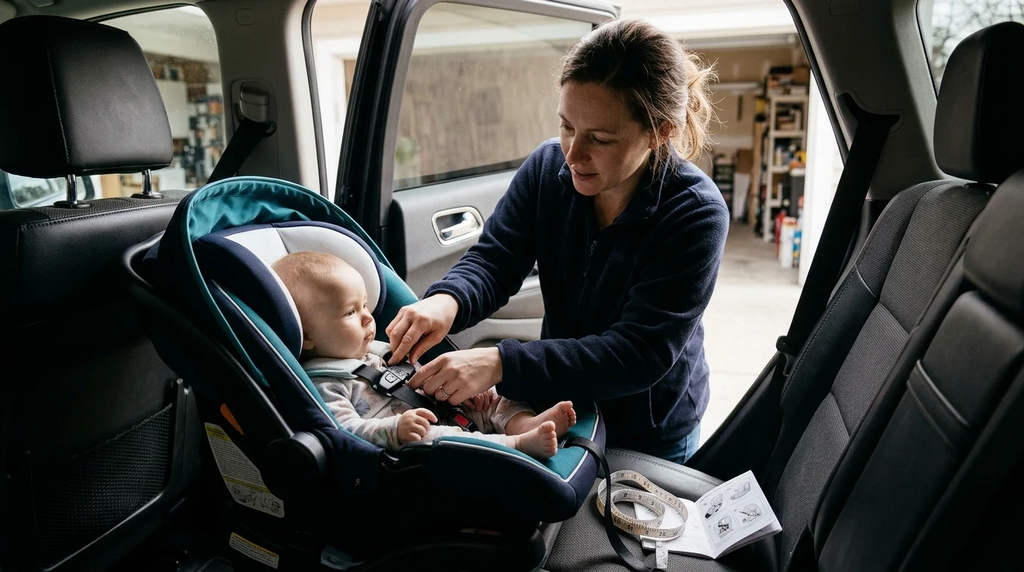
The clearest signs involve the manufacturer’s weight, height, and fit requirements. Your baby does not need to reach every limit before you make the switch.
Check these areas carefully.
1. Your Baby Has Reached the Maximum Weight
Every infant car seat has a maximum approved weight. You must stop using it once your child exceeds that limit, even if the seat still appears spacious.
Look for the weight range on the side or bottom label. The instruction manual also explains how to measure and apply the limit.
2. Your Baby Has Reached the Maximum Height
Height can become a problem before weight. A long baby may outgrow an infant carrier while weighing considerably less than its maximum approved weight.
Check the manufacturer’s height measurement method. Some seats use a maximum standing height, while others describe a specific head-position requirement.
3. Your Baby’s Head Is Too Close to the Top
Some infant seats require a minimum distance between the child’s head and the top of the seat shell. Others use different head-position instructions.
Do not assume every infant seat uses the same one-inch rule. Check the exact model’s manual to understand its required head clearance.
4. Your Baby No Longer Meets the Harness Requirements
A proper harness fit is essential for crash protection. The shoulder straps must occupy the correct positions, lie flat, and tighten securely according to the seat’s instructions.
For rear-facing use, harness straps generally need to come from at or below the child’s shoulders. If you cannot achieve the required fit, consult the manufacturer before another trip.
5. The Car Seat Has Expired or Sustained Damage
Car seats have expiration dates because materials, components, and safety requirements can change over time. A seat may also become unusable after certain crashes or damage.
Check the following:
- Manufacturing date: Find the date printed on the seat.
- Expiration information: Follow the manufacturer’s stated useful life.
- Crash history: Follow the manufacturer’s replacement instructions after a collision.
- Recall status: Check whether the manufacturer or relevant safety authority has issued a recall.
Never continue using an expired, recalled, or damaged seat without resolving the safety issue.
Should You Switch When Your Baby’s Feet Touch the Back of the Seat?
No. Your baby’s feet touching the vehicle seatback is not, by itself, a reason to switch from an infant car seat or turn a convertible seat forward-facing.
Rear-facing children often bend their legs, rest their feet against the vehicle seat, or sit with their knees naturally bent. These positions are normal as children grow.
Parents sometimes worry that a child will injure their legs during a crash. However, leg position alone does not determine whether a rear-facing seat remains appropriate.
Instead, check the actual weight, height, and fit limits. Keep your child rear-facing while the seat manufacturer permits it.
What Type of Car Seat Should You Switch To?
When your baby outgrows an infant-only seat, the usual next step is a convertible car seat installed in rear-facing mode. An all-in-one seat can also work if it accommodates your child’s size and fits your vehicle.
Both options can provide a longer rear-facing period than many infant carriers.
Convertible Car Seat
A convertible car seat changes between rear-facing and forward-facing configurations. It generally stays in the vehicle instead of functioning as a removable baby carrier.
Look for these features:
- Rear-facing weight and height limits suitable for your growing child.
- An adjustable harness and headrest.
- Recline positions that support correct rear-facing installation.
- Compatibility with your vehicle’s seating position.
- Clear instructions for installation and everyday adjustments.
All-in-One Car Seat
An all-in-one car seat can offer rear-facing, forward-facing, and booster configurations. This design may reduce the number of separate seats a family purchases as a child grows.
However, a larger seat is not automatically better. Check its rear-facing dimensions, installation requirements, and compatibility with your vehicle.
Infant Car Seat vs. Convertible Car Seat vs. All-in-One Seat
| Feature | Infant Seat | Convertible | All-in-One |
|---|---|---|---|
| Rear-facing | Yes | Yes | Yes |
| Forward-facing | No | Yes | Yes |
| Booster mode | No | Usually no | Yes, if specified |
| Removable carrier | Usually yes | No | No |
| Typical next use | Newborn and infant travel | Infant through toddler stages | Multiple growth stages |
Actual age, weight, height, and installation limits depend on the individual model. The table describes general seat functions, not permission to change seating positions at a particular age.
Should You Keep Your Toddler Rear-Facing After Switching?
Yes. Your child should continue riding rear-facing for as long as possible, until reaching the convertible seat’s maximum rear-facing height or weight limit.
The American Academy of Pediatrics recommends delaying the transition to forward-facing because rear-facing seats better support a young child’s head, neck, and spine during a crash.
The AAP reaffirmed its child passenger safety policy in February 2025. Its guidance emphasizes keeping children rear-facing as long as their seats allow.
There is no need to turn your child around simply because they reach their first, second, or third birthday.
When Is Forward-Facing Appropriate?
Forward-facing becomes appropriate after your child outgrows the rear-facing limits of their particular seat. The next restraint should have a suitable five-point harness and top tether.
Even then, check the manufacturer’s minimum age, weight, height, and developmental requirements. Some children can remain rear-facing well beyond age two.
As of October 2026, the practical advice remains simple: delay each seating transition until your child reaches the applicable limits.
How Do You Switch From an Infant Seat to a Convertible Seat?
Moving to a convertible seat takes more than placing a larger restraint in the back seat. You need to confirm the seat fits your vehicle and install it according to both manuals.
Use this transition checklist.
- Confirm the old seat’s limits: Check whether your baby has reached its height, weight, or fit requirements.
- Choose a suitable replacement: Find a convertible or all-in-one seat approved for your child’s current measurements.
- Read both manuals: Review the new car seat instructions and your vehicle owner’s manual.
- Choose an approved seating position: Use a rear seating position permitted by your vehicle and car seat manufacturers.
- Install rear-facing: Follow the correct belt path, recline angle, and installation method.
- Adjust the harness: Position the straps correctly and tighten them until snug.
- Check the installation: Test movement at the belt path and verify the seat’s level indicator.
For installation help, look for a certified Child Passenger Safety Technician (CPST). A professional seat check can identify problems that are easy to miss during a first installation.
Can You Use LATCH or a Vehicle Seat Belt?
Many convertible seats allow installation with either the vehicle seat belt or the lower anchors in the LATCH system. Both methods can provide a secure installation when used correctly.
However, you must follow the seat and vehicle manuals. Lower-anchor weight limits can require a switch to seat-belt installation as your child grows.
Never assume that using both methods together makes the installation safer. Use both only when the manufacturer specifically permits it.
What Mistakes Should Parents Avoid When Switching Car Seats?
Most transition mistakes happen when parents rely on appearance, age, or convenience instead of the manufacturer’s instructions.
Watch out for these common problems:
- Switching too early: Do not replace an infant carrier simply because your baby looks uncomfortable.
- Turning forward-facing too soon: Outgrowing an infant seat does not mean rear-facing is finished.
- Ignoring height limits: Weight alone cannot determine whether the seat still fits.
- Adding unapproved accessories: Avoid aftermarket inserts, cushions, and harness covers unless the manufacturer approves them.
- Using bulky coats under the harness: Buckle your child securely and place blankets or coats over the harness.
- Installing without checking both manuals: Vehicle and car seat requirements must work together.
- Reusing a recalled or expired seat: Verify the seat’s condition and recall status before every new stage.
Does Your Baby Need a Special Car Seat Cover After Switching?
Not necessarily. A convertible car seat already comes with a manufacturer-designed cover or fabric seat pad, so an additional cover is usually unnecessary.
If you want extra protection against spills, dirt, or everyday mess, check whether the manufacturer offers an approved accessory for your exact model.
Avoid putting an unapproved cover, thick cushion, or padding underneath your child. Such additions can interfere with harness fit or change how the restraint performs in a crash.
Also distinguish between a seat protector placed underneath the car seat and a fabric accessory that touches your child. Both need to be compatible with the seat and vehicle manufacturers’ instructions.
How Do You Choose the Right Convertible Car Seat?
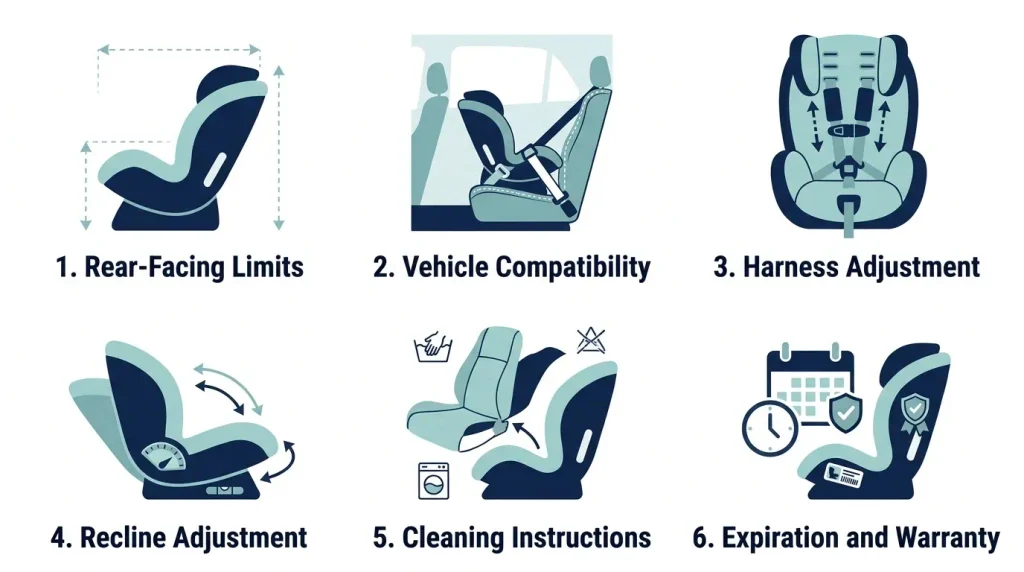
The right convertible seat is one that fits your child, installs securely in your vehicle, and supports extended rear-facing use. You do not need the most expensive model to meet those requirements.
Compare these practical features before choosing:
- Rear-facing limits: Look for suitable weight and height limits that support longer rear-facing use.
- Vehicle compatibility: Check seat width, front-seat clearance, and installation options.
- Harness adjustment: Choose a system you can adjust correctly as your child grows.
- Recline adjustment: Make sure the available positions work for your vehicle and child’s age.
- Cleaning instructions: Check whether the fabric cover can be removed and how the manufacturer allows it to be cleaned.
- Expiration and warranty: Understand the useful life and registration requirements.
One practical point I would never overlook is the vehicle fit. A seat with impressive specifications is not useful if it cannot be installed correctly in your particular car.
For additional installation guidance, consult the National Highway Traffic Safety Administration’s car seat safety resources.
Convertible Car Seat Examples to Consider
If you’re ready to compare replacement seats, these established models illustrate different priorities. Treat them as starting points, not universal recommendations.
🏆 EXTENDED REAR-FACING
Graco Extend2Fit Convertible Car Seat
The model offers a rear-facing weight limit of up to 50 pounds and an adjustable extension panel for additional legroom. Its specifications make it worth comparing for families who want extended rear-facing use.
🚗 GROWING CHILD OPTION
Britax Poplar Convertible Car Seat
The Poplar supports rear-facing use up to 50 pounds and offers a forward-facing harness configuration. Check its dimensions and installation system against your vehicle before choosing it.
🔄 MULTIPLE GROWTH STAGES
Graco 4Ever DLX 4-in-1 Car Seat
This all-in-one model offers rear-facing, forward-facing, and booster configurations. Its rear-facing weight limit is up to 40 pounds, so compare that limit carefully with other options.
These examples are not independently rated or tested here. Specifications, available versions, prices, and compatibility can change, so verify the exact model and current instruction manual before purchasing.
Frequently Asked Questions
Can I switch my baby from an infant car seat at six months?
Yes, if your baby has reached the infant seat’s height or weight limit, or no longer meets its fit requirements. Choose a convertible seat approved for your baby’s current size and use it rear-facing. Age alone does not determine when you should switch.
Can a 12-month-old stay in an infant car seat?
Yes. A 12-month-old can continue using an infant car seat if the child remains within every manufacturer requirement, including weight, height, and head clearance. There is no automatic requirement to change seats on the first birthday.
Does my baby need to be sitting independently before switching?
No. Independent sitting is not a universal requirement for moving from an infant carrier to a convertible car seat. However, your replacement seat must specifically accommodate your baby’s age, size, and developmental needs. Follow its instructions carefully.
Should I switch to a forward-facing seat after outgrowing the infant carrier?
No. The usual next step is a convertible or all-in-one seat installed rear-facing. Keep your child rear-facing until reaching that seat’s maximum rear-facing height or weight limit and meeting all other manufacturer requirements.
Can I use my old infant car seat base with a convertible seat?
No, not unless the manufacturer explicitly identifies the base as compatible with that exact convertible seat. Infant bases and convertible seats have different installation systems. Use only the components supplied or approved for your particular model.
What if my baby’s feet touch the vehicle seat?
Feet touching the vehicle seatback is normal for many rear-facing children. It does not automatically mean the child has outgrown the seat. Check the manufacturer’s weight, height, and head-position requirements instead.
How long can a child remain rear-facing?
A child can remain rear-facing until reaching the maximum rear-facing weight or height limit of the seat, whichever comes first. Some convertible seats accommodate rear-facing use up to 40 or 50 pounds, depending on the model.
Final Takeaway: Let Your Baby’s Growth Determine the Switch
The right time to switch from an infant car seat depends on your child’s measurements and the seat’s manufacturer requirements, not a specific birthday. Check the weight limit, height limit, head clearance, and harness fit before making a decision.
When your baby outgrows the infant carrier, choose a suitable convertible or all-in-one seat and continue rear-facing. Avoid rushing the next transition just because your child looks bigger or their feet touch the vehicle seat.
My biggest recommendation is to read the replacement seat’s manual before purchasing it. A correctly selected and installed seat is far more important than choosing one based on appearance or extra features.
For more child passenger safety information, visit the CDC’s child passenger safety guidance and follow the instructions supplied with your car seat.
Safety note: This article provides general educational information. Always follow your car seat and vehicle manuals, applicable local laws, and guidance from a qualified child passenger safety professional.

Daniel Brooks is an automotive writer and product researcher focused on car accessories, car tech, maintenance, and practical driving guides. At Plug-in Car World, he helps drivers make smarter automotive decisions through honest reviews and research-driven content.
