7 Signs It’s Time to Replace Your Car Cover (And What Happens If You Don’t)
⚡ Quick Answer
Replace your car cover when you spot tears or holes, water seeping through, mold or musty smell, fading color, fabric that feels thin, a loose or poor fit, or when it’s over 3–5 years old. Any one of these signs means your car is no longer fully protected.
The 7 Signs Your Car Cover Must Go:
-
1
Visible tears, rips, or holes in the fabric -
2
Water leaking through — car is damp under the cover -
3
Mold, mildew, or a musty smell under the cover -
4
Cover has faded — UV protection is gone -
5
Fabric feels noticeably thinner than when new -
6
Cover no longer fits snugly — flapping or sliding off -
7
Cover is 3–5+ years old with daily outdoor use
Act On These Red Flags Now:
-
✓
Even tiny holes let in dust, UV rays, and water -
✓
A worn cover can scratch your paint worse than no cover -
✓
Replace it before damage shows up on your car
You pull the cover off your car and something feels off — the fabric is thin, there’s a faint musty smell, or you notice a small tear near the hood. I’m Daniel Brooks, and after years covering everything about vehicle care, I can tell you this: a failing car cover isn’t just cosmetic. It’s actively putting your paint, interior, and finish at risk.
A car cover is your vehicle’s first shield against UV rays, rain, dust, and debris. But like every piece of protective gear, it wears out. Knowing when to let go of it — and replace it — saves you from paint fading, rust spots, and mold you never saw coming.
Here are the 7 clearest signs your car cover has stopped protecting you, plus what to do next.
📌 Key Takeaways
-
→
Car covers last 2–5 years outdoors; high-quality vinyl covers can reach 5+ years with care. -
→
Visible tears are the most obvious sign — even small holes let UV rays and water reach your paint. -
→
A worn-out cover can scratch your car’s paint as it flaps in the wind — worse than no cover at all. -
→
Fading color on your cover means its UV-blocking layer has broken down and your car’s finish is now exposed.
Why Your Car Cover Is Your Vehicle’s First Line of Defense
A car cover does one job: stand between your vehicle and everything that wants to damage it. UV rays fade paint. Rain carries acid and minerals that leave water spots. Bird droppings and tree sap eat into your clear coat within hours. Dust, when rubbed under a loose cover, acts like sandpaper against your finish.
The problem is that the cover itself takes all that punishment. And over time, that beating adds up. The same UV rays it’s blocking are slowly breaking down its fibers. The same rain it’s deflecting is weakening its waterproof coating.
So here’s what most people miss: a car cover doesn’t fail all at once. It degrades slowly — and by the time you notice a problem, your car may already have taken damage. Catching the 7 warning signs early is the whole game.
7 Signs It’s Time to Replace Your Car Cover
Each sign below is a specific checkpoint you can run through in under 5 minutes. If your cover fails even one of these, it’s time to shop for a replacement.
Sign 1: Visible Tears, Rips, or Holes
This is the most obvious sign — and the one most people dismiss as “just a small tear.” Don’t. A hole the size of a coin lets in rain, UV rays, dust, and debris. These reach your paint directly with no protection at all.
Tears often start at stress points: the front corners, the hood area, or around the mirror pockets. Run your hand across the entire cover and feel for weak, thin, or frayed spots. You might find damage you haven’t seen yet.
⚠️ Warning
A torn cover flapping in wind becomes a physical abrasive against your paint. Wind-whipped fabric causes micro-scratches on your clear coat — damage you’ll pay to polish or repaint later.
Sign 2: Water Leaking Through the Cover
A good car cover sheds water completely. If you lift the cover after rain and find your car damp, wet, or beaded with moisture — the waterproof layer is gone. This layer is a coating applied over the fabric, and it wears off with sun exposure, washing, and age.
Moisture under a cover is more than inconvenient. It creates the perfect conditions for rust on metal panels, water spots on paint, and mold growth in tight spots like door seams and mirror bases. So if your car feels wet under the cover, replace it now — not next month.
Sign 3: Mold, Mildew, or a Musty Smell
Pull off your car cover and take a sniff. A musty or sour smell is a direct signal that moisture has been trapped under the cover long enough for mold or mildew to grow. Mold loves the dark, warm, damp environment that a poor-quality or worn-out cover creates.
This happens for 2 reasons: the cover is no longer waterproof (letting rain in), or it’s no longer breathable (trapping condensation inside). Either way, mold on your car isn’t just a smell problem. It can stain soft rubber seals, attack painted surfaces, and get into air vents if left long enough.
You might be thinking a quick clean fixes this. Here’s why it doesn’t: once the breathability or waterproofing of the fabric is compromised, washing the cover won’t restore it. The structural protection is gone.
Sign 4: Fading or Discoloration on the Cover
When your car cover loses its original color and looks bleached, patchy, or washed out, that’s not just cosmetic. Fading means the UV-blocking layer on the outer surface has been broken down by the sun. The same UV rays that were supposed to be blocked are now degrading the cover itself.
A faded cover no longer reflects or absorbs UV radiation effectively. So if you feel your car is hotter than usual under the cover, or you notice paint fading on the roof or dashboard cracking, even with a cover on — fading is likely the cause.
💡 Key Insight
UV damage to car paint is cumulative and irreversible. Once your cover’s UV protection fails, every day you keep using it adds to the total UV exposure your paint and interior have absorbed — there’s no “catching up” later.
Sign 5: The Fabric Feels Noticeably Thinner
Pick up a corner of your cover and compare it to how it felt when you first bought it. If it feels flimsy, papery, or see-through in spots, the protective layers have worn down. Multi-layer covers rely on each layer doing a specific job — one for UV, one for waterproofing, one for dust. Thin fabric means those layers are compromised.
This is especially common with low-cost polypropylene covers used outdoors daily. According to industry data, polypropylene covers last just 1–2 years with daily outdoor exposure before thinning noticeably. Polyester holds up to 3–5 years, and vinyl can last 5 or more years with care.
Sign 6: The Cover No Longer Fits Properly
A car cover that hangs loose, slides around, or doesn’t sit snugly over mirrors and edges is failing at its most basic job. A loose cover leaves gaps — and gaps mean UV rays, rain, and dust can get in. Worse, a loose cover flaps in wind, and that flapping fabric rubs against your paint constantly.
If you bought a universal-fit cover, this is especially likely. Universal covers are made in only a few sizes for thousands of car shapes — so they almost never fit perfectly from day one, and they get looser as the elastic hems stretch with age. A poor fit is a safety risk for your paint.
Sign 7: It’s More Than 3–5 Years Old With Daily Use
Even if your cover looks okay, age alone is a reason to replace it. Most car covers last 2–5 years with regular outdoor use. High-quality vinyl covers can push past 5 years with proper maintenance, but budget polypropylene options often fail within 2 years.
If you’ve been using the same cover daily for 3+ years and haven’t checked it recently — check it today. The degradation of UV coatings and waterproofing happens gradually, not all at once. By the time a problem is visible, the protective value is already largely gone.
Recommended Product
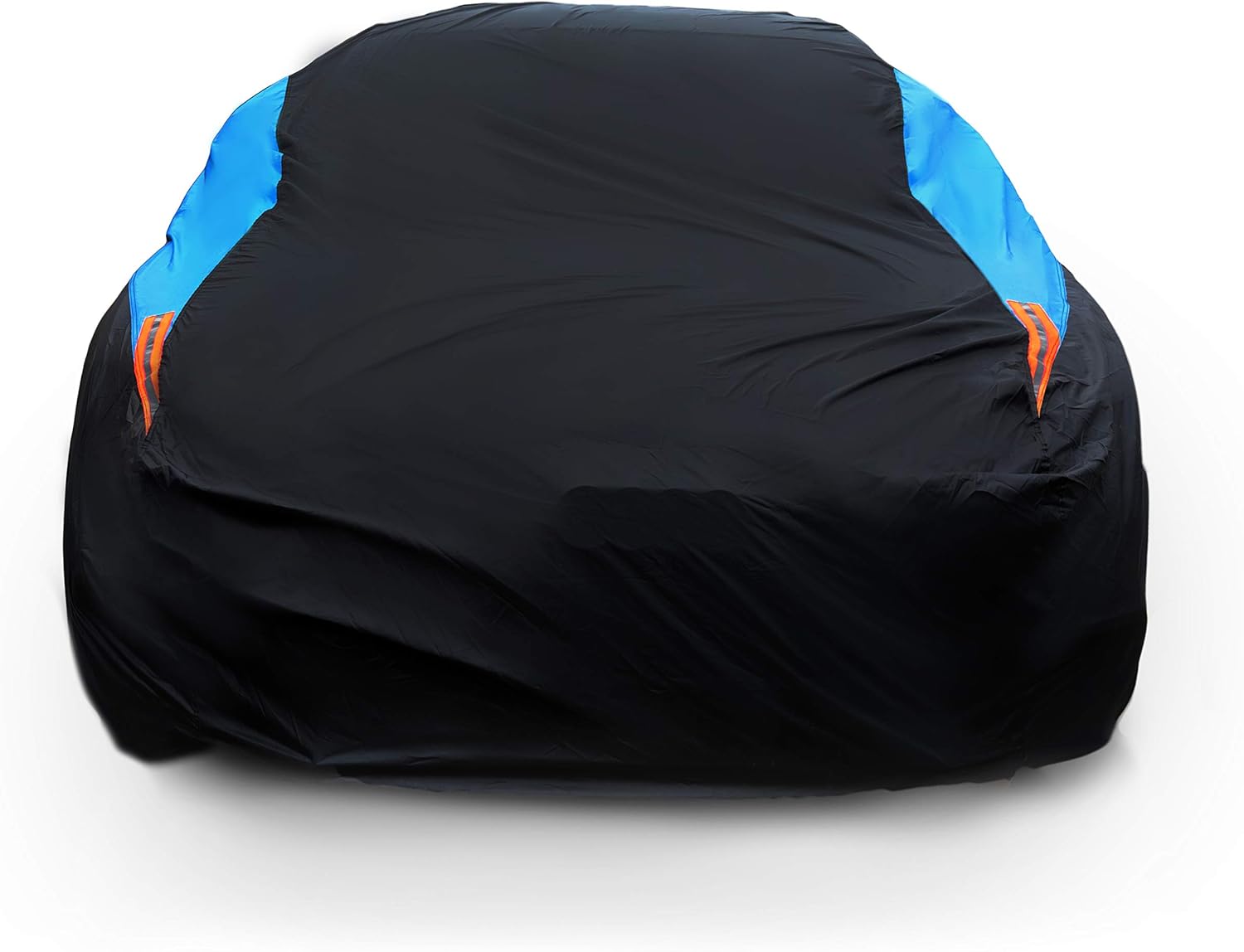
EzyShade 10-Layer Car Cover Waterproof All Weather
★★★★☆ 4.3 out of 5 stars — 8,972+ ratings on Amazon
If your current cover is showing any of the 7 signs above, the EzyShade 10-Layer is a reliable outdoor upgrade — with 10-layer construction for real waterproofing, UV blocking, and a snug size-chart fit that eliminates the loose-cover problem.
As an Amazon Associate, we earn from qualifying purchases.
How Long Does a Car Cover Last?
The lifespan of a car cover depends almost entirely on 3 things: the material it’s made from, how often you use it outdoors, and how well you maintain it. Here’s what the data shows across the most common material types.
Car cover lifespan varies widely by material — choosing the right one for your use case determines whether you replace it in 2 years or 7.
If you’re using a polypropylene cover outdoors every day, plan to replace it around the 18-month mark — even if it still looks fine on the outside.
The single biggest factor in longevity is UV exposure. Covers without UV-resistant coatings can fail in under 12 months in sunny climates like Florida, Texas, or California. Washing frequency also matters: over-washing with harsh detergents strips the waterproof coating faster than normal outdoor use.
For full details on what makes covers last longer, CarCover.com’s lifespan guide breaks down maintenance habits by material type.
What Damage Can a Worn Car Cover Actually Do to Your Car?
Most people think a worn cover is just “less effective.” The reality is worse: a degraded car cover can actively damage your vehicle. Here’s exactly what happens when you keep a failing cover in place.
📋 Damage a Worn Car Cover Can Cause
-
Paint scratches from abrasion: A loose or torn cover flaps in wind and rubs against your paint, creating micro-scratches and swirl marks across the entire surface. -
Paint fading from UV exposure: Once the UV layer is gone, direct sunlight degrades your clear coat and base coat — fading can happen within one summer without real UV protection. -
Rust formation: Trapped moisture from a non-waterproof cover pools in panel seams, door edges, and around trim pieces — starting rust from the inside out. -
Interior dashboard cracking: UV rays penetrating a faded cover heat the interior rapidly, causing dashboard materials and steering wheel surfaces to crack and fade. -
Mold on rubber seals: Persistent moisture trapped under a non-breathable cover degrades rubber door seals, window gaskets, and weatherstripping over months.
So if your car is dusty even with a cover on, or you notice new scratches appearing — your cover isn’t protecting you anymore. In fact, it’s the problem. Replacing it is far cheaper than a paint correction or rust repair job.
How Do You Know If Your Car Cover Is Still Waterproof?
You don’t need rain to test your cover’s waterproofing. Run this simple 3-step check right now — it takes 2 minutes and tells you exactly where your cover stands.
🔢 Step-by-Step: The 2-Minute Waterproof Test
-
1
Lay the cover flat on a table or driveway
Find an area that shows signs of wear — faded spots, thin areas, or around seams.
-
2
Pour a small cup of water onto the fabric
A healthy cover will bead water into round droplets that roll off. No soaking, no spreading.
-
3
Watch what the water does
If water absorbs into the fabric or spreads into a wet patch — the waterproof coating is gone. Time to replace.
-
✓
Make your decision
Beads up = still good. Soaks in = replace it now. No gray area here.
You can also check the CarCovers.com replacement guide for additional material-specific tests and tips on evaluating cover fit and breathability.
✅ Tip
When buying a replacement, choose a size-chart-based fit (not universal). A snug custom or semi-custom fit eliminates the loose-cover problem entirely — your cover won’t flap, shift, or leave exposed sections on windy days.
What Most People Get Wrong About Car Covers
There are 3 beliefs most car cover owners hold that quietly lead to vehicle damage. Here’s what they get wrong — and what’s actually true.
Myth 1: “If the cover still looks okay, it’s still working.” UV protection and waterproofing are invisible properties. A cover can look fine on the outside while its functional coatings have completely broken down. The water-pour test (above) reveals the truth that your eyes can’t.
Myth 2: “Any cover is better than no cover.” A worn, loose, or damaged car cover is genuinely worse than no cover. It traps moisture, causes scratches through abrasion, and blocks airflow while still letting water in. You’d be better off with nothing than with a torn, mold-promoting cover.
Myth 3: “Universal covers fit well enough.” Universal covers are made in 3–5 standard sizes for thousands of vehicle shapes. They’re rarely a real fit. A loose cover causes more paint damage through wind abrasion than it prevents. Always use a size-chart-based cover matched to your specific car’s make, model, and year.
The Bottom Line: Replace It Before Your Car Pays the Price
A car cover works invisibly — until it stops working. By then, the UV damage, scratches, rust, or mold may already have started. The 7 signs covered here are your early warning system.
Run the 2-minute check today. Look for tears, feel the fabric, sniff for mold, and pour water on a worn spot. If anything fails — replace it. A new quality cover costs $40–$150. A paint correction or rust repair costs 10 to 20 times that.
One thing to do right now: Take your car cover off and hold a section up to the light. If you can see light through the fabric — the protective layers are gone. Order a replacement today.
Frequently Asked Questions
How long does a car cover last before it needs replacing?
Most car covers last 2–5 years outdoors depending on material. Polypropylene covers wear out in 1–2 years with daily use. Polyester holds up 3–5 years. Vinyl can last 5 or more years with proper care. Indoor covers often last longer since they’re not exposed to UV rays or rain.
Can a damaged car cover scratch my paint?
Yes. A torn or loose car cover that flaps in the wind acts like sandpaper against your paint, creating micro-scratches and swirl marks. This is one of the most common causes of mystery scratches on parked vehicles. Replacing a worn cover prevents this damage entirely.
Why is my car dusty even though I use a cover?
Dust under the cover usually means the cover fits poorly. Gaps around the edges let fine dust particles enter and settle on your paint. Since dust is abrasive, a loosely fitting cover that lets it in causes more harm than leaving your car uncovered. Switch to a properly sized cover.
How do I stop mold growing under my car cover?
Mold grows when moisture gets trapped and can’t escape. The fix is a breathable cover that lets air circulate under the fabric while still blocking rain. Always remove the cover after rain and let it dry before reapplying. If mold has already appeared, replace the cover — it’s no longer breathable enough.
Is it worth repairing a torn car cover instead of replacing it?
A small tear can be patched with a fabric repair kit as a short-term fix. But patching doesn’t restore waterproofing, UV protection, or breathability in the surrounding area. If the cover has multiple tears, is faded, or is more than 3 years old — replace it. The cost of a new cover is far less than paint or rust repair.
Does a faded car cover still protect my car?
No. Fading is a direct sign that the UV-blocking layer on the cover’s surface has broken down. A faded cover no longer reflects or absorbs UV radiation effectively. Your paint and interior are now exposed to full sun damage, even with the cover on. Replace it as soon as you notice significant fading or discoloration.
What happens if I keep using a worn-out car cover?
A worn cover actively harms your car. It lets in UV rays, traps moisture, causes paint scratches through abrasion, and promotes rust and mold. In many cases, a degraded cover causes more damage than having no cover at all. The longer you wait to replace it, the more expensive the damage becomes.

Daniel Brooks is an automotive writer and product researcher focused on car accessories, car tech, maintenance, and practical driving guides. At Plug-in Car World, he helps drivers make smarter automotive decisions through honest reviews and research-driven content.