
What Are the Most Comfortable Car Seat Covers?
Quick Answer
The most comfortable car seat covers use soft, breathable padding that supports your back without trapping heat. Look for thick foam or memory foam, a snug fit, and a material that suits your climate. My top pick for daily comfort is a padded, breathable cover made for your exact seat shape, like the options in our guide to the best car seat covers for comfort.
What to check first
- Padding that holds shape: Foam should spring back after you press it, not stay flat.
- Breathable top layer: Mesh, cotton blend, or perforated leather keeps you cool on long drives.
- Snug, wrinkle-free fit: A loose cover bunches up and creates pressure points.
- Lumbar support: Built-in lower-back padding helps on drives over 30 minutes.
- Airbag-safe design: Side seams must open for seat-mounted airbags.
Try this before you buy
- Sit in the cover for 10 minutes before a long trip, and check for hot spots at your shoulders and lower back.
I’ve fitted covers to my own cars and to friends’ cars for years, and comfort always comes down to three things: padding, fit, and airflow.
This guide goes deeper than a simple material list. I’ll show you what to feel for, what to avoid, and how to match a cover to your car, your climate, and your back.
In This Guide
- What Makes a Car Seat Cover Comfortable?
- Which Car Seat Cover Material Is Most Comfortable?
- How Much Padding Do You Need for Real Comfort?
- Do Comfortable Car Seat Covers Fit Every Car?
- Are Comfortable Seat Covers Safe With Airbags and Heated Seats?
- How Do I Choose the Most Comfortable Cover for My Driving?
- Frequently Asked Questions
- My Takeaway: Start With Fit, Then Feel
What Makes a Car Seat Cover Comfortable?
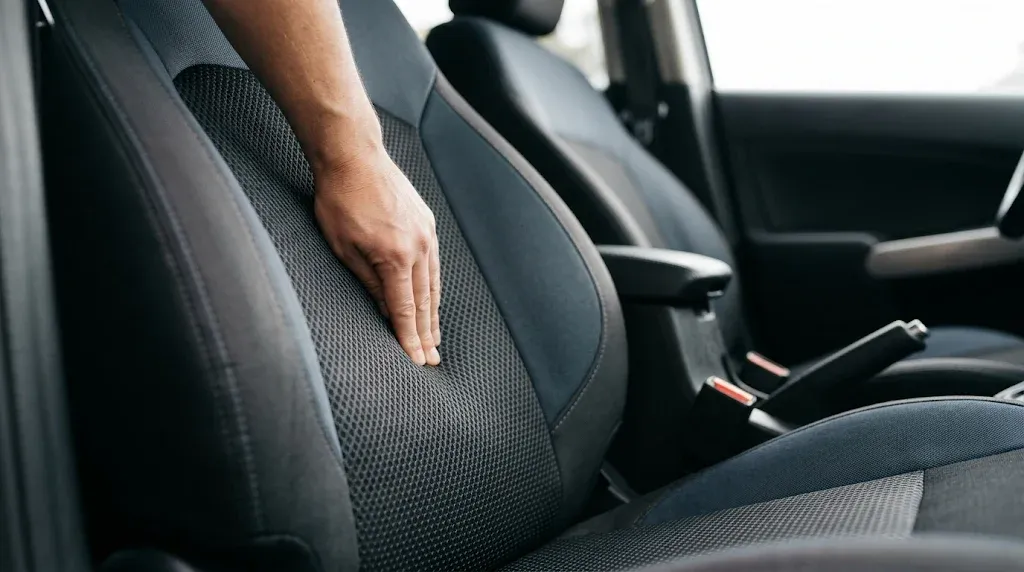
A comfortable car seat cover is a padded layer that spreads your weight evenly, lets air move, and stays put while you drive.
It should feel soft at first touch, yet firm enough to support you after an hour behind the wheel.
I learned this the hard way on a 2018 Honda Civic I used for weekend trips. The first cover I tried felt plush in the box, but it flattened out in 20 minutes and left my lower back aching.
Comfort is not just softness. A cover that is too soft lets you sink into the hard seat frame below it.
Comfort comes from four parts working together
Padding spreads pressure across your thighs, hips, and back. Breathability stops sweat from building up on warm days.
Fit stops the cover from sliding or bunching under you. Support holds your spine in a natural curve, not a slouch.
- Padding: Foam, memory foam, or gel that cushions without collapsing.
- Breathability: Mesh panels, cotton blends, or perforated surfaces that let heat escape.
- Fit: Straps, hooks, and a shaped cut that match your seat bolsters.
- Support: Lumbar padding and side bolsters that hold you in place.
When one part fails, the whole cover feels wrong. A thick cover with no airflow feels hot by mile 50.
A breathable cover with thin padding feels fine for 10 minutes, then hard. Test all four together, not one at a time.
Why your seat shape matters more than the brand
Bucket seats, flat bench seats, and sport seats all need a different cover shape. A cover made for a flat seat will wrinkle on a deep bucket seat.
Those wrinkles turn into ridges under your thighs. Check your seat bolsters before you shop, and measure the headrest width too.
Section Takeaway: Comfort is padding plus airflow plus fit plus support — if one is missing, the cover will feel wrong on a long drive.
Which Car Seat Cover Material Is Most Comfortable?
For most drivers, a breathable fabric or mesh cover feels most comfortable in daily use, while padded leather feels best for short, cool-weather drives.
Material sets the first feel, the temperature, and how the cover ages. I keep a fabric set in my daily driver and a leather set for a second car I use less often.
The fabric set stays cool in summer and warms up fast in winter. The leather set looks sharp, but it needs a few minutes to stop feeling cold or sticky.
Your climate should drive this choice. Hot, humid weather punishes vinyl and smooth PU leather.
Leather and faux leather
Genuine leather feels smooth and supportive, and it lasts for years with basic care. It can feel cold in winter and hot in summer, though perforated leather helps a lot.
PU leather, also called faux leather, costs less and wipes clean fast. It breathes less than real leather, so it can feel clammy on a long, warm drive.
Neoprene, mesh, and fabric blends
Neoprene feels like a wetsuit: soft, grippy, and water-resistant. It suits drivers who carry kids, dogs, or gym gear, and it holds up well to spills.
Mesh and cotton-blend covers breathe best of all. They stay cool, dry fast, and feel soft against bare arms in summer.
Sheepskin and wool blends feel warm and plush in cold weather. They need more care, and they can feel too warm once the heater is on.
For a full roundup of top-rated options across materials, see our guide to the best car seat covers.
| Material | Comfort feel | Breathability | Best for | Care |
|---|---|---|---|---|
| Genuine leather | Smooth, firm, supportive | Medium, better if perforated | Style and long-term use | Condition every few months |
| PU / faux leather | Smooth, slightly stiff at first | Low | Easy cleaning, budget buys | Wipe clean |
| Neoprene | Soft, grippy, cushioned | Medium | Spills, pets, active use | Hand wash or spot clean |
| Mesh / fabric blend | Soft, cool, light | High | Hot climates, daily driving | Machine wash many types |
| Sheepskin / wool blend | Plush, warm, soft | Medium | Cold climates, winter comfort | Brush and air dry |
As of 2026, mesh and fabric blends remain the safest pick if you drive in heat. Leather wins if you want a firm, premium feel and you park in shade.
Section Takeaway: Pick mesh or fabric for heat, leather for a firm premium feel, and neoprene if spills and pets are part of daily life.
How Much Padding Do You Need for Real Comfort?
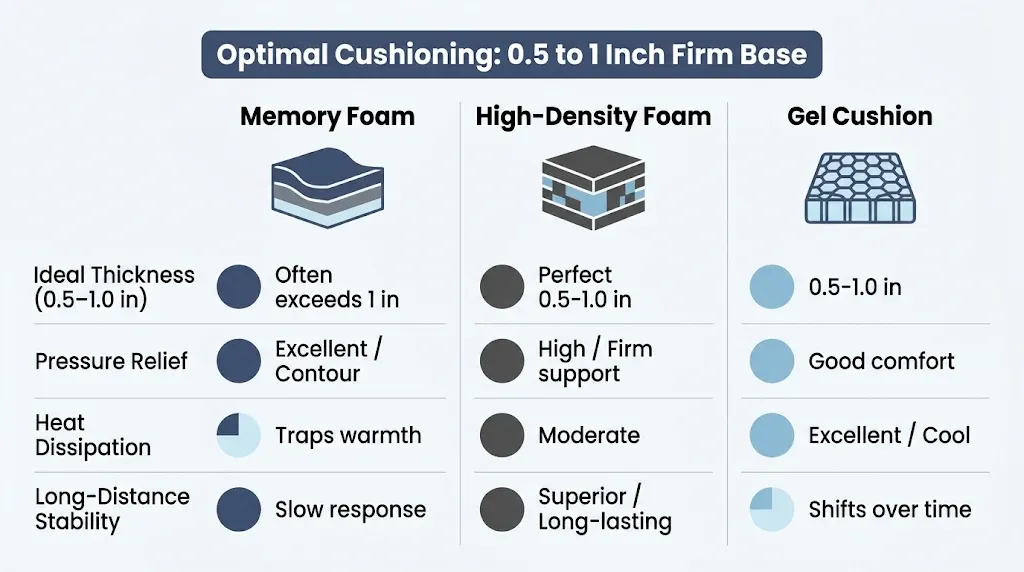
You need enough padding to cushion pressure points, but not so much that it changes your driving position.
A good rule is 0.5 to 1 inch of firm foam on the seat base, with a little extra at the lumbar area. Thicker is not always better.
I once fitted a 2-inch pad to a 2021 Toyota RAV4 for a road trip. It felt like a sofa for the first hour, then my knees sat too high and my back started to ache.
Thin, dense foam beats thick, soft foam. Dense foam holds its shape and spreads weight, while soft foam bottoms out fast.
Memory foam vs. standard foam vs. gel
Memory foam molds to your shape and eases pressure on hips and tailbone. It can trap heat, so look for ventilated or gel-infused versions if you run warm.
Standard high-density foam feels firmer and stays cooler. It suits drivers who like a stable, upright seat and want the cover to last.
Gel pads feel cool at first and spread heat well. They add weight, and some feel too firm until they warm up.
What about lumbar support?
Lumbar support fills the natural curve of your lower back. Without it, you slouch after 20 minutes and your shoulders round forward.
Some covers build the lumbar roll into the foam. Others add a removable pad you can move up or down.
Removable pads work better if two people share the car. Fixed padding works better if you drive alone and know your sweet spot.
If back pain is your main issue, start with covers made for that need — see our guide to the best car seat covers for back support.
Check reviews from Consumer Reports and Edmunds when you compare comfort claims across brands, since both test seating and interior materials in real cars.
Section Takeaway: Aim for firm, dense padding around 0.5 to 1 inch thick, with lumbar support you can adjust to your back.
Do Comfortable Car Seat Covers Fit Every Car?
No, comfortable covers do not fit every car — a universal cover can feel fine, but a custom-fit cover almost always feels better.
Universal covers use elastic and straps to fit many seats. They work well on flat, simple seats and cost less.
Custom covers are cut for your exact year, make, and model. They hug the bolsters, leave headrest posts clear, and stay smooth where universal covers wrinkle.
I fitted a universal set to a sedan once and spent 30 minutes tucking loose fabric. The same job on a custom set took 15 minutes and looked factory-fitted.
How to check fit before you buy
- Measure seat width: Check the widest part of the seat base and backrest.
- Check headrest posts: Note if they are fixed, removable, or adjustable.
- Look for side airbags: Your seat tag or owner’s manual will list them.
- Note seat controls: Power seats, levers, and side pockets need clear access.
- Check split seats: Rear bench covers must match your split ratio, such as 60/40.
Fit also affects comfort over time. A cover that shifts by an inch each week will bunch up right where your thigh meets the seat edge.
Straps under the seat and hooks at the back help a lot. Tuck the side flaps deep, then sit and shift your weight to test for movement.
If you want a cover cut for your exact seats, look at best custom car seat covers before you settle for a universal set.
Pro tip: Check your vehicle’s owner’s manual for seat airbag locations and seat-cover warnings before you install any cover, and use NHTSA to check for recalls that affect your seats.
Section Takeaway: Universal covers can work, but custom-fit covers stay smoother, shift less, and feel more comfortable over months of use.
Are Comfortable Seat Covers Safe With Airbags and Heated Seats?
Yes, comfortable covers can be safe with airbags and heated seats — but only if they are made for those features.
Seat-mounted side airbags deploy through a seam in the seat side. A cover that blocks that seam can delay or change how the airbag opens.
Look for covers labeled airbag-compatible, with breakaway stitching on the sides. Never cut your own opening or sew over that seam.
Heated seats need a cover that lets heat pass through. Thick, insulated covers can block warmth and make the heater work harder.
Airbag safety checklist
- Airbag-compatible label: The maker should state it clearly, not just imply it.
- Side seam design: The seam should split open under force, not hold firm.
- No extra padding over the airbag: Keep thick foam away from the side bolster where the airbag sits.
- Correct fit: A loose cover can shift over the airbag area and block it.
Check your owner’s manual for airbag locations before you buy. If you are unsure, ask a certified mechanic or your dealer.
Heated seats and comfort
Thin mesh and perforated leather let heat through well. Thick sheepskin and heavy gel pads slow heat down.
Test the heater on low for 5 minutes after install. If the seat feels warm evenly, the cover works with your heater.
If one spot stays cold, the cover may be too thick there. Move the cover or pick a thinner material for that seat.
Pro tip: For safety questions, trust your owner’s manual and NHTSA over a product listing, and get a certified mechanic to check fit if your car has seat-mounted airbags.
Section Takeaway: Choose airbag-compatible covers with breakaway side seams, and pick a breathable, heat-friendly material if you use heated seats.
How Do I Choose the Most Comfortable Cover for My Driving?
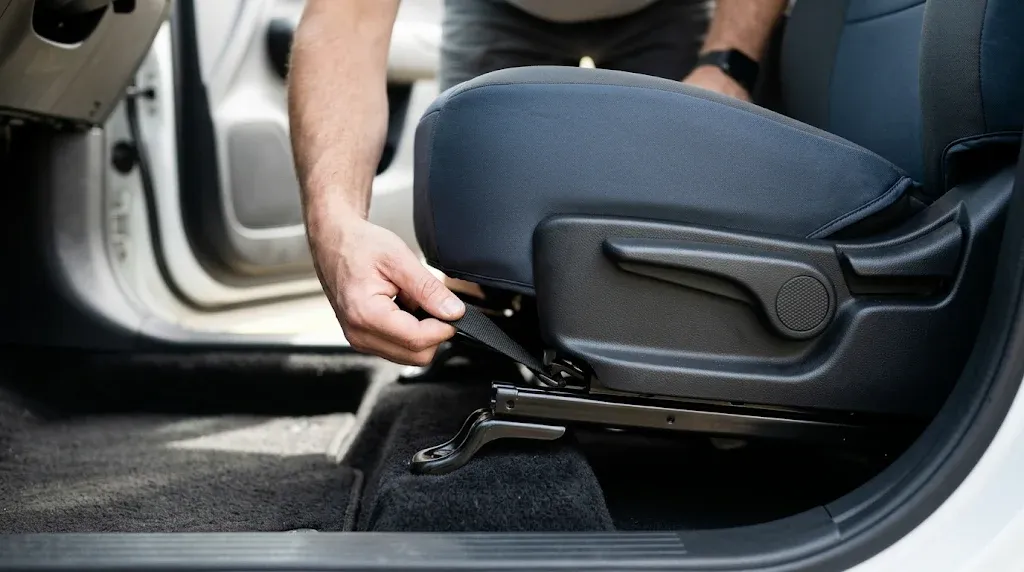
Match the cover to how you actually drive, not to how it looks in a photo.
A commuter needs breathability and lumbar support. A road-trip driver needs thick, stable padding and a cover that stays put for hours.
A parent needs wipe-clean material and strong straps. A driver with back pain needs adjustable lumbar support first, looks second.
Choose by your drive type
- Short daily commutes under 30 minutes: Mesh or fabric, light padding, easy to clean.
- Long drives over 2 hours: Memory foam or dense foam, lumbar support, breathable top.
- Hot climates: Mesh, perforated leather, or cotton blend with airflow panels.
- Cold climates: Leather, sheepskin, or wool blend with a warm, soft feel.
- Work trucks and family cars: Neoprene or heavy fabric that resists spills and wear.
Think about who else uses the car. A cover that suits you may feel too firm or too warm for your partner.
Adjustable lumbar pads and removable seat cushions help here. They let each driver tune the seat without swapping the whole cover.
A quick 5-step test before a long trip
- Install it fully: Tighten all straps and tuck the flaps before you sit.
- Sit for 10 minutes: Check for pressure at your thighs, hips, and shoulders.
- Drive 30 minutes: Note any heat, sliding, or lower-back ache.
- Test the controls: Make sure seat levers, heaters, and belts still work.
- Adjust once: Move the lumbar pad or straps, then retest before you commit.
For long-distance comfort, compare your shortlist with our guide to the best car seat covers for long drives.
Also read owner feedback on Car and Driver and Kelley Blue Book for real-world seat comfort notes on your car model, since seat shape varies a lot by trim.
Section Takeaway: Start with your drive type and climate, then test fit, heat, and lumbar support for 30 minutes before you trust a cover on a long trip.
Frequently Asked Questions
What car seat cover material is most comfortable for long drives?
Breathable mesh or fabric with dense memory foam feels best for long drives. It stays cool, spreads pressure, and holds its shape for hours. Add adjustable lumbar support if your back aches after 60 minutes.
Are padded car seat covers worth it?
Yes, if the padding is dense and the cover fits well. Thin, soft padding flattens fast and adds little comfort. Firm foam around 0.5 to 1 inch thick makes a real difference on daily drives.
Do car seat covers make seats hotter?
Some do, especially vinyl, PU leather, and thick sheepskin. Mesh, cotton blends, and perforated leather stay cooler. Choose a breathable top layer if you drive in heat or park in the sun.
Can comfortable seat covers help back pain?
They can help, but they do not fix back pain on their own. Lumbar support and a snug fit reduce slouching and pressure. See a doctor or physical therapist if pain lasts more than a few weeks.
Are leather car seat covers comfortable?
Yes, leather feels smooth and supportive, and perforated leather breathes better than solid leather. It can feel cold in winter and hot in summer at first. A breathable seat pad can help in both seasons.
How do I keep a car seat cover from sliding?
Tighten the under-seat straps, hook the rear straps, and tuck the side flaps deep into the seat crease. Custom-fit covers slide less than universal ones. Recheck the straps after the first week of use.
My Takeaway: Start With Fit, Then Feel
The most comfortable cover is the one that fits your seat, breathes in your climate, and supports your back for the length of your drive.
Start with fit, then test padding and airflow for 30 minutes. That one test will tell you more than any product photo can.
If you drive far, commute daily, or deal with back ache, pick comfort over looks. Your back will thank you by mile 100.

Daniel Brooks is an automotive writer and product researcher focused on car accessories, car tech, maintenance, and practical driving guides. At Plug-in Car World, he helps drivers make smarter automotive decisions through honest reviews and research-driven content.
