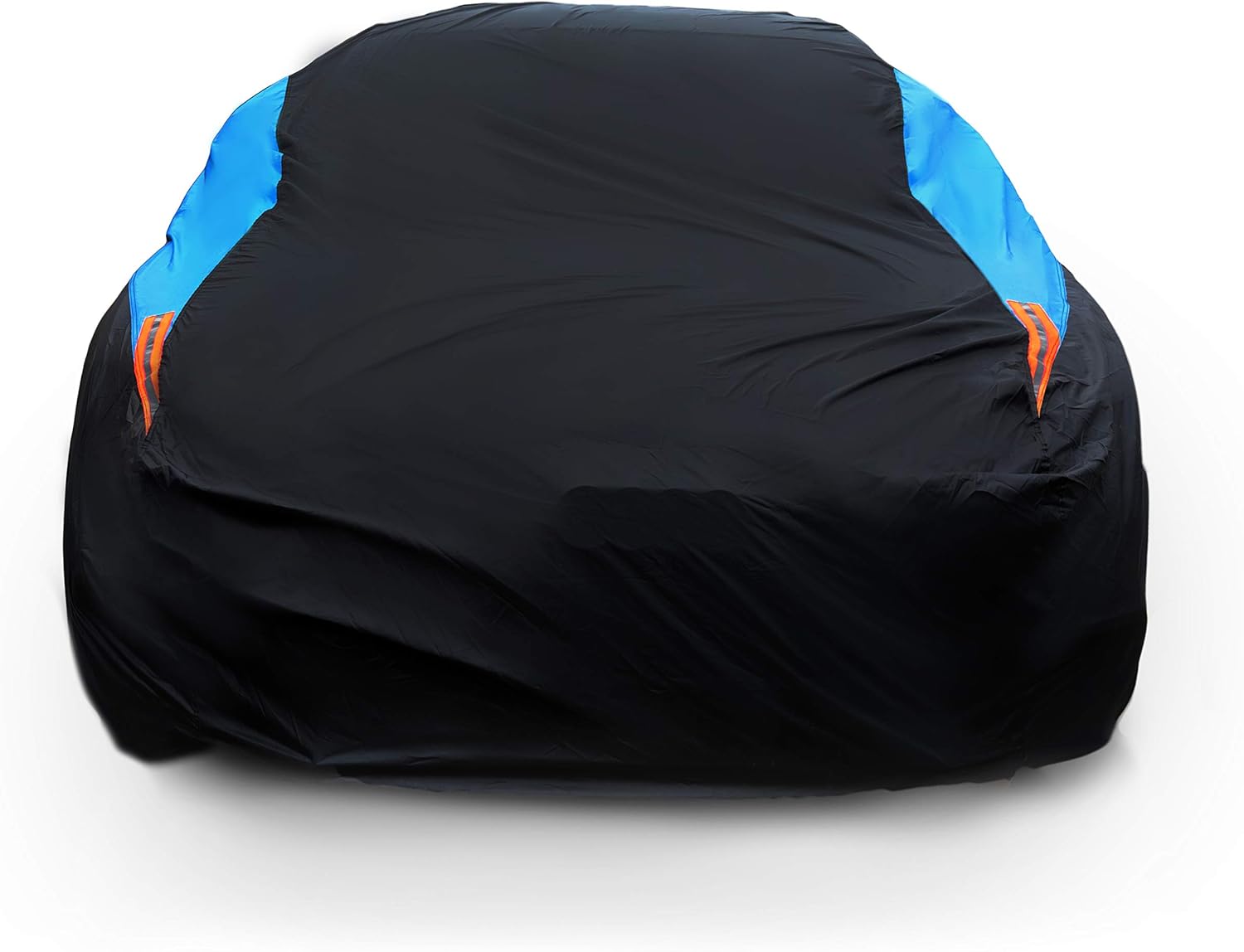
Why You Should Never Store a Wet Car Cover
⚡ Quick Answer
You should never store a wet car cover because trapped moisture creates a dark, warm environment where mold, mildew, and rust thrive. The dampness cannot evaporate. It sits against your car’s paint and metal, causing damage that can cost hundreds of dollars to fix.
What a wet car cover does to your vehicle:
- Mold & mildew: Trapped moisture breeds fungi in as little as 48 hours.
- Rust & corrosion: Water with no exit path eats through chassis metal over time.
- Paint damage: Wet fabric glues to the finish and leaves discoloration, spots, and peeling.
Before storing your car cover, always:
-
✓
Air-dry fully — never fold while still damp -
✓
Store in a cool, dry place — away from sunlight and heat -
✓
Use a breathable storage bag — not sealed plastic
You peel the cover off after a rainstorm, stuff it in a bag, and figure you’ll deal with it later. It’s a small thing — or so it seems. I’m Daniel Brooks, and after years of covering the world of car care and vehicle storage, I can tell you that this one habit quietly destroys more paint jobs and chassis than most owners ever realize.
A wet car cover isn’t just damp fabric. It’s a sealed chamber of trapped moisture pressed directly against your car’s finish. And once you close that bag, the clock starts ticking on mold, rust, and paint damage you won’t see coming.
Here’s exactly what happens — and how to stop it.
📌 Key Takeaways
-
→
Trapped moisture cannot evaporate inside a folded or bagged wet cover, creating a perfect environment for mold within 48 hours. -
→
Wet fabric on paint can bond to your car’s finish and cause discoloration, water spots, and peeling that resists standard polishing. -
→
Rust starts fast — water trapped against the chassis with no airflow accelerates corrosion, especially on classic or older vehicles. -
→
Always air-dry completely before folding and storing — a breathable cover and a dry car are the only safe combination.
What Happens When You Store a Wet Car Cover?
Storing a wet car cover is one of the fastest ways to damage a car that would otherwise be perfectly protected. The moment you fold a damp cover and seal it away, you remove the one thing moisture needs to become harmless: airflow.
Without air circulation, the water has nowhere to go. It sits. It saturates the inner lining of the cover. And if that cover is still draped over your car when this starts, the moisture presses directly against your paint, your trim, and your metal chassis.
Here’s the part most car owners don’t expect. The outside of most car covers sheds water well. But the inside — the lining that actually touches your car — absorbs it. That inner layer stays wet far longer than the outside suggests. You might assume the cover is dry when it feels dry to the touch. It isn’t.
⚠️ Warning
Never store a car cover while it still feels cool or heavy. Cool fabric almost always means the inner lining is still holding moisture, even if the outer surface appears dry.
So what exactly does this trapped moisture do? It sets off a chain of 3 separate damage events — and each one gets worse the longer the cover stays wet.
Does a Wet Car Cover Cause Mold and Mildew?
Yes — and it happens faster than most people expect. According to the EPA’s guide on mold and moisture, mold only needs 4 conditions to grow: temperature above 40°F, spores (which are always present in outdoor air), a nutrient surface, and moisture. A folded wet car cover checks every box.
The inside of a stored cover is dark. It’s warm from the ambient temperature. Mold spores from the outdoor air are already clinging to the fabric. Add trapped moisture, and mold colonies can begin forming within 24 to 48 hours.
You might be thinking: “It’s just the cover, not the car.” Here’s why that’s wrong. When you put a mold-contaminated cover back on your car, you drag those colonies directly across your paint. The rubbing action during installation spreads mold and mildew residue across your finish. This residue is acidic enough to cause staining and discoloration that doesn’t come off with a standard wash.
💡 Key Insight
A wet cover stored in a bag doesn’t just grow mold on the fabric — it becomes a mold delivery system for your paint the next time you use it. Dry the cover first, every single time.
Mildew causes a similar problem but spreads even more aggressively across synthetic cover fabrics. Once mildew takes hold in the fibers, it compromises the cover’s UV and waterproofing coatings. Your cover becomes less effective — permanently — even after you clean it.
The next section covers a threat that’s even harder to reverse than mold.
Can a Wet Car Cover Cause Rust and Corrosion?
A wet car cover pressed against your vehicle’s chassis is one of the most corrosion-friendly conditions you can create. Water that can’t evaporate doesn’t just sit there harmlessly. It activates an electrochemical reaction with bare or thinly painted metal — and rust begins.
Here’s what makes this worse for covered vehicles specifically. A cover creates a sealed microclimate around your car. In normal outdoor exposure, rain hits the car and dries. Under a wet cover, the water is held in constant contact with the metal surface. There’s no wind to pull moisture away. There’s no sun to evaporate it. The rust has ideal conditions and all the time it needs.
Classic cars are especially vulnerable. Their paint is often thinner, their metal less treated, and their chassis less rust-proofed than modern vehicles. Expert restorers consistently warn that even a few hours of trapped moisture on a classic can cause corrosion that takes 10 times longer to reverse than it took to form.
48 hrs
Mold can begin forming inside a sealed wet cover
72 hrs
Trapped water on bare metal can start surface rust
100%
Preventable — with a fully dry cover every time
The fix is simple but non-negotiable. Your cover and your car must both be dry before the cover goes on or goes into storage. Letting the cover air-dry flat or on a clothesline for 2 to 4 hours is all it takes to break this chain.
How Does a Wet Car Cover Damage Car Paint?
Paint damage from a wet car cover comes in 2 distinct forms — and both are frustrating to fix. The first is water spots. The second is something car detailers call “bonding,” where wet fabric actually adheres to the clearcoat surface under heat.
Water spots form when mineral-rich water evaporates slowly against the paint. The minerals stay behind. They etch into the clearcoat and create dull, white, ring-shaped marks. These don’t wash off. They require clay bar treatment, light compounding, or in severe cases, wet sanding — all of which are time-consuming and expensive.
Bonding is more serious. When a wet cover sits on a car in direct sunlight, the heat from the sun warms both surfaces. The inner lining, now wet and warm, begins to behave like adhesive against your paint. When you pull the cover off, you can drag the paint’s surface texture with it — or leave behind a textured impression that mirrors the cover’s weave pattern. This is not reversible with a wax and polish alone.
📋 Paint damage signs caused by a wet car cover
-
Water spots: Dull white rings etched into clearcoat — need clay bar or compound to remove. -
Mildew staining: Yellow or brown spots baked into the paint surface by sun heat — extremely difficult to remove. -
Clearcoat bubbling: Prolonged moisture softens paint layers, leading to bubbling and peeling over weeks. -
Weave pattern impressions: Cover fabric texture transfers to paint when wet + heat combines — only wet sanding fixes this.
As automotive journalist Rob Siegel documented in a widely-cited Hagerty guide on car cover best practices, even a high-quality cover doing its UV protection job perfectly caused large yellow spots to appear on his car’s paint — purely because moisture pooled under the cover and was baked in by sun heat. Trapped moisture is the number-one enemy, not the cover itself.
How Do You Properly Dry and Store a Car Cover?
Drying a car cover the right way takes less than 5 minutes of hands-on effort. The waiting time is the only real cost. The key is to never rush the process by folding a cover that still holds any moisture at all.
🔢 Step-by-Step: How to Dry and Store a Car Cover Safely
-
1
Remove the cover carefully
Fold it inward as you remove it so dirt and moisture don’t drag across your paint.
-
2
Hang or spread it flat in a shaded area
Use a clothesline, railing, or porch railing — avoid direct sunlight which degrades UV coatings.
-
3
Flip it inside-out after 1 hour
The inner lining holds moisture longer than the outer surface — turn it over to dry both sides fully.
-
4
Touch-test before folding
Run your hand along the inner surface — if it feels cool or slightly heavy, wait another 30 minutes.
-
✓
Store in a breathable bag in a dry location
A mesh or fabric bag beats sealed plastic every time. Keep it away from heating vents and direct sunlight.
One common mistake: people drape the wet cover back over their car, thinking sunshine will dry it. This is not advisable. The cover traps heat and moisture simultaneously against the paint — exactly the conditions that cause the bonding and mildew damage described above.
Should You Use a Breathable or Waterproof Car Cover?
This is the most important buying decision most car owners get wrong. A 100% waterproof cover sounds like the ultimate protection. In reality, it’s one of the fastest ways to trap moisture and cause the exact damage you’re trying to prevent.
Here’s why. No cover is truly 100% waterproof once installed on a car in real conditions. Condensation forms through a process called osmosis — moisture vapor passes through even sealed fabrics. When that moisture has no way to escape (because the cover is non-breathable), it builds up inside and pools against your paint.
The table below shows how breathable and non-breathable covers compare across the risks that matter most.
A breathable, water-resistant cover gives you rain protection without creating the sealed moisture trap that causes mold, rust, and paint damage over time.
The rule that most experts agree on: choose breathable and water-resistant over fully waterproof — every time. The small amount of rain that might reach your car through a breathable cover is far less damaging than the condensation that builds up under a sealed one.
Recommended Product
EzyShade 10-Layer Car Cover Waterproof All Weather — Full Exterior Covers for Automobiles
★★★★☆ 4.3 out of 5 — 8,972 ratings on Amazon
The EzyShade uses multi-layer construction with a vehicle size chart for a custom-like fit — reducing the pooling and flapping that cause moisture trapping and paint damage.
As an Amazon Associate, we earn from qualifying purchases.
What Most People Get Wrong About Car Cover Storage
Most car cover mistakes aren’t about the cover itself. They’re about 3 assumptions that feel reasonable but cause real damage over time.
Myth 1: “The sun will dry it out while it’s on the car”
Many owners leave a wet cover on the car and assume sunlight will do the work. The opposite happens. Sunlight heats the cover, which heats the moisture inside it. Hot, wet fabric pressed against paint is precisely the condition that causes mildew staining and clearcoat bonding. Never use your car as a drying rack for a wet cover.
Myth 2: “If the outside feels dry, it’s safe to store”
The outer layer of a car cover dries much faster than the inner lining. You can have a completely dry-feeling outer shell while the inside layer still holds significant moisture. Always test the inner surface by touch — or simply wait longer than you think you need to.
Myth 3: “A waterproof cover is always better than a breathable one”
This is the most damaging misconception. A 100% waterproof cover with no breathability creates a sealed moisture chamber around your car. Even when it’s not raining, condensation still forms inside. A breathable, water-resistant cover lets that moisture escape. It’s the professional-standard choice for good reason.
Conclusion
A wet car cover stored away isn’t a minor inconvenience — it’s a slow-moving threat to your paint, your chassis, and the fabric of the cover itself. The damage is preventable with one rule: always dry fully before storing.
Breathable covers, proper drying technique, and a cool dry storage spot cost you nothing extra but save you from rust, mold, and paint repairs that can run into the hundreds. Your cover is only as good as how you treat it between uses.
One thing to do right now: Go check your stored car cover. If it feels cool, heavy, or damp anywhere — take it out, hang it up, and let it air-dry for 2 hours before putting it back.
Frequently Asked Questions
Can I put a car cover on a wet car?
No. Putting a cover on a wet car traps moisture between the fabric and your paint with no way to escape. This creates the ideal conditions for mold, water spots, and rust within 48 to 72 hours. Always dry the car with a microfiber towel first, then apply the cover.
How long does a car cover take to dry?
Most car covers take 2 to 4 hours to air-dry fully when hung in a shaded, ventilated area. The inner lining holds moisture longer than the outer surface, so flip the cover inside-out halfway through. In humid climates, add an extra hour before storing.
Will a car cover cause rust on my car?
A car cover causes rust only when moisture is trapped beneath it with no airflow. A breathable cover used on a dry car will not cause rust. A non-breathable or wet cover used on a wet car creates the perfect sealed environment for corrosion to begin on the chassis and around paint edges.
What happens if mold grows on my car cover?
Mold on a car cover spreads to your paint the next time you install it. The rubbing action during installation drags mold residue across the finish, causing acidic staining. The mold also breaks down the cover’s UV and waterproofing coatings permanently. Wash the cover with mild detergent and allow it to dry fully before reuse.
Is it safe to store a car cover in a plastic bag?
Only if the cover is completely dry first. A sealed plastic bag traps any remaining moisture and accelerates mold growth. A breathable mesh or fabric bag is always the better storage option. Store it in a cool, dry location away from heat vents and direct sunlight to prevent material degradation.
Should I remove my car cover when it rains?
It depends on the cover type. A quality breathable, water-resistant outdoor cover can stay on during rain — it’s designed for this. But once the rain stops, lift the cover edges to allow airflow underneath and let both surfaces dry before the next use. Never leave a wet cover sitting flat against the car for hours after rain ends.
How often should I wash my car cover?
Wash your car cover every 2 to 3 months under normal use, or immediately after heavy mud, bird droppings, or mold are visible. Use cold water and mild, bleach-free detergent on a gentle cycle. Always air-dry — never use a tumble dryer as high heat destroys the waterproofing and UV-resistant coatings.

Daniel Brooks is an automotive writer and product researcher focused on car accessories, car tech, maintenance, and practical driving guides. At Plug-in Car World, he helps drivers make smarter automotive decisions through honest reviews and research-driven content.