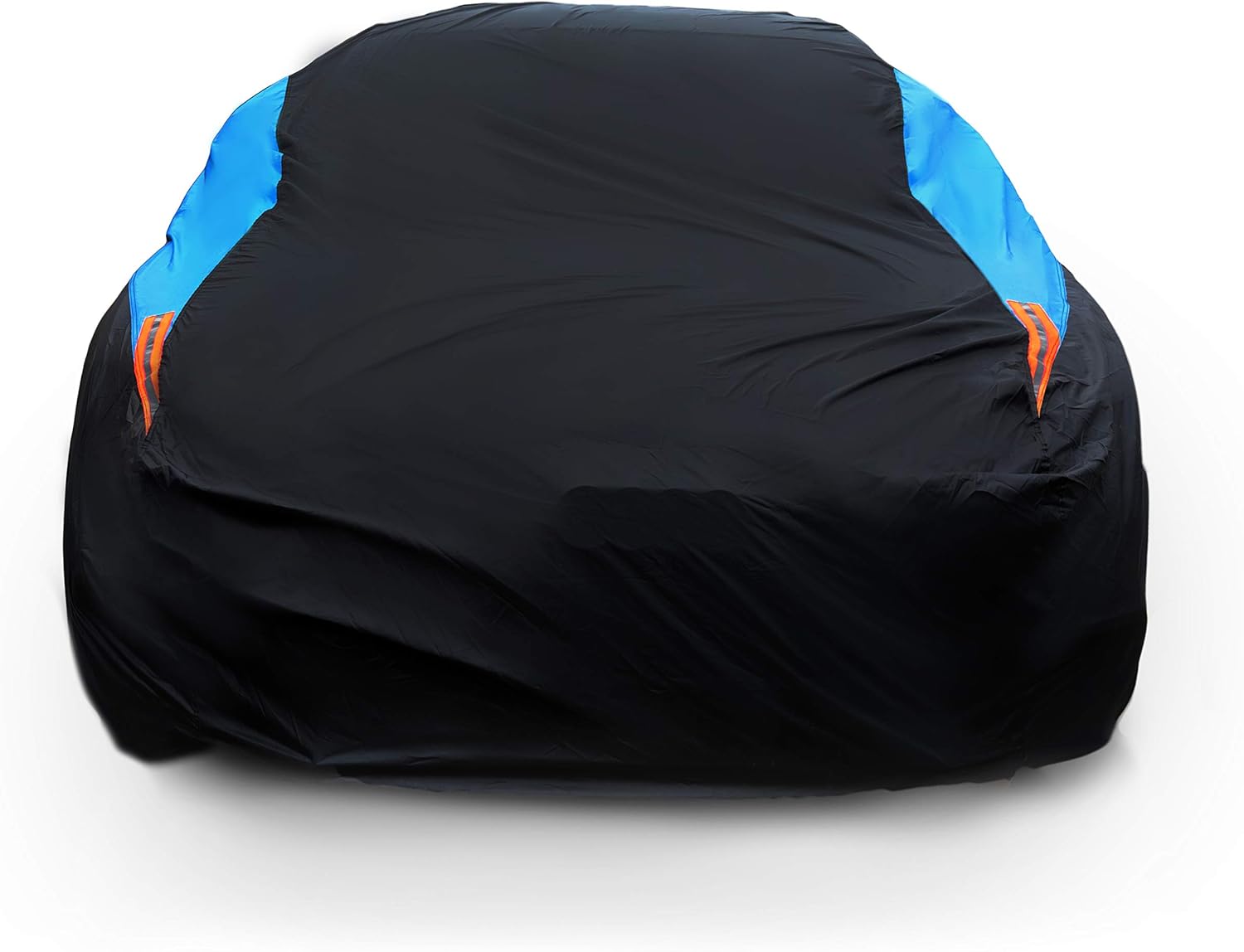
How to Remove Odors From a Car Cover (Without Damaging the Fabric)
Wash the cover with a mild detergent, then soak it in a water and white vinegar solution to kill odor-causing bacteria. Rinse well and air-dry it fully in the sun before storing it. Trapped moisture is almost always the real cause of the smell.
You pull your car cover off and get hit with a sour, musty smell. It’s not your imagination.
I’m Daniel Brooks, and I’ve spent years testing car covers in humid climates where this problem shows up fast. A smelly cover almost always means moisture got trapped somewhere it shouldn’t have.
The good news? You can fix this in an afternoon. Let’s walk through exactly how.
- Odor almost always means trapped moisture, not a “dirty” cover.
- A vinegar soak kills most odor-causing bacteria on contact.
- Sunlight and full airflow are what stop the smell from returning.
- Baking soda helps mask lingering smells but can’t fix deep mildew.
- A cover that still smells after two full cleanings may have failed inside.
Why Does a Car Cover Start to Smell?
A car cover smells because moisture got trapped against the fabric long enough for bacteria or mold to grow. This can happen even with a “breathable” cover.
Think about it like a gym bag. Damp fabric folded up and left alone will always turn sour. Your car cover works the same way.
Rain, morning dew, and condensation from temperature swings are the usual sources. Once that moisture sits under the cover for more than a day, odor-causing microbes start to multiply.
Mildew means an early-stage, powdery mold growth that thrives on damp fabric and gives off a sharp, musty smell.
What’s Actually Causing the Smell Under Your Cover?
The three most common causes are trapped rainwater, condensation, and storing the cover while it’s still damp.
Condensation is the sneaky one. Warm days followed by cool nights cause water vapor to form under the cover, even if it never rained. This is common with covers made from polypropylene or vinyl, since these materials trap heat and moisture more than woven polyester or Tyvek does.
Folding a wet or damp cover into its storage bag is the other big mistake. That bag becomes a sealed, dark, moist pocket, which is close to ideal for bacteria growth.
Is It Mildew or Just a Musty Smell?
You can usually tell the difference by looking, not just smelling. Mildew leaves visible white, gray, or black speckled patches on the fabric surface.
A plain musty smell with no visible spots usually means moisture soaked in and dried without fully airing out. This is easier to fix and rarely needs harsh chemicals.
Here’s a test I use that most guides skip: fold a small section of the cover and press it flat against your nose for a few seconds. If the smell is strong and uniform across the whole fabric, the odor has soaked into the fibers and you’ll need a full soak treatment. If it’s only strong near the hem or a specific patch, you’re dealing with a localized moisture pocket, and spot cleaning that one area is often enough.
How to Remove Odors From a Car Cover Step by Step
The fastest reliable method combines a detergent wash with a vinegar soak, followed by a full sun-dry.
- Shake off loose dirt and debris outdoors before you start.
- Hand wash or machine wash on cold with a mild, non-detergent car wash soap.
- Mix one part white vinegar with four parts water in a large tub or bucket.
- Submerge the cover fully and let it soak for 30 to 45 minutes.
- Rinse thoroughly until no vinegar smell or soap residue remains.
- Lay the cover flat outdoors or hang it in direct sunlight until 100% dry.
Never store the cover until it’s completely dry, including the seams and grommets. Even slightly damp spots will regrow odor within days.
Now let’s look at what to do if this first pass doesn’t fully clear the smell.
What’s the Best Home Remedy for a Smelly Car Cover?
Vinegar works best for freshly musty covers, while enzyme cleaners work better on set-in, older odors.
Here’s how the common options stack up against each other.
| Method | Best For | Limitation |
|---|---|---|
| White vinegar soak | Fresh musty smell, mild bacteria | Weaker against deep-set mildew |
| Baking soda | Absorbing lingering odor after washing | Doesn’t kill mold at the root |
| Enzyme-based cleaner | Old, set-in bacterial odor | Needs several hours of dwell time |
| Direct sunlight | Finishing step, natural disinfecting | Slow, weather-dependent |
Most covers only need the first and last row. Reach for an enzyme cleaner only if the smell survives a full wash and dry cycle.
Can You Use Baking Soda to Deodorize a Car Cover?
Yes, baking soda is a solid finishing step, but it won’t fix the moisture problem on its own.
Baking soda works by neutralizing acidic odor compounds through a simple chemical reaction, according to McGill University’s Office for Science and Society. That’s useful for absorbing lingering smell, but it doesn’t kill mold spores or dry out damp fabric.
Sprinkle it on a fully dry cover, let it sit for a few hours, then shake it out before folding. Skip it entirely on a cover that’s still even slightly damp.
Does Sunlight Really Kill Odor-Causing Mold?
Yes, UV rays help break down mold spores and speed up drying, which is why sun-drying is the last step in nearly every method above.
Flip the cover inside out halfway through drying so both sides get direct sun exposure, not just the outer layer.
According to the U.S. Environmental Protection Agency, the real key to controlling mold long-term is moisture control, not repeated cleaning. That principle applies directly to car covers.
How Do You Stop the Smell From Coming Back?
Prevention comes down to one habit: never put a wet or damp cover back on the car or into storage.
- Check the weather before covering your car overnight.
- Remove the cover after rain and let it dry before reusing it.
- Store it in a breathable bag, never a sealed plastic bin.
- Wash it every 4 to 6 weeks if the car sits outside full time.
A cover made from a breathable material like polyester or Tyvek naturally resists this problem better than vinyl or unlined polypropylene, since trapped moisture has an easier path to escape.
When Should You Replace a Smelly Car Cover?
Replace the cover if the odor returns after two full wash-and-dry cycles or if you see mildew staining that won’t scrub out.
Mildew that has worked into the fabric backing usually can’t be fully removed. At that point, the smell is a sign the material itself has broken down, not a cleaning failure on your part.
If regular washing isn’t cutting it anymore, an enzyme-based fabric odor eliminator can break down set-in bacterial odor that vinegar alone won’t touch, without damaging the cover’s coating.
Your Next Step
A smelly car cover is a moisture problem first and an odor problem second. Wash it, soak it in diluted vinegar, and let it dry completely in the sun before it touches your car again.
Do that once, and stay ahead of damp storage after that, and you likely won’t smell this problem again. I’m Daniel Brooks, and that’s the exact routine I use on my own covers every season.
Frequently Asked Questions
Why does my car cover smell like mildew even after washing it?
The cover probably wasn’t dried all the way through before it was folded or stored. Residual dampness in seams and folds is enough to let the smell come right back. Try re-washing it and drying it fully flat in direct sun.
Can I put a smelly car cover in the dryer?
No, most car cover materials can’t handle dryer heat and will shrink or lose their coating. Air-drying outdoors in the sun is safer and works just as well for odor removal.
Will vinegar damage my car cover’s waterproof coating?
A diluted vinegar soak, one part vinegar to four parts water, is generally safe for most fabric car covers. Always rinse thoroughly afterward and check your cover’s care label if it has a specialty coating.
How often should I wash my car cover to prevent odor?
Every 4 to 6 weeks is a good baseline if your car is parked outside full time. Wash it sooner any time it gets soaked by rain and doesn’t dry within a day.
Does a breathable car cover still get moldy?
Yes, breathable covers reduce the risk but don’t eliminate it, especially if they’re stored damp. Breathability helps moisture escape while the cover is on the car, but it won’t dry out a cover that’s already folded up wet.

Daniel Brooks is an automotive writer and product researcher focused on car accessories, car tech, maintenance, and practical driving guides. At Plug-in Car World, he helps drivers make smarter automotive decisions through honest reviews and research-driven content.