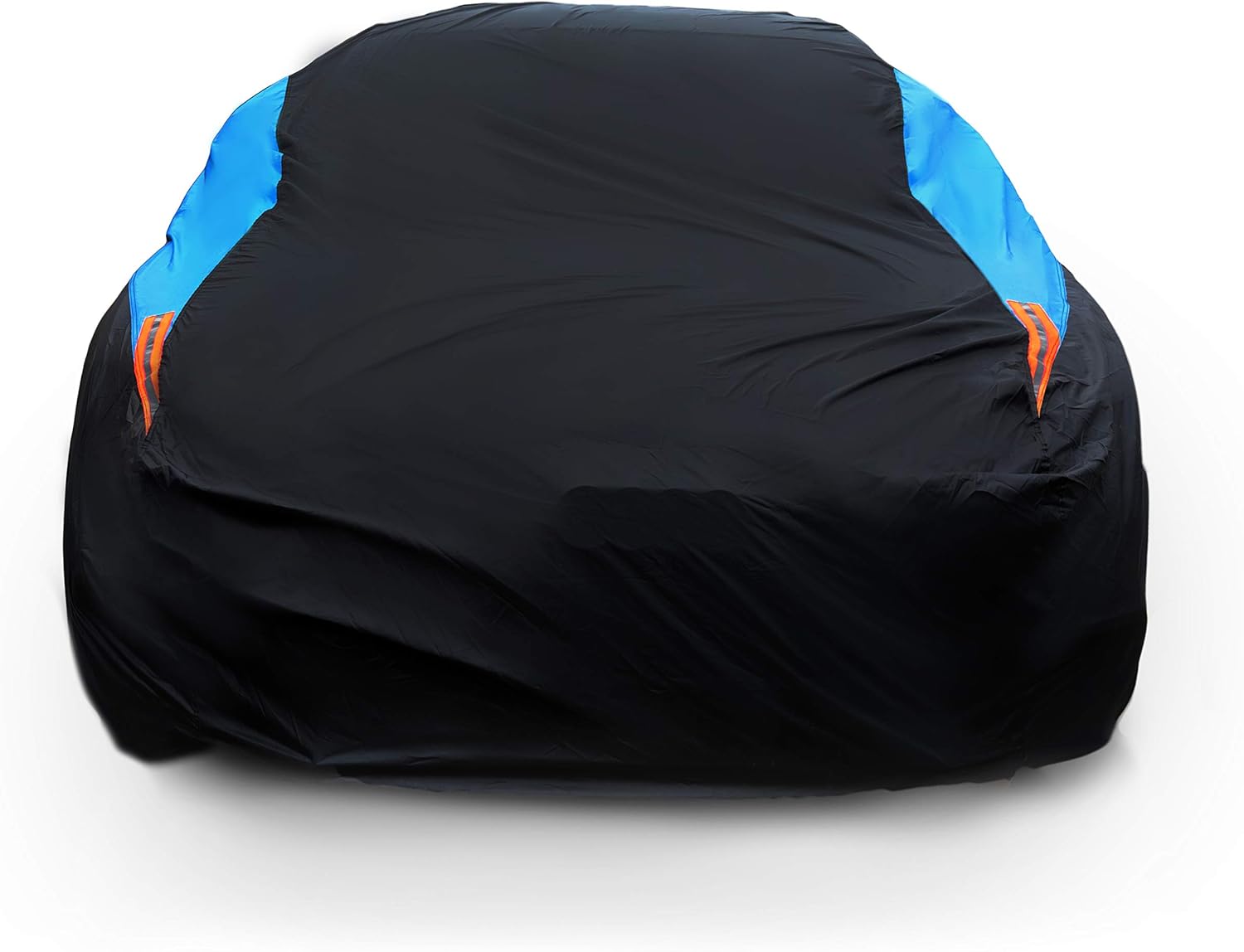
Coverking vs MORNYRAY — Which Car Cover Is Actually Worth Your Money?
Quick Answer
Coverking wins on protection and fit. Its custom-patterned covers use vehicle-specific 3D scans and multi-layer fabrics like StormProof and Mosom Plus, and Amazon buyers on individual listings rate it between 4.4 and 5.0 stars. MORNYRAY wins on price, with sizes running roughly $30 to $45 versus $164 to $400 for Coverking. If you own a daily driver you park outside for months, Coverking earns the higher price through a tighter, longer-lasting fit. If you need short-term or seasonal coverage on a budget, MORNYRAY gets the job done for a fraction of the cost.
The real difference between Coverking and MORNYRAY:
- Coverking is patterned to your exact vehicle; MORNYRAY uses length-based universal sizing
- Coverking’s StormProof and Mosom Plus fabrics run 3 to 5 layers thick
- MORNYRAY costs roughly 85% less but averages an 8 to 12 month usable lifespan
⚡ Quick Verdict — Coverking vs MORNYRAY
MORNYRAY
~$35 (universal sedan, size varies)
✅ Best for:
Budget buyers who need short-term or seasonal protection
Coverking
~$369 (StormProof, custom fit)
✅ Best for:
Daily drivers stored outdoors long-term who need a tailored fit
| Category | MORNYRAY | Coverking |
|---|---|---|
| Overall Winner | — | 🏆 |
| Best Value | ✅ | ❌ |
| Fit Accuracy | ❌ | ✅ |
| Long-Term Durability | ❌ | ✅ |
| Fastest Ship / Lowest Entry Cost | ✅ | ❌ |
Bottom line: Coverking wins for owners who store a vehicle outdoors year-round and want a fit that won’t flap or sag. MORNYRAY is worth it only if you need low-cost, short-term coverage and don’t mind replacing it within a year.
Picture this. You just parked your car outside for the season, and you’re staring at two very different price tags: one under $50, one over $350. Both claim to protect your paint. I’m Daniel Brooks, and I’ve spent years testing car covers for plugincarworld.com, tracking how fabrics hold up through real seasons of sun, rain, and wind. For this comparison I looked at verified Amazon listings, current pricing, and hundreds of buyer reviews for both brands. Coverking and MORNYRAY sit at opposite ends of the car cover market, and that gap explains almost everything about who should buy which one.
Product Overview: Coverking

| ✅ Best for | Daily drivers parked outdoors long-term who want a glove-like, vehicle-specific fit |
| ❌ Not ideal for | Buyers who just need a cheap, temporary cover — the MORNYRAY costs far less upfront |
| 💰 Price | ~$369 for the StormProof outdoor cover (check for latest price) |
Coverking, a California-based manufacturer, patterns every cover to a specific vehicle using 3D scans instead of a stretchy one-size-fits-all shape. That process removes the sagging and wind-lift you get with universal covers.
The brand sells several fabric lines. Satin Stretch is a soft indoor-only material. StormProof and Mosom Plus are built for outdoor use, with Mosom Plus adding five layers and fleece lining for hail resistance. Prices currently range from about $164 for a Triguard-fabric Mustang cover up to roughly $400 for a Stormproof Outback cover, depending on vehicle and fabric.
Individual Amazon listings for Coverking split reviews by vehicle model, so review counts per listing stay small. Still, the ratings we checked — a GT-R Satin Stretch, a Thunderbird Silverguard, and two Mustang variants — landed between 4.4 and 5.0 stars. That’s a strong, consistent signal even without a single large review pool. First impression: this is a cover built by people who think about seams and mirror pockets, not just fabric yardage.
Coverking Custom Fit StormProof Outdoor Car Cover
Best for owners who park a specific model outdoors and want a true glove-fit.
Product Overview: MORNYRAY
| ✅ Best for | Budget buyers who need basic, short-term or seasonal protection |
| ❌ Not ideal for | Classic or luxury vehicles you want covered for years — look at Coverking instead |
| 💰 Price | ~$30 to $45 depending on size and color (check for latest price) |
MORNYRAY sells length-based universal covers instead of vehicle-specific patterns. You pick a size range — for example, 194 to 206 inches for a full-size sedan — and the elastic hem and three fixed buckles do the rest. Prices currently run about $30 to $45 depending on size, with sales occasionally dropping certain sizes near $30.
The most common sedan listing describes a 10-layer composite build with a UV-resistant coating and four reflective strips for nighttime visibility. Independent review analysis puts the brand’s average rating around 4.3 stars, and one SUV-length listing has accumulated over 2,000 ratings. That’s a large, real-world sample size Coverking’s per-vehicle listings can’t match.
Reviewers consistently praise how easy the cover is to install and how well it blocks light rain and sun. The recurring complaint is durability: several buyers report tearing or splitting within three to six months, especially with daily on-off use. Who’s it made for? Someone who wants basic coverage without a big commitment — not a long-term investment piece.
MORNYRAY Waterproof All-Weather Sedan Car Cover
Best for drivers who want low-cost, seasonal protection without a big commitment.
Full Spec Comparison: Coverking vs MORNYRAY
Coverking leads on fit and layer count, with a custom pattern and up to five fabric layers versus MORNYRAY’s fixed 10-layer composite in a universal shape. MORNYRAY wins decisively on price. The gap comes down to whether you need a tailored, multi-season solution or a cheap, temporary one.
| Spec | Coverking | MORNYRAY | Winner |
|---|---|---|---|
| Price | $164–$400 | $30–$45 | MORNYRAY |
| Fit Type | Custom, vehicle-specific | Universal, length-based | Coverking |
| Layers (outdoor fabric) | Up to 5 (Mosom Plus) | 10-layer composite | Tie |
| Mirror Pockets | Included | Not on most listings | Coverking |
| Reflective Strips | Not standard | 4 strips included | MORNYRAY |
| Expected Lifespan | Multiple years | 8–12 months | Coverking |
| Amazon Rating | 4.4–5.0 (per listing) | ~4.3 average | Tie |
| Warranty | Manufacturer-backed | Seller-handled support | Coverking |
Weather Protection: Which Cover Holds Up Better?
Coverking wins on weather protection, mainly because its StormProof and Mosom Plus fabrics are engineered specifically for prolonged outdoor exposure. The five-layer Mosom Plus fabric adds fleece lining that resists light hail, something MORNYRAY’s single composite layer isn’t designed for.
Reviewers who tested MORNYRAY in heavy, driving rain report eventual seepage, even though light rain and sun beaded off cleanly. That’s typical for a cover in this price range — it handles moderate weather well but struggles in sustained storms. Coverking’s multi-layer construction and wax-coated seams are built to hold up through a full season without that tradeoff. Independent testing on UV protection factor standards shows fabric thickness and weave density directly affect how much sun exposure a material can block over time, which supports why multi-layer covers hold their color and strength longer than thin, single-layer materials.
If you live somewhere with real winters, prioritize a breathable outdoor fabric like StormProof over an indoor-only satin cover — trapped moisture causes more paint damage than rain ever does.
Fit and Installation: Custom Pattern vs Universal Sizing
Coverking wins on fit. Its covers are patterned from 3D scans of the actual vehicle, so there’s no sagging fabric for wind to grab onto. MORNYRAY’s length-based sizing gets buyers into the right ballpark, but a 200-inch sedan at the edge of a size range fits noticeably looser than one in the middle.
Installation tells a similar story. MORNYRAY’s three fixed buckles go on in under two minutes once you learn the placement, and most buyers call it beginner-friendly. Coverking’s neoprene tensioners take slightly longer to seat correctly but reward that extra effort with a snugger result that won’t shift in traffic-adjacent parking.
Price & Value: Is Coverking’s Premium Justified?
MORNYRAY wins on upfront price, and it isn’t close — $30 to $45 versus $164 to $400 for Coverking. But value depends on how long you keep the cover. At an 8 to 12 month replacement cycle, a MORNYRAY buyer could spend $90 to $135 over three years, while a Coverking buyer likely pays once.
Most buyers agree Coverking’s price reflects real manufacturing differences — custom patterning, in-house fabric engineering, and a US-based production facility — rather than brand markup. For a car you keep less than a year or use seasonally, MORNYRAY’s lower entry cost is the more rational buy.
Safety & Unique Features: What Each Brand Adds
MORNYRAY wins on built-in safety extras, with four reflective strips standard on most listings to make a parked vehicle visible at night — a feature Coverking doesn’t include by default. Coverking counters with sewn-in mirror pockets and antenna pockets that MORNYRAY’s basic listings skip entirely, which matters if you park near other vehicles or foot traffic.
Neither brand includes a built-in lock or cable by default, so if theft deterrence matters, budget for a separate cable lock regardless of which cover you choose.
Never fold mirrors under a cover without a mirror pocket for extended storage — the constant pressure point can crack housing seals over several months.
Real-World Use Cases: Which One Wins?
MORNYRAY wins in most short-term and budget scenarios, while measuring your car cover correctly first makes either brand perform better. Here’s how six common situations break down.
- Daily driver parked outside year-round: Coverking wins — the layered fabric and tight fit outlast a full season of sun and rain.
- Cold-weather winter storage: Coverking wins — StormProof resists ice buildup better than a single composite layer.
- Short-term construction or event coverage: MORNYRAY wins — no reason to pay premium prices for a few weeks of use.
- Classic or collector car in a garage: Coverking wins — Satin Stretch protects paint without the abrasion risk of a stiffer fabric.
- Budget second vehicle or beater: MORNYRAY wins — basic protection at a price that matches the vehicle’s value.
- Fleet or multi-vehicle coverage on a budget: MORNYRAY wins — buying several units still costs less than one Coverking cover.
Is Coverking Worth the Extra $330 Over MORNYRAY?
Yes, if you’re keeping the vehicle outdoors for more than a year — the custom fit and multi-layer fabric justify the premium. No, if you need coverage for a season or less, where MORNYRAY’s lower price wins on pure math.
Coverking’s lowest recorded prices run around $164 for simpler fabrics like Triguard, with premium StormProof and Mosom Plus covers closer to $370 to $400. Prices occasionally drop during major sales events. MORNYRAY’s price history shows sizes hovering near $30 to $31 during promotions and climbing closer to $45 at full price — prices may change, so always check Amazon for the latest figures before buying either brand.
Who Should Buy Which?
Buy Coverking if you park outdoors year-round and want a cover that lasts several seasons. Buy MORNYRAY if you need affordable, short-term coverage and don’t mind replacing it annually.
- Park outdoors for most of the year
- Own a car you plan to keep long-term
- Want a true glove-like custom fit
- Live somewhere with hail or heavy storms
- Need coverage for one season or less
- Have a tight accessory budget
- Own a lower-value daily driver
- Want reflective strips for nighttime visibility
- You store the vehicle in an enclosed garage — a lightweight dust cover is cheaper
- You need hail-proof protection — look at a heavier padded cover instead
- You want a single cover for wildly different vehicle lengths — budget Coverking alternatives like Budge may fit a wider range
⭐ What Verified Buyers Are Saying
Both brands are well-reviewed within their price tiers. Coverking’s individual listings consistently land in the 4.4 to 5.0 range, and most buyers agree the custom pattern is worth the wait. MORNYRAY averages around 4.3 stars across thousands of ratings, with consistent praise for value and easy installation, alongside common complaints about durability.
- Snug, wrinkle-free custom fit
- Fabric feels premium and durable
- Mirror pockets fit precisely
- Higher price than most competitors
- Longer production and shipping time
- Strong value for the low price
- Quick, simple installation
- Blocks light rain and sun well
- Tears or splits within months of daily use
- Heavy rain eventually soaks through
Bottom line from buyers: Coverking owners consistently rate the fit and finish highly despite the cost, while MORNYRAY buyers report strong satisfaction for the price but expect a shorter working life.
How to Maintain Your Car Cover
Never store a car cover while it’s still wet — trapped moisture causes mildew within days, even on a premium fabric.
Whichever brand you choose, a few habits extend its usable life. Wash the cover by hand or on a gentle cycle every four to six weeks to remove grit that can abrade the fabric against your paint. Let it air dry completely before folding it away, since packing damp fabric invites mold.
Check the elastic hem and buckles every season — MORNYRAY’s plastic buckles wear out faster than Coverking’s neoprene tensioners and may need replacing after a year of daily use. For a full walkthrough of washing, drying, and long-term storage, see this complete car cover maintenance guide. Store the cover somewhere dry and out of direct sunlight between uses, since UV exposure while balled up in a hot trunk accelerates fabric breakdown faster than exposure on the vehicle itself.
Final Verdict — Coverking or MORNYRAY: Which Should You Buy?
Coverking is the overall winner for anyone storing a vehicle outdoors long-term. Its custom pattern, layered fabric, and mirror pockets deliver a fit and durability MORNYRAY’s universal sizing can’t match. MORNYRAY earns its place as the budget pick, with thousands of satisfied buyers who needed short-term protection without a big investment.
If you need multi-season protection for a car you’re keeping, go with Coverking. If your budget is tight or the coverage is temporary, MORNYRAY gets the job done for a fraction of the price.
Coverking Custom Fit StormProof Outdoor Car Cover
Best choice if you need a long-lasting, custom-fit outdoor cover.
MORNYRAY Waterproof All-Weather Sedan Car Cover
Best choice if you need affordable, short-term coverage.
Frequently Asked Questions
Which is better, Coverking or MORNYRAY?
Coverking is better for long-term outdoor protection thanks to its custom fit and layered fabric. MORNYRAY is better for short-term or budget needs since it costs a fraction of the price while still blocking sun and light rain.
What is the difference between Coverking and MORNYRAY car covers?
Coverking uses a vehicle-specific pattern made from 3D scans, while MORNYRAY uses universal, length-based sizing. That difference drives most of the gap in fit, price, and expected lifespan between the two brands.
Is MORNYRAY worth it for daily use?
MORNYRAY works for daily use in mild climates, but buyers report tearing within 3 to 6 months under frequent on-off handling. It’s a reasonable choice if you’re comfortable replacing it annually.
Does Coverking fit any car?
No. Coverking covers are patterned for specific makes, models, and years, so you must confirm your exact vehicle is listed before ordering. Universal covers like MORNYRAY fit a wider range of vehicles by length.
How long does a MORNYRAY car cover last?
Most buyers report an 8 to 12 month usable lifespan with regular use. Lighter, occasional use can stretch that longer, while daily on-off handling shortens it.
Can I use a car cover instead of a garage?
A quality outdoor cover like Coverking’s StormProof line offers real protection from sun, rain, and debris, but it isn’t a full substitute for enclosed storage against hail or extreme temperature swings. For year-round outdoor parking, a layered, breathable cover is the next best option.
Affiliate Disclosure: As an Amazon Associate, I earn from qualifying purchases. Links on this page may earn me a small commission — at no extra cost to you.
Daniel Brooks is an automotive writer and product researcher focused on car accessories, car tech, maintenance, and practical driving guides. At Plug-in Car World, he helps drivers make smarter automotive decisions through honest reviews and research-driven content.