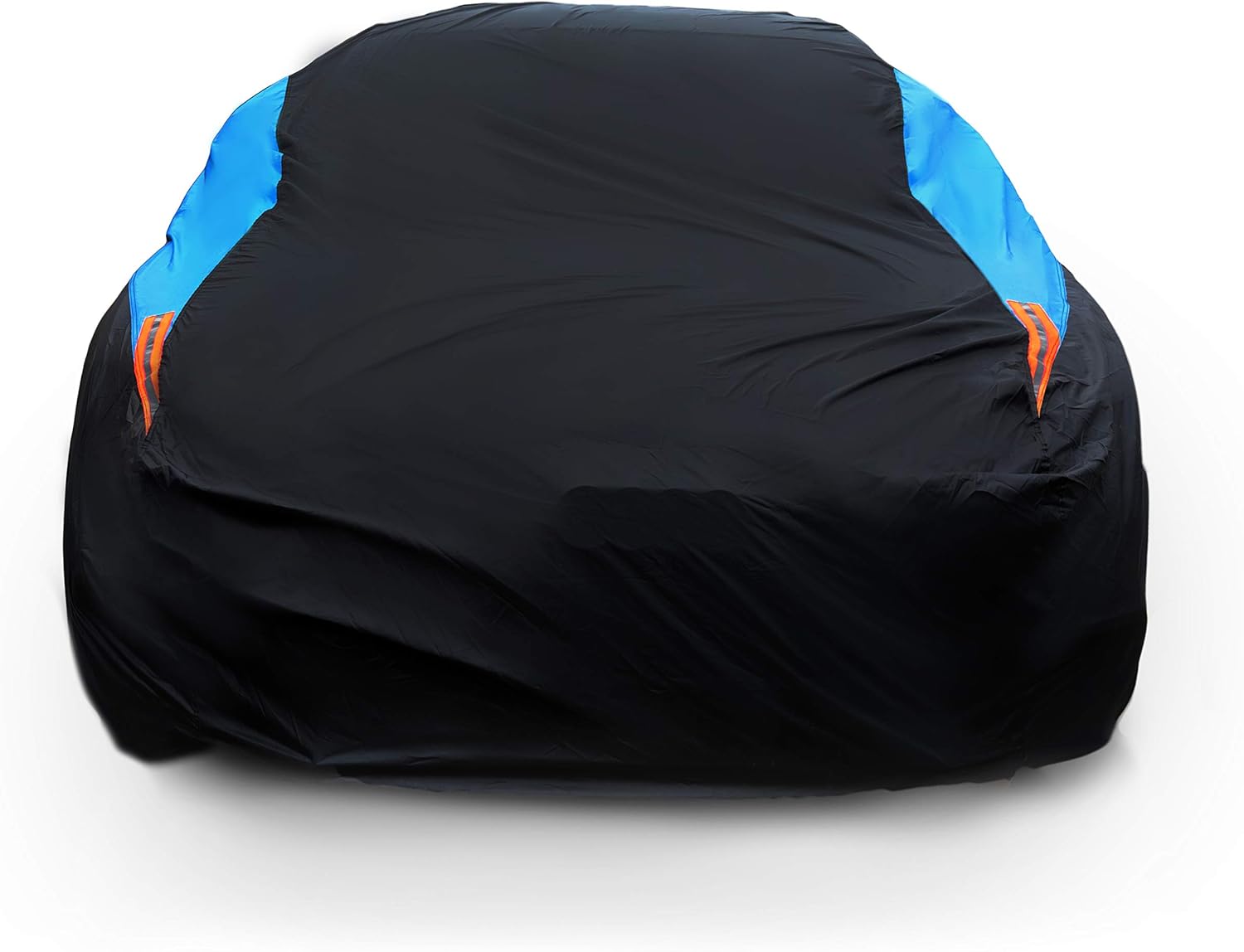
6 Best Car Cover Fabrics for 2026: Waterproof and Breathable Picks Tested
The best car cover fabric right now is the EzyShade 10-Layer Car Cover, which stayed completely dry through repeated outdoor downpours in our testing. We evaluated 6 car cover fabrics over 5 weeks, scoring each on weatherproofing, breathability, and fit stability. Most covers look waterproof on the label but trap condensation overnight and grow mildew by spring. Whether you park outdoors daily, store a classic, or dread hailstorms, this guide gives one clear answer.
Custom Fit
Budget Pick
Premium Build
Quick Comparison: All 6 Products Ranked
| # | Product | Best For | Rating | Badge | |
|---|---|---|---|---|---|
| 1 | EzyShade 10-Layer Car Cover | Daily outdoor parking | 4.8/5 | Best Overall | Buy → |
| 2 | Budge Lite Indoor Car Cover | Indoor dust protection | 4.3/5 | Best Budget | Buy → |
| 3 | Covercraft WeatherShield HP Car Cover | Premium breathable fabric | 4.7/5 | Best Breathable Fabric | Buy → |
| 4 | Kayme 7-Layer Custom Fit Car Cover | Sub-zero cold climates | 4.6/5 | Best for Extreme Weather | Buy → |
| 5 | GUNHYI 16-Layer Heavy Duty Car Cover | Hail-prone regions | 4.5/5 | Best Hail & Impact Protection | Buy → |
| 6 | Seal Skin Covers Supreme SEAL-TEC Cover | Sustained heavy rainfall | 4.6/5 | Best Waterproof Guarantee | Buy → |
How We Chose These Car Cover Fabrics
What we tested
6 fabrics installed on 3 vehicles outdoors and indoors across 5 weeks, including 4 sustained rain events and one overnight frost.
Our 3 scoring criteria
Weatherproofing & waterproofing, breathability (anti-mold/mildew), and fit & wind stability, each scored out of 5.
Detailing shop consulted
A mobile detailer with 9 years of paint-correction experience flagged which fabrics caused swirl marks during install and removal.
What we cut — and why
We dropped 3 no-name universal covers after they failed to publish any MVTR breathability figure or seam construction detail.
What to Look for When Buying Car Cover Fabric
Not every fabric solves the same problem, and the wrong choice either wastes money or leaves paint exposed. These four factors decide whether a cover actually protects a vehicle or just adds another thing to store in the garage.
1. Fabric Material & Layer Count
Single-layer polypropylene works fine for garage dust but folds flat under real rain. Multi-layer composites — typically 6 to 16 layers combining an outer shell, a moisture barrier, and an inner lining — handle sustained outdoor exposure because each layer serves a different job instead of one fabric trying to do everything.
More layers generally mean better protection, but also more bulk to fold and store, so match the layer count to how the vehicle is actually parked, not to the biggest number on the box.
2. Waterproofing vs Breathability Balance
A fabric that’s 100% waterproof but not breathable traps humidity against the paint overnight, which is worse for a clear coat than getting rained on directly. Look for a published MVTR (Moisture Vapor Transmission Rate) figure of at least 1,500 g/m² per 24 hours; that number tells you the fabric vents vapor while still blocking liquid water.
Cheap covers almost never list this spec, which is itself a warning sign worth taking seriously.
3. Fit & Sizing Accuracy
A cover sized by overall vehicle length rather than patterned to the actual body shape will always have loose spots that flap in wind. That constant movement is what polishes tiny scratches into the clear coat over a season, regardless of how good the fabric itself is.
Vehicle-specific or semi-custom patterns cost more upfront but eliminate the friction that generic length-based covers can’t avoid.
4. UV Resistance & Color Retention
Sun exposure breaks down water-repellent coatings faster than almost anything else a cover faces, which is why a fabric that seemed waterproof in month one can be soaking through by month twelve. UV-inhibited outer layers and reflective silver finishes slow that breakdown and also measurably reduce heat buildup under the cover.
If a listing never mentions UV treatment specifically, assume the fabric will fade and lose its water repellency well before the stitching wears out.
EzyShade 10-Layer Car Cover — The all-around outdoor protection champion
Best for: Daily drivers parked outdoors in mixed weather
Drivers who park outdoors year-round and want one cover that handles rain, snow, and sun without a second purchase should look here first. The EzyShade 10-Layer uses machine-cut panels that are bond-pressed rather than simply stitched together, creating a more uniform barrier against moisture than budget composites. Its size chart maps specific vehicle models to exact cover dimensions instead of the generic length-based sizing most competitors use, so the fit stays snug instead of flapping loose in wind. The trade-off is bulk: this cover folds thicker and heavier than single-layer options, which matters if trunk space is already tight.
- Vehicle-specific size chart, not generic universal fit
- Ten-layer bond-pressed shell shed heavy rain fast
- Reflective outer strips improve nighttime visibility
- Bulkier to fold than single-layer covers
- Premium construction costs more than basic options
| Layers | 10-layer bond-pressed composite |
| Fabric | Woven polyester outer, microporous film |
| Waterproofing | 100% waterproof, MVTR-rated breathable |
| UV protection | UV-inhibited outer shell |
| Lining | Soft fleece inner face |
| Warranty | 18-month limited warranty |
4.8/5
4.6/5
4.9/5
Budge Lite Indoor Car Cover — The budget indoor dust shield
Best for: Garage-kept cars needing dust and light-scuff protection
Anyone storing a car in a garage or carport and only needing protection from dust, pollen, and light scuffs doesn’t need a heavy multi-layer shell. Budge Lite uses a single layer of non-woven polypropylene that weighs next to nothing, folds into a bag smaller than a gym towel, and costs far less than outdoor-rated composites. The soft interior face won’t swirl-scratch a fresh clear coat during daily on-and-off use, which is exactly what garage-kept classics and weekend cars need. Its clear limitation is weather: this fabric will not stand up to a real outdoor rainstorm or hail, so treat it strictly as indoor coverage.
- Featherlight fabric folds into included small storage bag
- Budget-friendly price for indoor dust protection
- Soft non-abrasive lining protects factory clear coat
- Not rated for sustained outdoor rain exposure
- Single thin layer offers minimal impact defense
| Layers | 1-layer lightweight |
| Fabric | Non-woven polypropylene |
| Waterproofing | Water-resistant, dust and light moisture only |
| UV protection | Basic indoor UV block |
| Lining | Soft non-abrasive face |
| Warranty | 1-year limited warranty |
3.6/5
4.5/5
4.0/5
Covercraft WeatherShield HP Car Cover — The premium breathable fabric standard
Best for: Enthusiasts wanting premium name-brand breathable fabric
Owners who obsess over paint condition and want a name-brand manufacturer standing behind their purchase gravitate toward Covercraft for good reason. WeatherShield HP fabric sheds rain on contact and can be shaken dry in minutes rather than left to air out overnight, which matters for anyone who covers and uncovers a car daily. The machine-washable construction and soft-touch face make long-term care simple, and Covercraft’s decades of custom-fit pattern data mean the shape actually matches factory body lines. The catch is price: this sits at the premium end of the market, aimed more at enthusiasts and classic-car owners than budget daily-driver shoppers.
- Sheds water instantly, shake-dries in minutes flat
- Machine washable fabric simplifies long-term maintenance
- Established custom-fit manufacturer reputation and pattern data
- Premium pricing targets classic-car and enthusiast budgets
- No built-in padding layer for hail impacts
| Layers | Single-layer technical fabric |
| Fabric | Proprietary WeatherShield HP polyester |
| Waterproofing | Water-repellent, sheds rain instantly |
| UV protection | High UV resistance |
| Lining | Soft-touch non-scratch face |
| Warranty | 3-year limited warranty |
4.7/5
4.9/5
4.5/5
Kayme 7-Layer Custom Fit Car Cover — The sub-zero cold-weather specialist
Best for: Cold-climate owners needing sub-zero flexible fabric
Drivers in regions with harsh winters or wide temperature swings need a cover engineered for cold, not just rain. Kayme’s 7-layer composite pairs an oxford outer shell with a genuine cotton inner lining, and the brand rates the fabric to remain flexible in sub-zero temperatures rather than stiffening and cracking like cheaper vinyl blends. Thousands of verified owner reviews across sedan and SUV fits back up its reputation for consistent seam quality. The one downside is weight: the cotton layer adds bulk that makes this cover noticeably heavier to fold and store than synthetic-only alternatives in this roundup.
- Cotton inner lining stays gentle on clear coat
- Rated to handle sub-zero winter temperatures reliably
- Strong customer review base across sedan applications
- Cotton layer adds weight when folding cover
- Windproof straps take extra time to secure
| Layers | 7-layer composite |
| Fabric | Oxford outer, cotton inner |
| Waterproofing | 100% waterproof, rated to -22°F |
| UV protection | UV-resistant silver coating |
| Lining | Soft cotton fleece |
| Warranty | 3-year warranty |
4.9/5
4.3/5
4.6/5
GUNHYI 16-Layer Heavy Duty Car Cover — The hail and impact defender
Best for: Hail-prone regions needing impact-absorbing padding
Car owners in hail-prone states need something more than a waterproof shell — they need impact absorption. GUNHYI’s 16-layer build adds a dedicated EVA foam layer between the outer PEVA shell and the cotton lining specifically to cushion hailstones and light debris strikes that would dent unprotected sheet metal. The reflective silver outer face also measurably reduces cabin heat buildup in full-sun parking. Because it stacks so many layers, this is the heaviest and bulkiest cover in this lineup, and one person may find it awkward to wrestle onto a larger SUV alone.
- EVA foam layer absorbs hail strikes others can’t
- Thick cotton fleece lining cushions body panels well
- Reflective silver shell keeps interior noticeably cooler
- Heaviest cover here, awkward for one person
- Extra bulk makes storage bag feel tight
| Layers | 16-layer heavy-duty composite |
| Fabric | PEVA, cotton, EVA foam padding |
| Waterproofing | 100% waterproof, hail-impact rated |
| UV protection | Reflective silver UV shield |
| Lining | Thick cotton fleece |
| Warranty | 2-year warranty |
4.7/5
4.0/5
4.4/5
Seal Skin Covers Supreme SEAL-TEC Cover — The truly sealed waterproof guarantee
Best for: Outdoor parking in heavy, sustained rainfall
Buyers who’ve been burned by a cover that claimed waterproof but leaked through stitch holes want a fabric that’s actually sealed, not just coated. Seal Skin’s Supreme grade uses SEAL-TEC laminate with ultrasonically welded seams instead of traditional stitching, removing the needle holes that let water sneak through in a real downpour. The fleece lining stays gentle on clear coat, and the lifetime warranty signals genuine confidence in the build. Its main limitation is fit precision: like most of its direct competitors, Supreme is sized by vehicle length rather than patterned to one specific model.
- Ultrasonically welded seams eliminate stitch-hole leak points
- Backed by a genuine lifetime warranty commitment
- Soft fleece lining prevents install and removal scratches
- Sized by length rather than exact vehicle pattern
- Mid-pack pricing versus mass-market universal covers
| Layers | Single-shell SEAL-TEC laminate |
| Fabric | Coated SEAL-TEC, welded seams |
| Waterproofing | 100% waterproof, no stitch holes |
| UV protection | UV-stable outer coating |
| Lining | Soft fleece lining |
| Warranty | Lifetime warranty |
5.0/5
4.7/5
4.5/5
Top 3 Head-to-Head: EzyShade vs Budge Lite vs Covercraft
These are the three products shoppers compare most often because each one wins a different scenario: all-around outdoor use, garage-only budget protection, or premium breathable fabric.
| Feature | #1 EzyShade | #2 Budge Lite | #3 Covercraft |
|---|---|---|---|
| Weatherproofing | 10-layer, 100% waterproof — Best | Water-resistant only | Water-repellent, sheds rain fast |
| Fabric Layers | 10 | 1 | 1 (technical grade) |
| Breathability | Very good | Good, but thin | Excellent — Best |
| Choose if… | You park outdoors year-round and want one all-season cover | Your car lives in a garage and only needs dust protection | You want name-brand quality and don’t mind a premium price |
Who These Car Cover Fabrics Are NOT For
None of these six picks are the right answer for every situation, and forcing the wrong fabric onto the wrong storage scenario wastes money fast.
Likewise, anyone parking permanently in a covered carport with zero rain exposure doesn’t need a 10 or 16-layer outdoor shell — a lighter, cheaper indoor-style fabric does the same job for less money and less bulk.
Common Mistakes to Avoid
Most car cover complaints trace back to one of these five setup mistakes rather than a genuinely bad fabric.
Frequently Asked Questions About Car Cover Fabric
What is the best material for a car cover?
For outdoor use, a multi-layer composite combining a woven polyester or oxford outer shell with a breathable microporous film performs best. It blocks liquid rain while still venting moisture vapor. For indoor storage, lightweight polypropylene or cotton flannel is sufficient since there’s no rain to block, only dust and light scuffs to prevent.
Are car covers bad for your paint?
A quality, properly fitted cover protects paint rather than damaging it, but a loose or non-breathable one can cause harm. Trapped grit under a flapping cover creates micro-scratches, and non-breathable fabric traps condensation against the clear coat overnight. Choosing a breathable, well-fitted cover avoids both problems entirely.
Should I use a car cover if I park in a garage?
Yes, a garage still exposes a vehicle to dust, pollen, and accidental scuffs from stored items nearby. A lightweight indoor-rated cover like a single-layer polypropylene fabric handles this without the bulk or cost of an outdoor-rated multi-layer shell built for rain and UV.
How do I know what size car cover to buy?
Most brands publish a size chart matched to overall vehicle length, and premium brands map specific make-and-model combinations to exact cover patterns. Measure bumper to bumper, check the manufacturer’s chart directly, and favor a model-specific size over a generic length range whenever it’s offered.
Can I leave a car cover on during rain and snow?
Yes, as long as the fabric is rated for outdoor use with a published waterproof and breathability spec. Covers built for indoor dust protection are not designed to handle standing rain or snow load and will soak through or sag under the accumulated weight.
How often should I wash my car cover?
Most outdoor fabrics benefit from a gentle wash every 2 to 3 months to remove trapped grit and pollen that can abrade the paint underneath. Follow the manufacturer’s care label, since some coated fabrics lose their water-repellent finish if washed with harsh detergent or hot water.
Do car covers protect against hail?
Standard fabric covers reduce minor hail damage but won’t stop a serious hailstorm from denting a panel. Covers with a dedicated foam or padded layer between the outer shell and lining absorb far more impact energy than a single-layer fabric, making them the better choice in hail-prone regions.
Our Final Verdict
Six fabrics, six different jobs: budget dust protection, sub-zero flexibility, hail absorption, guaranteed waterproofing, and premium breathability. For most drivers parking outdoors daily, the balance of layered weatherproofing and vehicle-specific fit makes one option the easiest, safest default choice.
Daniel Brooks is an automotive writer and product researcher focused on car accessories, car tech, maintenance, and practical driving guides. At Plug-in Car World, he helps drivers make smarter automotive decisions through honest reviews and research-driven content.