
Why Does My New Steering Wheel Cover Smell?
Quick Answer
A new steering wheel cover often smells because its rubber, synthetic leather, adhesives, dyes, or packaging release odors after manufacturing and storage. This smell usually fades with ventilation and gentle cleaning, but a strong chemical odor, sticky surface, visible damage, or physical irritation deserves closer attention.
Common reasons your cover smells
- Manufacturing residue: Rubber compounds, dyes, and finishing agents can leave a noticeable new-product odor.
- Synthetic materials: PU leather, PVC, and rubber may release volatile compounds that create a plastic-like smell.
- Sealed packaging: Trapped odors can become more noticeable when you first open the package.
- Heat buildup: A hot car interior can intensify odors from some cover materials.
- Moisture or contamination: Damp packaging, storage conditions, or residue can produce a musty or unusual smell.
What should you do?
- Air the cover in a shaded, well-ventilated place and clean it according to the manufacturer’s instructions.
- Avoid driving if fumes cause headaches, dizziness, nausea, or breathing irritation; leave the vehicle and get fresh air.
- Return or replace the cover if the odor remains unusually strong, the material deteriorates, or cleaning does not help.
A new steering wheel cover should improve your grip and comfort, not fill your car with a strong chemical smell. If you’ve just fitted one and noticed a rubbery, plastic-like, or sweet odor, the material and storage conditions are good places to start.
In this guide, I’ll explain the likely causes, how long the smell may last, and what you can safely do to remove it. I’ll also cover material differences and the warning signs that mean you shouldn’t keep using the cover.
In This Guide
Why Does a New Steering Wheel Cover Smell?
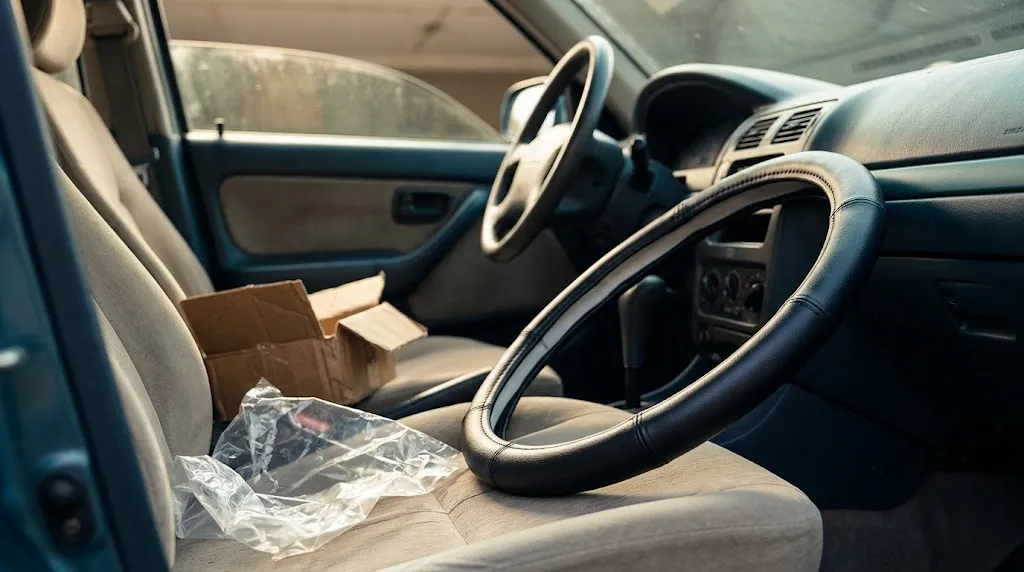
A new steering wheel cover usually smells because of its materials, manufacturing residues, or trapped packaging odors. The smell alone doesn’t prove that the product is dangerous, but its intensity and how it changes over time matter.
1. Rubber and synthetic materials release odors
Many budget-friendly covers use natural or synthetic rubber, PVC, or polyurethane (PU) leather. These materials can have a distinct factory-fresh odor that becomes noticeable when you bring the cover into a small, enclosed cabin.
Some products also contain plasticizers, colorants, bonding agents, and surface finishes. Their exact composition varies, so two covers that look similar can smell completely different.
2. Manufacturing residues remain on the surface
During production, manufacturers may use finishing compounds, dyes, or adhesives to create the desired texture and appearance. Small amounts of residual odor can remain after the cover leaves the factory.
A strong smell doesn’t identify a particular chemical, however. Without product-specific testing or ingredient information, you can’t determine the exact substance simply by smelling it.
3. Packaging traps the smell
Many steering wheel covers arrive tightly wrapped in plastic or sealed inside a box. Limited airflow allows odors to collect around the material during shipping and storage.
Once you open the package, the accumulated smell may seem stronger than expected. Giving the cover time to air out can help if packaging is the main cause.
4. Heat makes the odor more noticeable
A parked car can become hot, especially in direct sunlight. Higher temperatures can increase the release of some volatile compounds, making a new cover smell stronger inside the cabin.
For that reason, a cover that smells mild indoors may become unpleasant after the car sits in the sun. Don’t deliberately heat the cover to speed up deodorizing; use shade and ventilation instead.
5. Storage conditions introduce other odors
A musty smell may point to moisture exposure or contamination rather than ordinary new-product odor. Strong perfume-like, oily, or solvent-like smells may also come from packaging or finishing products.
Check for damp patches, discoloration, sticky areas, or damaged seams. If anything looks unusual, contact the seller before installing or continuing to use the cover.
Section takeaway: Most new-cover odors come from the material, manufacturing, or sealed packaging, but smell alone cannot confirm chemical safety.
How Long Should the Smell Last?
A mild new-product smell may become less noticeable over the first few days as the cover gets fresh air. There is no reliable universal timeline because materials, manufacturing methods, packaging, and storage conditions differ.
Instead of relying on a fixed number of hours, watch whether the odor is gradually fading. A smell that stays strong, worsens, or causes discomfort is a reason to stop using the cover and investigate.
What the smell may tell you
| What you notice | Possible explanation | What to do |
|---|---|---|
| Mild rubber or plastic odor | New material or trapped packaging odor | Ventilate and monitor for improvement. |
| Smell becomes stronger in heat | Heat may increase odor release. | Keep the cover out of direct sunlight while airing it. |
| Musty or damp odor | Possible moisture or storage contamination | Inspect the material and contact the seller if needed. |
| Strong solvent-like odor | Possible chemical residue or unusual material emissions | Stop using it and seek product-specific guidance. |
| Burning smell, smoke, or melting | Possible overheating or another vehicle problem | Stop driving safely and investigate the source urgently. |
Remember that these are clues, not definitive diagnoses. You cannot identify a chemical or determine its toxicity from its odor alone.
Section takeaway: A fading odor is more reassuring than a persistent or worsening one, but symptoms and visible material damage should always take priority over the timeline.
How Can You Remove Steering Wheel Cover Smell Safely?
The safest approach is to remove the cover if necessary, ventilate it, and clean it only with a method approved for its material. Avoid harsh chemicals and don’t try to cover the smell with fragrance.
Step 1: Remove the cover if it comes off safely
If the cover is removable, take it off according to the product instructions and air it out separately. This keeps the odor from building up around the driver’s seat and makes inspection easier.
Don’t force a tightly fitted cover or use sharp tools near the steering wheel. If removal risks damaging controls, trim, or the steering wheel itself, ask the seller or a qualified installer for advice.
Step 2: Air it out in a shaded location
Place the cover in a clean, dry area with good airflow, away from direct sunlight, heat sources, children, and pets. Follow any storage or ventilation guidance supplied by the manufacturer.
Allow fresh air to circulate naturally. Don’t use a hair dryer, heater, or other artificial heat source to accelerate the process.
Step 3: Clean the material gently
Check the care label before using water or a cleaner. If the manufacturer permits damp cleaning, use a soft cloth and a small amount of mild soap solution, then remove residue with a clean, lightly damp cloth.
- PU or PVC leather: Use a compatible cleaner and avoid soaking the material.
- Genuine leather: Use a leather-safe cleaner recommended for the finish.
- Rubber or silicone: Follow the product’s cleaning instructions and avoid aggressive solvents.
- Suede or microfiber: Check the manufacturer’s guidance before applying liquid, since some finishes can stain or change texture.
Let the cover dry completely before reinstalling it. Never apply a cleaning solution directly to the steering wheel’s electronic controls, horn switches, or airbag cover.
Step 4: Ventilate the car interior
If the smell has transferred into the cabin, park in a secure, well-ventilated place and open the doors or windows when conditions permit. Keep the vehicle unattended only when it’s safe to do so.
After removing the odor source, ventilate the cabin before driving again. If the smell persists even after the cover is removed, check for another source rather than assuming the cover is responsible.
Step 5: Decide whether to return it
Contact the seller if the smell remains intense after reasonable airing and manufacturer-approved cleaning. Ask about the material composition, care instructions, and return or replacement options.
Don’t continue using a cover that leaves a sticky residue, sheds material, irritates your skin, or produces fumes that make you feel unwell. Replacing it is more sensible than trying increasingly aggressive cleaning methods.
Safety tip: Never mix cleaning products or use gasoline, paint thinner, acetone, bleach, or strong solvents on a steering wheel cover. These substances can damage the material, leave additional residues, or create their own hazardous fumes.
Section takeaway: Ventilation and material-compatible cleaning are the best first steps. If the odor is strong or causes symptoms, stop using the cover instead of trying to mask it.
Which Steering Wheel Cover Materials Smell the Most?
A steering wheel cover is a removable or fitted layer placed over the original steering wheel to change its grip, appearance, or comfort. Its material plays a major role in how it feels, how you clean it, and what kind of new-product odor you might notice.
There isn’t a universal ranking of materials by smell. Formulation and manufacturing quality can matter as much as the material category.
| Cover material | Possible new-product odor | Care considerations |
|---|---|---|
| Natural or synthetic rubber | Rubbery or tire-like | Use gentle cleaning and avoid incompatible solvents. |
| PU leather | Plastic-like or chemical | Avoid excessive moisture and abrasive cleaners. |
| PVC or vinyl | Plastic-like, sometimes sharp | Follow product-specific cleaning instructions. |
| Genuine leather | Natural hide or tanning-product odor | Use a cleaner suitable for the leather finish. |
| Suede or microfiber | Fabric, dye, or finishing odor | Avoid soaking and follow the care label. |
| Silicone | Usually material-dependent; some products have a noticeable odor | Clean with a compatible, non-abrasive method. |
Does a more expensive cover smell less?
Not necessarily. A higher price doesn’t guarantee low emissions, better material composition, or a completely odor-free product.
Instead, look for clear material descriptions, care instructions, seller contact information, and a sensible return policy. If odor is a major concern, ask the manufacturer whether it provides emissions information or product-specific safety documentation.
Can a steering wheel cover affect grip?
Yes. A cover that feels greasy, sticky, slippery, or unusually soft can affect how securely you hold the wheel, regardless of whether it smells.
Check that the cover fits the wheel diameter specified by the manufacturer and doesn’t rotate, bunch up, or obstruct steering-wheel controls. A correctly fitted cover should not interfere with your ability to steer safely.
Section takeaway: Choose a cover for reliable fit, comfortable grip, clear material information, and appropriate care instructions—not price or smell alone.
When Is the Smell a Warning Sign?
A mild odor that steadily fades is generally less concerning than a persistent, intense, or irritating smell. You should stop using the cover if it causes symptoms, shows signs of deterioration, or makes the cabin uncomfortable to breathe in.
Watch for physical symptoms
Some airborne chemicals can irritate the eyes, nose, throat, or respiratory system. The odor itself cannot tell you which compounds are present or whether the concentration is harmful.
Leave the vehicle and get fresh air if you experience symptoms such as:
- Headaches, dizziness, or nausea.
- Burning or watering eyes.
- Throat irritation, coughing, or breathing discomfort.
- A rash or irritation after handling the cover.
If symptoms are severe, persistent, or include difficulty breathing, seek urgent medical assistance. Don’t re-enter a vehicle with strong fumes just to investigate the smell.
Inspect the cover for physical changes
A new cover should remain structurally sound and provide a dependable grip. Remove it from service if you notice:
- Sticky, oily, or powdery residue that returns after appropriate cleaning.
- Cracking, melting, peeling, or unusual discoloration.
- Loose stitching, exposed inner material, or sections that separate.
- A fit that slips or interferes with the horn or steering-wheel controls.
These signs don’t prove toxicity, but they can indicate a product-quality or fitment problem. Photograph the issue and contact the seller or manufacturer for guidance.
Could the smell come from something else?
Yes. If the odor continues after you remove the cover, check for other possible sources without putting yourself at risk.
- Cabin accessories: Air fresheners, adhesive mounts, and recently installed trim can produce their own odors.
- Cleaning products: Interior sprays and polish may leave a lingering fragrance or chemical smell.
- Electrical or mechanical problems: A burning-plastic smell accompanied by smoke, unusual heat, or electrical faults requires prompt attention.
Don’t assume a burning smell comes from the cover. Stop in a safe location, switch off the vehicle when appropriate, and seek professional help if you suspect an electrical or mechanical fault.
For vehicle safety information, consult the National Highway Traffic Safety Administration (NHTSA). For general information about airborne chemical exposure, the CDC’s National Institute for Occupational Safety and Health provides useful occupational health resources.
Pro tip: If your vehicle has a heated steering wheel, check the vehicle manual and cover manufacturer’s compatibility guidance before using an aftermarket cover. An unsuitable cover may interfere with heating performance or cause material damage.
Section takeaway: Symptoms, material deterioration, slipping, and burning odors matter more than how new the cover is. Stop using a suspect product and investigate the source safely.
How Can You Prevent the Smell From Returning?
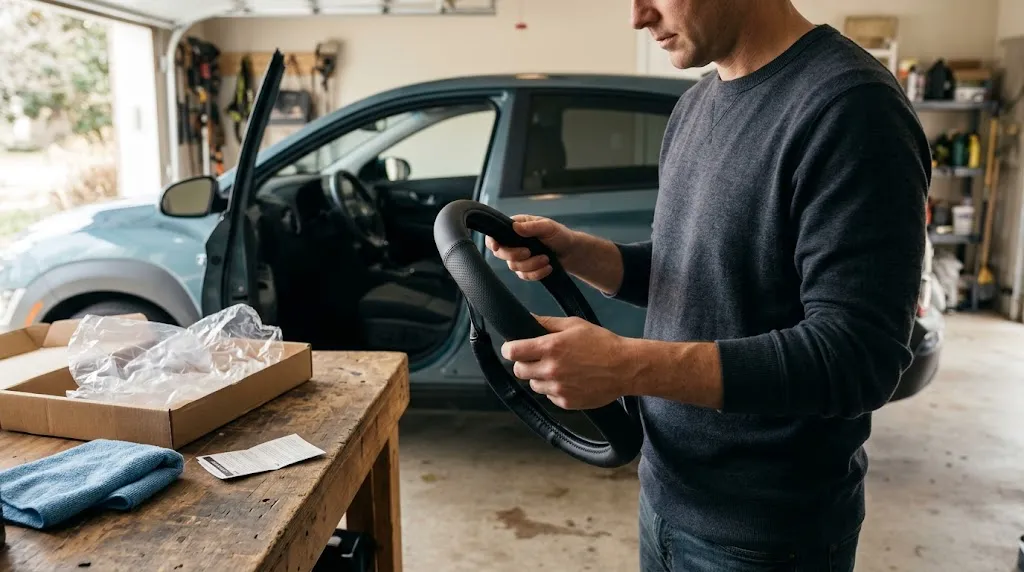
The best way to prevent persistent odors is to choose a suitable cover, keep it clean, and avoid trapping moisture or chemical residues inside the vehicle. A few simple checks before installation can save you from dealing with an unpleasant smell later.
Check the product before installing it
Open the packaging in a well-ventilated area and inspect the cover before fitting it. Check the seams, surface finish, care label, and material description for anything unusual.
If the odor is overpowering straight out of the package, don’t assume you must tolerate it. Contact the seller before installation, particularly if the product lacks clear material information or has visible defects.
Keep the steering wheel and cover clean
Sweat, skin oils, food residue, and cleaning products can contribute to unpleasant smells over time. Clean the cover as needed using a method compatible with its material.
- Wipe away surface dirt with a suitable soft cloth.
- Remove cleaner residue according to the product instructions.
- Let any cleaned surfaces dry completely.
- Inspect the cover periodically for wear, loose seams, and changes in grip.
Avoid common deodorizing mistakes
Some popular odor-removal tricks can make the problem worse. Don’t apply baking soda, vinegar, perfume, essential oils, or household disinfectants indiscriminately to the cover.
These substances may stain finishes, leave residues, or introduce additional odors. If the manufacturer doesn’t approve a particular treatment, stick with ventilation and compatible cleaning methods.
Air fresheners are also a poor substitute for removing the original odor source. The National Capital Poison Center’s Poison Control resource provides general guidance about exposure to household and consumer products.
Make a sensible replacement decision
If you’ve aired and cleaned the cover correctly but the odor remains strong, replacing it may be the simplest option. Choose a product with transparent material information, reliable fitment guidance, and a clear return policy.
Don’t sacrifice steering control for a particular style or price. The cover must stay secure during normal driving and remain compatible with the original steering wheel and its controls.
Section takeaway: Prevention starts before installation. Inspect the cover, follow its care instructions, and replace it if persistent odor or material defects make it unsuitable for use.
Frequently Asked Questions
Is the smell from a new steering wheel cover toxic?
Not necessarily. A new-cover odor may come from rubber, synthetic materials, adhesives, dyes, or packaging, but smell alone cannot establish toxicity. If the fumes are strong or cause irritation, stop using the cover, ventilate the area, and contact the manufacturer for product-specific safety information.
How long does a new steering wheel cover smell last?
A mild manufacturing or packaging odor may fade over the first few days, but there is no guaranteed timeline. Material composition, storage conditions, and ventilation all affect how long it lasts. A persistent or worsening odor warrants further investigation rather than indefinite waiting.
Can I wash a new steering wheel cover to remove the smell?
Sometimes, but the correct method depends on the material. Follow the manufacturer’s cleaning instructions and use only compatible products. Avoid soaking leather, using harsh solvents, or machine-washing a cover unless the manufacturer specifically permits it.
Why does my steering wheel cover smell worse when the car gets hot?
Heat can increase the release of some volatile compounds from synthetic materials, making their odor more noticeable inside a closed cabin. Keep the cover in a shaded, ventilated place while airing it out. If the smell becomes intense or causes symptoms, stop using it.
Will the smell go away if I leave the windows open?
Ventilation can help disperse odors and may speed up the reduction of a mild new-product smell. However, it won’t necessarily resolve an ongoing emissions or contamination problem. Remove the suspected source and avoid driving if the fumes cause discomfort or irritation.
Should I return a steering wheel cover that smells like chemicals?
Consider returning it if the odor is unusually strong, persists after reasonable ventilation, or accompanies sticky residue, cracking, or other defects. Stop using it if it causes symptoms. Ask the manufacturer about its materials and safety documentation rather than trying stronger cleaning chemicals.
Can I use an air freshener to hide the smell?
It’s better to remove the source than mask it. Air fresheners introduce additional fragrance compounds and may make the cabin less comfortable for sensitive occupants. Ventilate the vehicle, remove the cover if appropriate, and investigate any odor that persists.
Final Takeaway: Don’t Ignore a Strong New-Cover Smell
A new steering wheel cover can smell because of its rubber, synthetic leather, manufacturing residues, or sealed packaging. In many cases, ventilation and gentle, material-safe cleaning are enough to make the odor less noticeable.
Still, a strong chemical smell isn’t something you need to put up with. Stop using the cover if it causes irritation, deteriorates, or interferes with your grip, and contact the seller about a replacement.
My advice is simple: prioritize a secure fit, clear material information, and a comfortable driving environment over appearance alone. Your steering wheel is a critical control, so the cover should never compromise safe handling.

Daniel Brooks is an automotive writer and product researcher focused on car accessories, car tech, maintenance, and practical driving guides. At Plug-in Car World, he helps drivers make smarter automotive decisions through honest reviews and research-driven content.
