
What Are the Best Steering Wheel Covers to Keep Hands Warm?
Quick Answer
The best steering wheel covers to keep hands warm are thick fleece, plush microfiber, and genuine sheepskin covers for passive insulation, while a compatible heated steering wheel cover provides active warmth. Choose a snug, non-slip cover that matches your wheel size and check your vehicle manual before fitting any cover over a factory-heated steering wheel.
What to look for
- Best overall: A soft fleece or plush microfiber cover for everyday winter comfort without an electrical connection.
- Best insulation: A dense sheepskin cover that reduces the cold sensation of a chilly steering rim.
- Best active warmth: A vehicle-compatible heated cover used exactly as its manufacturer instructs.
- Best for heated wheels: A thin, low-pile cover only when the vehicle and cover manufacturers explicitly permit it.
- Best for control: A correctly sized cover with a secure, anti-slip inner surface and manageable thickness.
Before you buy
- Measure the outside diameter of your steering wheel and confirm the product’s stated fit range.
- Never drive with a loose, rotating cover or a powered heated cover connected contrary to its instructions.
A cold steering wheel can make a winter morning drive uncomfortable before the cabin heater has time to warm up. The right steering wheel cover can soften that first chilly grip, improve comfort, and help you maintain a natural hold on the wheel.
In this guide, I’ll compare the main warm-cover materials, explain when heated options make sense, and cover fitment, maintenance, and safety checks. The goal is to help you choose a cover that feels warmer without compromising steering control.
In This Guide
- How do steering wheel covers keep your hands warm?
- Which steering wheel cover materials are best for winter?
- Are heated steering wheel covers better than insulated covers?
- How do you choose the right warm steering wheel cover?
- Are winter steering wheel covers safe to use?
- How do you clean and maintain a winter steering wheel cover?
- Frequently asked questions
How Do Steering Wheel Covers Keep Your Hands Warm?
A steering wheel cover is a removable or fitted layer of material placed around the outer steering wheel rim to change its feel, improve grip, or protect its surface. Winter covers help by reducing direct contact with a cold rim and, depending on their construction, trapping a layer of insulating air.
Not every cover produces the same warmth. A thin leather-look cover can feel more comfortable than bare plastic, but a thick fleece or plush cover generally provides more insulation.
Passive insulation versus active heating
Most winter steering wheel covers use passive insulation, meaning they retain some warmth from your hands rather than generating heat. Electrically heated covers use a powered heating element to warm the cover itself.
- Passive covers: Fleece, plush microfiber, and sheepskin reduce the cold feel of the rim without requiring power.
- Thermal fabric covers: Woven or padded materials offer a balance of insulation, grip, and everyday practicality.
- Heated covers: Powered models can supply active warmth, but they introduce electrical connections and additional usage restrictions.
- Thin leather or synthetic leather: These can feel less harsh than bare, cold plastic while maintaining a relatively slim grip profile.
What makes a cover feel warmer?
Material thickness, pile density, surface texture, and how the cover fits all affect comfort. A dense, soft material can feel warmer than a thin synthetic surface, although individual preferences and cabin conditions matter.
There’s a trade-off worth remembering. More padding may provide better insulation, but it also increases the steering wheel’s diameter and can reduce your natural feel for the rim.
For a typical cold morning commute, a properly fitted plush cover is a sensible starting point. Drivers who experience prolonged cold may prefer a vehicle-approved active heating solution rather than relying on insulation alone.
Section Takeaway: Choose passive insulation for simple, cord-free comfort or a compatible active-heating solution when you need additional warmth. Don’t sacrifice a secure grip for a thicker cover.
Which Steering Wheel Cover Materials Are Best for Winter?
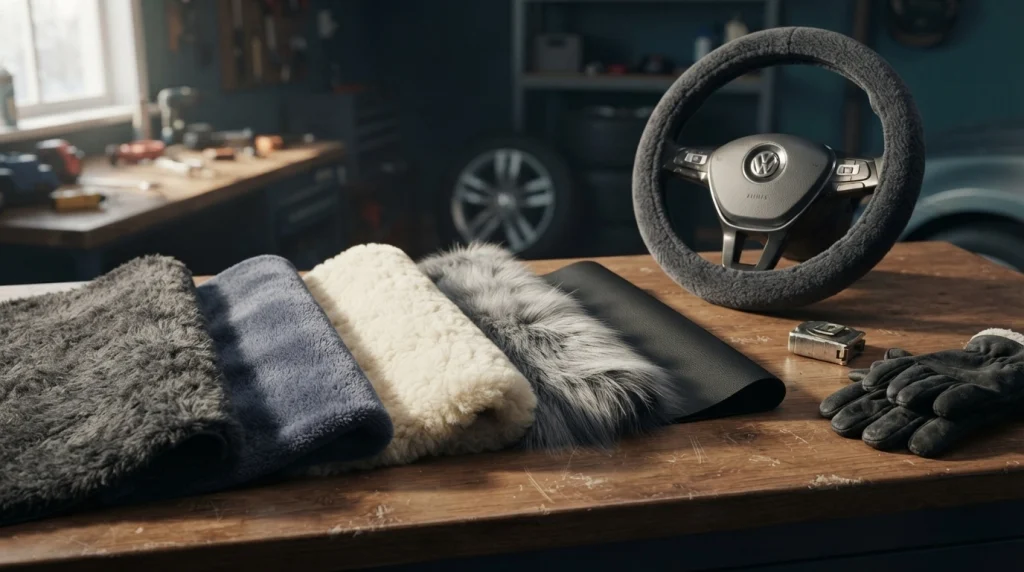
Fleece, plush microfiber, and sheepskin are strong options for cold-weather comfort because their surfaces feel softer against cold hands. Leather and synthetic leather suit drivers who prefer a slimmer, easier-to-clean grip rather than maximum insulation.
Fleece and plush microfiber: Best for everyday comfort
Fleece and plush microfiber covers offer a soft contact surface and useful insulation without electrical components. They’re practical choices for drivers who park outdoors, leave early for work, or want a warmer feel without changing their vehicle’s steering system.
Look for a cover with securely finished seams and a backing that grips the rim. Loose fibers, poor stitching, and an elastic fit that stretches excessively can turn an inexpensive accessory into a frustrating purchase.
These materials may collect dust, lint, and hand oils more readily than smooth synthetic leather. Check the care label before washing, especially if the cover includes rubberized backing or decorative sections.
Sheepskin and faux fur: Best for a warmer, cushioned feel
Sheepskin and faux-fur covers provide a deeper, softer surface that can make a cold rim feel less unpleasant. Dense pile can trap air, but the exact warmth depends on the material, construction, and thickness.
Genuine sheepskin may cost more and require careful cleaning. Faux fur can be more affordable, although shedding, flattening, and inconsistent material quality vary between products.
Choose a short or moderate pile if you want a balance between softness and steering feedback. Very thick or shaggy covers can make the wheel feel bulky, particularly on vehicles with already thick rims.
Leather and synthetic leather: Best for a slimmer grip
Genuine leather and PU leather, a synthetic leather-like material, usually provide a more defined grip than long-pile fabric. They aren’t the strongest insulation options, but they can be comfortable for drivers who dislike fuzzy textures.
Perforated synthetic leather may offer a different hand feel, while textured backing can help keep the cover in place. Inspect the stitching, material quality, and size information rather than relying on product photographs alone.
Winter cover material comparison
| Material | Cold-weather comfort | Main advantage | What to consider |
|---|---|---|---|
| Fleece | Good | Soft, insulating surface | May attract lint or flatten |
| Plush microfiber | Good | Comfortable everyday texture | Check shedding and cleaning instructions |
| Genuine sheepskin | Good to very good | Soft, dense pile | Care needs and added bulk |
| Faux fur | Good | Soft feel at varied price points | Quality and shedding vary |
| Leather or PU leather | Fair | Slimmer, defined grip | Less insulation than thick pile |
| Electrically heated cover | Active heating | Generates heat when powered | Electrical safety and operating restrictions |
These are general material comparisons, not laboratory temperature ratings or independently verified rankings. Manufacturers don’t always publish comparable heat-retention or surface-temperature measurements.
Section Takeaway: Start with fleece or plush microfiber for a practical winter cover. Choose sheepskin for a deeper, cushioned feel, or a slimmer leather-style option if precise grip matters more than insulation.
Are Heated Steering Wheel Covers Better Than Insulated Covers?
Heated covers can provide active warmth, while insulated covers offer a simpler way to make a cold steering wheel more comfortable. Neither is automatically better: your vehicle’s equipment, the manufacturer’s instructions, and your tolerance for added bulk determine the right choice.
When a heated cover makes sense
A heated steering wheel cover may appeal to drivers whose vehicles lack a factory heated steering wheel. Depending on the product, it may use a 12-volt accessory outlet, a rechargeable battery, or another specified power arrangement.
Before buying, verify the manufacturer’s instructions for when the heater may operate. Some powered covers are designed to warm the rim while parked and must be disconnected before driving, while other products may specify different restrictions.
Never assume a product is safe to leave connected simply because it fits a standard accessory socket. Check its electrical ratings, power requirements, temperature controls, and operating instructions.
When a passive cover is the better choice
A passive cover is usually easier to live with because it needs no charging, wiring, or power outlet. It also avoids the electrical and cable-management concerns associated with heated accessories.
For many drivers, the simple benefit is enough: a soft surface feels more comfortable than a cold, hard rim during the first few minutes of a winter drive. The cover continues to provide that tactile difference without needing to warm up.
What if your car already has a heated steering wheel?
Check your vehicle owner’s manual before adding any cover to a factory-heated wheel. An insulating layer may slow heat transfer, and some manufacturers prohibit covers because they can interfere with the heating system’s intended operation.
If the manual and cover manufacturer explicitly approve a cover, a thin, low-pile design may preserve more of the original hand feel than a thick fleece or sheepskin cover. Follow the exact compatibility instructions for your model.
Don’t assume that a cover advertised as heat-resistant is automatically compatible with a heated steering wheel. Material heat resistance and safe operation over an integrated heating element are different questions.
Section Takeaway: A passive cover is the straightforward choice for cord-free comfort. Consider active heating only when the product’s operating instructions fit your driving routine and vehicle requirements.
How Do You Choose the Right Warm Steering Wheel Cover?
The best winter steering wheel cover fits your exact wheel, provides enough insulation, and stays firmly in place during normal steering. Material alone isn’t enough; diameter, rim thickness, inner grip, and compatibility all matter.
1. Measure your steering wheel correctly
Many passenger cars use steering wheels around 14.5–15 inches in outside diameter, but that is only a general reference, not a universal fit specification. Measure your own wheel before ordering.
- Park safely and turn off the vehicle before measuring.
- Measure straight across the outside edge of the steering wheel rim through its center.
- Check the cover manufacturer’s stated diameter range and any rim-thickness restrictions.
- Confirm that the cover accommodates your wheel’s shape, contours, and grip sections.
A universal cover isn’t necessarily a universal fit. If your wheel has a flattened bottom, unusually thick grips, or pronounced thumb contours, check the manufacturer’s compatibility guidance carefully.
2. Check the inner lining and grip
A secure inner surface helps prevent the cover from rotating independently of the steering wheel. Look for a well-fitted construction with appropriate friction or a non-slip lining.
A cover that feels soft in your hands can still be unsuitable if it shifts under pressure. Avoid relying on adhesive strips or improvised fasteners to compensate for incorrect sizing.
3. Consider the added thickness
Thick winter covers can feel comfortable but may make the steering wheel harder to grip naturally. Drivers with smaller hands should pay particular attention to the finished diameter.
Check that you can comfortably wrap your fingers around the rim and operate nearby controls. If the extra padding changes your grip significantly, choose a thinner design.
4. Compare quality rather than appearance alone
Product photos don’t tell you whether a cover will remain secure after months of use. Read the specifications and look for clear information about construction, care, sizing, and warranty coverage.
- Fit: The stated size range must include your wheel measurements.
- Construction: Inspect stitching, seams, and the inner gripping surface.
- Material: Choose a texture and pile depth that suit your hands.
- Cleaning: Confirm that routine cleaning won’t damage the backing.
- Compatibility: Verify any restrictions involving factory heating or vehicle-specific features.
As of 2026, the practical buying rule remains simple: prioritize verified dimensions and secure construction over unsubstantiated claims about warmth or premium quality.
Section Takeaway: Measure first, verify compatibility, and choose a cover that preserves your natural grip. A well-fitting budget cover is preferable to an expensive cover that shifts while driving.
Are Winter Steering Wheel Covers Safe to Use?
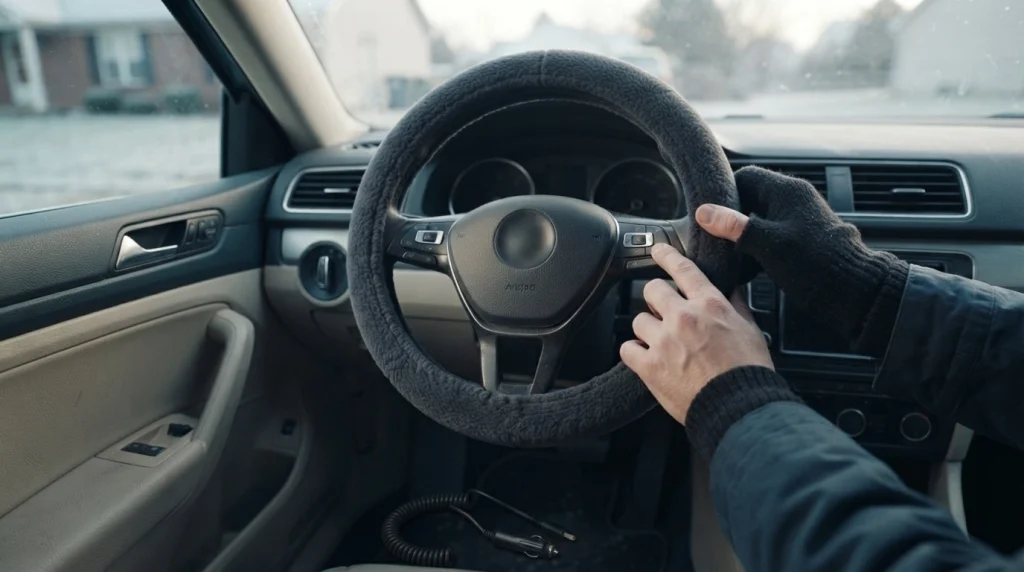
A steering wheel cover should remain securely attached without interfering with steering control, the horn, nearby switches, or any vehicle safety features. A cover that slips, obstructs controls, or conflicts with manufacturer instructions should not be used.
Check these safety points before driving
- Secure fit: The cover must not twist, slide, or bunch up when you grip the rim.
- Clear controls: Keep access to the horn, steering-wheel buttons, and other controls unobstructed.
- Airbag clearance: Never extend a rim cover over the steering wheel’s central airbag module.
- Heating compatibility: Follow the vehicle owner’s manual and the cover manufacturer’s restrictions.
- Electrical safety: Inspect powered covers, cables, and connectors for damage before use.
- Driving visibility: Ensure bulky material doesn’t interfere with your view of the instrument cluster.
The driver’s airbag deploys from the steering wheel center on many vehicles. Keep that area free from added covers, decorations, and accessories that could interfere with deployment.
Pro tip: Review your owner’s manual for steering-wheel accessory restrictions, and consult the NHTSA airbag safety guidance for general information about airbag precautions.
Extra precautions for electrically heated covers
Heated covers deserve additional attention because they combine a hand-contact surface with electrical components. Never use a product with exposed wiring, damaged insulation, unusual odors, or signs of overheating.
- Follow the specified power source and voltage requirements.
- Use any temperature controls exactly as instructed.
- Keep cables away from pedals, moving controls, and other areas where they could snag.
- Disconnect or switch off the heater as required by the manufacturer’s instructions.
- Don’t leave the product operating unattended unless its instructions explicitly permit that use.
Don’t modify a factory steering wheel or its airbag wiring to accommodate a heated cover. If an accessory requires changes to vehicle safety systems, seek advice from a qualified automotive professional before proceeding.
Section Takeaway: Fit and control come before warmth. Remove any cover that slips or obstructs the driver’s controls, and follow all vehicle-specific safety instructions.
How Do You Clean and Maintain a Winter Steering Wheel Cover?
Regular cleaning helps a winter steering wheel cover remain comfortable, hygienic, and secure. The correct method depends on whether the cover uses washable fabric, genuine sheepskin, synthetic leather, or electrical heating components.
Clean the material according to its care instructions
- Fleece and microfiber: Remove loose lint and follow the label’s washing or spot-cleaning instructions.
- Sheepskin: Use only an appropriate cleaning method for the specific hide and backing.
- Faux fur: Remove loose debris gently and avoid excessive heat that could damage synthetic fibers.
- Leather or PU leather: Wipe with a suitable cleaner and avoid soaking the material.
- Heated covers: Follow the electrical product’s cleaning instructions and disconnect power before any permitted cleaning.
Never assume that a cover is machine washable just because its outer fabric looks like ordinary fleece. Its lining, elastic, seams, or heating components may not tolerate immersion or a washing machine.
Inspect the fit as the material ages
Fabric and elastic can stretch, while some synthetic materials can crack, peel, or lose their original texture. Check the cover periodically for loose seams, worn backing, flattened padding, and signs of movement.
After cleaning, allow the cover to dry fully before reinstalling it. Moisture trapped between the cover and steering wheel can contribute to unpleasant odors and material deterioration.
Remove seasonal covers carefully
If you use a thick cover only during winter, remove it when you no longer need the extra insulation. Store it clean and dry, following any folding or storage guidance supplied by the manufacturer.
Check the exposed steering wheel for residue, moisture, or surface damage before reinstalling a different cover. Don’t use harsh cleaners on leather or other finishes without confirming compatibility.
Section Takeaway: Keep the cover clean, dry, and firmly fitted. Replace it if the lining deteriorates or the material begins to move independently of the wheel.
Frequently Asked Questions
What are the best steering wheel covers to keep hands warm?
Fleece, plush microfiber, and sheepskin covers are strong passive options for cold-weather comfort. If you need active heating, consider a compatible heated cover only when its operating instructions suit your vehicle and driving routine.
Do steering wheel covers really keep your hands warm?
Yes, insulated covers can reduce the cold sensation of a steering wheel by adding a softer layer between your hands and the rim. They don’t generate heat, however, so their effectiveness depends on the material, thickness, and surrounding conditions.
Is fleece or leather better for winter driving?
Fleece generally provides more insulation and a softer surface, while leather and synthetic leather offer a slimmer, more defined grip. Choose fleece when warmth is the priority, or a thin leather-style cover when you prefer less bulk.
Are heated steering wheel covers worth buying?
They may be worthwhile when your vehicle lacks a factory heated steering wheel and you want active warmth. Check the power requirements, operating restrictions, temperature controls, and compatibility information before buying, and never assume the cover can remain connected while driving.
Can I put a winter cover on a factory-heated steering wheel?
Only if your vehicle owner’s manual and the cover manufacturer’s instructions permit it. Insulating materials can reduce heat transfer, and some vehicle manufacturers prohibit covers over heated steering wheels. Never assume a thick cover is compatible simply because it fits.
How do I know what size steering wheel cover to buy?
Measure the outside diameter of your steering wheel through its center and compare that measurement with the cover’s stated fit range. Check rim thickness and wheel shape, too, because diameter alone doesn’t guarantee a secure fit.
Can a steering wheel cover become dangerous if it is too loose?
Yes. A loose cover can rotate or shift under your hands, reducing your ability to control the steering wheel predictably. Stop using a cover that moves independently of the rim and replace it with one designed for your wheel’s measurements.
Final Takeaway: Choose Warmth Without Losing Control
The best steering wheel cover for cold weather depends on how much insulation you need and how you prefer to grip the wheel. For most everyday drivers, a snug fleece or plush microfiber cover offers a straightforward way to make chilly mornings more comfortable.
Choose sheepskin if you prefer a deeper, cushioned surface, or consider active heating if your vehicle and the product support it safely. If your car already has a heated steering wheel, verify compatibility before adding another layer.
Measure your wheel, inspect the inner grip, and check the manufacturer’s instructions before ordering. A warm steering wheel is useful, but secure steering control always comes first.

Daniel Brooks is an automotive writer and product researcher focused on car accessories, car tech, maintenance, and practical driving guides. At Plug-in Car World, he helps drivers make smarter automotive decisions through honest reviews and research-driven content.
