
Steering Wheel Cover vs. Steering Wheel Wrap: What’s the Difference?
Quick Answer
A steering wheel cover is usually a removable, slip-on accessory that protects the entire outer rim, while a steering wheel wrap is typically a closer-fitting layer secured with stitching, lacing, or adhesive. Choose a cover for convenience and full-rim protection, or a wrap for a more tailored appearance and control over grip thickness. Before buying either, check your vehicle’s compatibility requirements and follow the manufacturer’s safety instructions.
Key Differences at a Glance
- Installation: Most slip-on covers take minutes, while stitched wraps require more time and patience.
- Fit and feel: A fitted wrap can follow the original rim more closely, while a cover may add more bulk.
- Protection: Covers generally protect the entire rim, whereas partial wraps may leave sections exposed.
- Customization: Wraps offer greater control over stitching, texture, and finish.
- Maintenance: Covers are usually easier to remove, while wraps may require careful cleaning around seams and adhesive edges.
- Safety: Neither option is automatically safer; correct fit and vehicle compatibility matter most.
Before You Choose
- Measure the steering wheel and check the accessory manufacturer’s sizing instructions.
- Keep the center airbag cover, horn pad, spokes, and controls unobstructed.
- Check your owner’s manual for restrictions involving heated steering wheels and driver-assistance systems.
Choosing between a steering wheel cover and a steering wheel wrap comes down to more than appearance. The right option should suit your wheel’s condition, your preferred grip, and the way you use your car every day.
When comparing these accessories, I focus on fit, installation effort, material, long-term wear, and safety. This guide explains those differences so you can make a practical choice without paying for features you don’t need.
In This Guide
- What Is the Difference Between a Steering Wheel Cover and a Wrap?
- How Do Covers and Wraps Compare?
- Which Option Offers Better Fit, Grip, and Comfort?
- How Do Installation and Maintenance Differ?
- Are Steering Wheel Covers and Wraps Safe?
- Which Should You Choose for Your Car?
- Frequently Asked Questions
What Is the Difference Between a Steering Wheel Cover and a Wrap?
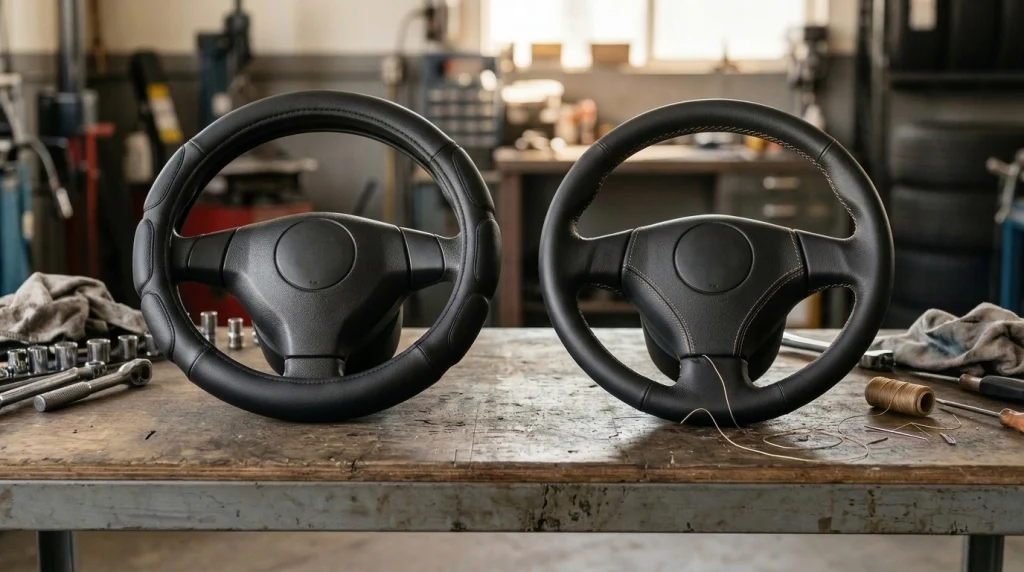
A steering wheel cover is a removable accessory fitted over the steering wheel’s outer rim, while a steering wheel wrap is usually a material layer secured more closely around the existing rim. Both can change the grip, appearance, and comfort of a steering wheel, but they differ in construction and installation.
The terminology isn’t always consistent across manufacturers. Some sellers use “cover” and “wrap” interchangeably, so examine the product’s actual design rather than relying on its listing title.
What is a steering wheel cover?
A steering wheel cover is generally a pre-shaped ring that stretches or fits over the existing rim. It creates a new contact surface without requiring you to remove the steering wheel.
Common materials include:
- PU leather: A synthetic leather-like surface that offers a neat appearance and straightforward care.
- Genuine leather: A natural material that can develop a distinctive finish with use and proper maintenance.
- Silicone or rubber: Materials that can provide a textured, grippy surface, depending on the design.
- Fabric or microfiber: Options that change the texture and may feel comfortable in different temperatures.
Most universal covers prioritize easy installation and removal. However, “universal” doesn’t mean every cover fits every steering wheel correctly.
What is a steering wheel wrap?
A steering wheel wrap is a layer fitted around the original rim, often secured by stitching, lacing, adhesive, or a combination of methods. Some designs cover nearly the entire circumference, while others focus on selected grip areas.
Wraps are often chosen for their tailored appearance and the ability to control material, seam placement, and added thickness. A properly fitted wrap can look more integrated than a bulky slip-on cover.
Some wraps are designed for home installation, while others require professional upholstery work. Check the instructions before buying because the installation method determines the time, tools, and skill involved.
Is a wrap the same as steering wheel reupholstery?
No. A wrap usually adds material over the existing rim, while reupholstery may involve removing worn outer material and replacing it with new upholstery.
If your wheel has peeling leather, damaged foam, or a deteriorating surface, a wrap may conceal some cosmetic wear without correcting the underlying damage. Professional restoration may be a better option when the original rim needs repair.
Section takeaway: A cover prioritizes convenience and removable protection, while a wrap generally prioritizes a closer fit and customization. Always confirm what a product actually covers and how it attaches.
How Do Covers and Wraps Compare?
The main difference is the balance between convenience and customization. A cover is generally simpler to install and remove, while a well-fitted wrap can provide a more integrated appearance and a more controlled grip profile.
The comparison below describes typical designs rather than guarantees for every product. Materials, construction, fit, and installation quality can change the outcome.
| Factor | Steering Wheel Cover | Steering Wheel Wrap |
|---|---|---|
| Construction | Usually a pre-shaped cover that fits over the rim | Usually stitched, laced, bonded, or tailored around the rim |
| Installation time | Often several minutes | May take substantially longer, depending on the method |
| Skill required | Usually beginner-friendly | Ranges from beginner-level to specialist work |
| Added thickness | Can noticeably increase rim thickness | Can stay closer to the original profile if designed well |
| Rim protection | Usually covers the full outer rim | Depends on whether the wrap is full or partial |
| Removal | Usually straightforward | May require unpicking stitches or removing adhesive |
| Appearance | Can look more prominent or bulky | Can appear more integrated with the original wheel |
| Best suited to | Quick protection, comfort, and easy changes | Tailored grip, styling, and a closer fit |
Which option costs less?
A basic slip-on cover is usually the lower-cost starting point because its design and installation are simpler. A tailored leather wrap can cost more, especially when it uses higher-quality materials or requires professional fitting.
There is no reliable universal price difference because vehicle fitment, material, and labor vary widely. Compare the complete cost, including any installation supplies or professional service, rather than comparing product prices alone.
For a fair comparison, check:
- The listed material and the amount of rim coverage.
- Whether installation tools, thread, or adhesive are included.
- Whether the product is vehicle-specific or universal.
- The manufacturer’s warranty, care instructions, and replacement policy.
Section takeaway: A cover is usually the practical choice for a quick, reversible change. A wrap makes more sense when fit, finish, and grip customization justify the extra installation effort.
“`html
Which Option Offers Better Fit, Grip, and Comfort?
A properly fitted cover or wrap can improve the steering wheel’s feel, but the best choice depends on the original rim and your hands. Diameter, rim thickness, surface texture, and how securely the material stays in place matter more than the product label.
How do you measure a steering wheel correctly?
Measure the steering wheel before ordering an accessory. Most sizing problems begin when buyers choose a cover by appearance instead of checking the actual measurements.
- Measure the diameter: Measure straight across the wheel through its center, from the outside edge of the rim to the opposite outside edge.
- Check the rim thickness: Measure around the grip section if the manufacturer requests circumference, or across the rim if it specifies thickness.
- Check the wheel shape: Look for flattened bottoms, unusual contours, thickened grip sections, or other features that might affect compatibility.
- Compare the measurements: Use the accessory manufacturer’s sizing chart rather than assuming a universal cover will fit.
A cover that fits the diameter but not the rim thickness can stretch unevenly or fail to sit securely. Don’t force an incompatible accessory into place.
Does a cover or wrap provide better grip?
Neither design automatically provides better grip. The material’s texture, the way it handles perspiration, and the quality of its fit determine how secure the wheel feels in your hands.
Here is how common materials generally compare:
- Leather: Offers a familiar, natural feel and can provide good grip when clean and in sound condition.
- PU leather: Provides a leather-like appearance, although surface texture and wear resistance vary by product.
- Suede or microfiber: Can provide a soft, tactile surface, but may need more frequent cleaning to manage dirt and oils.
- Silicone or rubber: Often provides a textured feel, but the exact compound determines whether it becomes slippery or tacky.
- Fabric: Can feel comfortable but may absorb sweat, odors, and grime more readily than some smooth surfaces.
For everyday driving, I would prioritize a consistent, secure grip over a sporty appearance. A slippery material or loose cover can undermine the very benefit you’re trying to achieve.
What if the steering wheel already feels too thick?
Choose a slim, well-fitted wrap if maintaining the original rim profile is your priority. A thick slip-on cover can make the wheel harder to hold comfortably, particularly if you have smaller hands.
However, don’t assume every wrap is thin. Multiple material layers, padding, and stitching can also increase thickness, so inspect the product’s design before committing.
**Section takeaway:** Measure both diameter and grip thickness, then choose a texture and profile that allow comfortable, secure control. A close fit matters more than a particular material or accessory style.
How Do Installation and Maintenance Differ?
A slip-on cover usually requires less work than a stitched steering wheel wrap. A wrap can deliver a more tailored finish, but the result depends on careful alignment, even tension, and correct installation.
How do you install a steering wheel cover?
Most conventional covers install without removing the steering wheel. Follow the product’s instructions and work with the vehicle parked securely.
- Park the vehicle, switch off the engine, and make sure the wheel is stationary.
- Clean the rim using a method suitable for its original material, then let it dry completely.
- Align the cover with the top of the wheel and position it evenly.
- Stretch the cover over the rim gradually, working evenly around both sides rather than twisting it into place.
- Check the entire circumference for wrinkles, bunching, gaps, or uneven seating.
- Hold the wheel and check whether the cover moves independently of the rim.
Never drive with a cover that rotates, slides, or bunches under your hands. If it won’t stay secure, remove it and verify the size rather than improvising a fix with glue or fasteners.
How difficult is it to install a steering wheel wrap?
The difficulty depends on the wrap’s construction. A simple adhesive-backed grip section may install quickly, while a full leather wrap that requires hand stitching can demand considerable patience.
For a stitched wrap, the usual process involves:
- Cleaning and inspecting the existing rim.
- Positioning the material to keep seams and edges aligned.
- Following the manufacturer’s stitching or lacing pattern.
- Maintaining consistent tension without damaging the material or original wheel.
- Checking for loose edges, uneven seams, and areas that could catch your fingers.
Don’t cover a structurally damaged rim and assume the problem is solved. Loose upholstery, sharp edges, or deteriorating material may require professional repair first.
Pro tip: A conventional rim accessory shouldn’t require steering-wheel or airbag removal. If the job involves removing the wheel, disturbing wiring, or working around the supplemental restraint system (SRS), stop and consult the vehicle’s factory service information or a qualified technician.
Which option is easier to clean and maintain?
A removable cover is generally easier to inspect and replace, provided the manufacturer allows removal and reinstallation. A fitted wrap stays in place, so cleaning must account for its seams, stitching, and adhesive edges.
Use these maintenance habits for either option:
- Wipe away perspiration, dust, and skin oils with a cleaner approved for the material.
- Avoid harsh solvents or abrasive brushes that can damage coatings and stitching.
- Inspect regularly for loose edges, cracks, fraying, or changes in grip.
- Replace an accessory when its fit deteriorates or its surface becomes slippery.
- Follow the product’s instructions for drying and conditioning, where applicable.
Leather, synthetic leather, suede, and silicone have different care requirements. A cleaner suitable for one material may stain or damage another.
Section takeaway: Covers are usually easier to install, remove, and replace. Wraps reward careful fitting, but their seams and attachment points need regular inspection.
Are Steering Wheel Covers and Wraps Safe?
Either accessory can be unsuitable if it slips, changes the grip unpredictably, obstructs controls, or conflicts with the vehicle’s equipment. Safety depends on correct fit, installation quality, and the manufacturer’s compatibility instructions.
Can a loose cover affect steering control?
Yes. If the cover rotates independently of the wheel, your hands may lose their expected grip position during a turn.
Test the fit while the vehicle is parked before driving. If you can twist the accessory separately from the rim, or if it bunches or shifts, remove it.
Don’t rely on extra padding, decorative stitching, or a premium material to compensate for a poor fit. None of those features makes an unsecured accessory safe.
Can a wrap interfere with the airbag?
A conventional rim cover or wrap should stay on the outer grip surface and leave the center airbag cover, horn pad, spokes, and controls unobstructed. Never extend material across the airbag cover or attach decorative objects to the center pad.
The National Highway Traffic Safety Administration’s warning about aftermarket steering-wheel decals explains how loose decorative pieces can become dangerous projectiles during airbag deployment.
That warning concerns decorative decals, not every conventional rim wrap. Still, it illustrates why steering-wheel modifications should never compromise the airbag system or its cover.
What about heated steering wheels and driver-assistance systems?
Some vehicles have specific restrictions on steering-wheel covers, particularly when the wheel contains heating elements or sensors that detect the driver’s hands. An accessory may affect heat transfer or interfere with the intended operation of a driver-assistance feature.
Check your exact vehicle’s owner’s manual and the accessory manufacturer’s instructions before installation. If either prohibits the accessory, don’t use it.
Pro tip: Consult your vehicle manufacturer’s official documentation for heated-wheel and driver-assistance compatibility. If the instructions are unclear, ask an authorized dealer or qualified technician rather than relying on a generic product listing.
Can a steering wheel wrap make a car illegal?
Legality depends on the jurisdiction, the modification, and whether it affects required safety equipment or vehicle operation. A conventional rim wrap isn’t automatically illegal everywhere, but that doesn’t make every modification compliant.
Check local vehicle regulations if you’re making a substantial change, especially one involving the steering-wheel assembly, airbag, horn, or electronic controls. The safest approach is to preserve the original safety systems and follow manufacturer requirements.
Section takeaway: Never accept slipping, blocked controls, or uncertainty about airbag and sensor compatibility. A secure fit and compliance with vehicle-specific instructions take priority over appearance.
“`html
Which Should You Choose for Your Car?
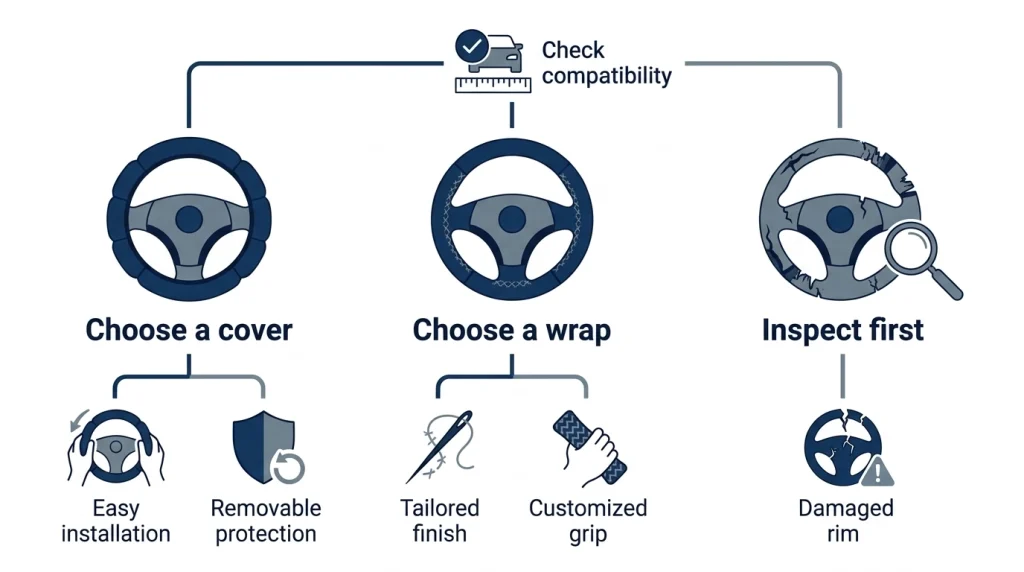
The best option depends on what you want to change about your steering wheel. If you want quick protection and easy removal, a cover is usually the better fit; if you want a more integrated finish and greater control over grip thickness, consider a properly fitted wrap.
Choose a steering wheel cover if you want convenience
A cover makes sense when you want to refresh the cabin without committing to a more involved installation. It is particularly useful for everyday drivers who want a removable accessory.
A cover is a good match if:
- You want to protect an otherwise sound steering-wheel rim from everyday dirt and wear.
- You prefer a simple installation without stitching or upholstery work.
- You want to change the appearance seasonally or remove the accessory later.
- You prefer a padded grip and have confirmed that the extra thickness feels comfortable.
- You want a practical option that is easy to replace when worn.
For example, a commuter whose original steering wheel remains in good condition may find a correctly sized synthetic-leather cover sufficient. It can refresh the interior without requiring permanent changes.
Choose a steering wheel wrap if you want a tailored finish
A wrap is worth considering when the fit and finish matter more than quick installation. A well-made, correctly fitted wrap can preserve more of the original rim’s shape and offer a closer, more customized appearance.
A wrap may suit you if:
- You want a less bulky alternative to a thick slip-on cover.
- You prefer a particular leather texture, stitching pattern, or color combination.
- You want to refresh the grip surface while keeping the original steering-wheel assembly.
- You are comfortable with detailed DIY work or willing to pay for professional installation.
- You have checked the wrap’s compatibility with the wheel’s shape and equipment.
For example, an owner who likes the original wheel’s shape but dislikes its worn outer finish may prefer a fitted leather wrap. If the underlying wheel has structural damage, however, repair or replacement should come before cosmetic customization.
When is neither option the right choice?
Sometimes the best decision is to leave the steering wheel uncovered until you address an existing problem. Accessories shouldn’t conceal damage that affects comfort, grip, or the integrity of the wheel.
Consider professional inspection if the rim has:
- Loose or deteriorating material that catches your fingers.
- Cracked structural components or a damaged steering-wheel assembly.
- Controls that don’t work correctly or an illuminated airbag warning light.
- A heated-wheel or driver-assistance system with unclear accessory restrictions.
If the wheel needs substantial restoration, compare professional reupholstery with replacement rather than assuming a cover or wrap will solve everything.
Section takeaway: Pick a cover for convenience and removable protection, or a wrap for a more tailored feel. If the original wheel is damaged or the accessory conflicts with vehicle equipment, address that issue first.
Frequently Asked Questions
1. Is a steering wheel cover better than a wrap?
Neither is universally better. A cover is generally easier to install and remove, while a fitted wrap can offer a more integrated appearance and greater control over the finished grip profile. Choose based on fit, comfort, protection needs, installation effort, and vehicle compatibility.
2. Does a steering wheel wrap last longer than a cover?
Not necessarily. Lifespan depends on material quality, exposure to sunlight, perspiration, cleaning habits, installation, and daily use. A securely fitted wrap may last well, but its stitching or adhesive can deteriorate. A cover can also loosen or wear. Inspect either regularly.
3. Can I install a steering wheel wrap myself?
Yes, if the product is designed for DIY installation and you can follow its instructions accurately. Simple adhesive-backed wraps may require little work, while stitched leather wraps demand patience and consistent tension. Never remove the steering wheel or disturb airbag components without the correct service procedure and qualifications.
4. Will a steering wheel cover damage the original leather?
A correctly fitted, compatible cover shouldn’t inherently damage a sound steering wheel. However, trapped grit, moisture, friction, poor fit, or unsuitable cleaning products can contribute to wear. Keep the original rim clean and dry, and periodically inspect the surface according to the manufacturer’s instructions.
5. Which option is better for hot weather?
It depends on the material and the vehicle. Some covers provide full-rim protection, while particular wrap materials may feel more comfortable in sweaty conditions. Neither guarantees a cool steering wheel after prolonged sun exposure. Check heated-wheel restrictions and choose a surface that remains secure and comfortable.
6. Can I use a cover or wrap on a heated steering wheel?
Only if the vehicle manufacturer’s instructions permit it and the accessory is compatible. Some vehicles prohibit covers over heated steering wheels because the additional material can interfere with heat transfer. Consult your exact owner’s manual before installing either accessory.
7. Do steering wheel covers and wraps fit every car?
No. Wheel diameter, rim thickness, shape, and integrated equipment vary between vehicles. A universal accessory may fit many cars without fitting yours securely. Measure the wheel, check the manufacturer’s fitment information, and reject any accessory that slips, bunches, or obstructs controls.
Final Takeaway: Cover or Wrap?
When comparing a steering wheel cover vs. a steering wheel wrap, focus on the result you want rather than the name on the packaging. Covers usually offer the easiest route to full-rim protection, while wraps provide more opportunities to tailor the grip and appearance.
Before buying, measure your steering wheel, compare materials, consider installation effort, and confirm compatibility with your vehicle. A well-fitted accessory that preserves predictable steering control is a better investment than one chosen for looks alone.
For more information about vehicle modifications and safety, consult your owner’s manual and the NHTSA vehicle safety resources.

Daniel Brooks is an automotive writer and product researcher focused on car accessories, car tech, maintenance, and practical driving guides. At Plug-in Car World, he helps drivers make smarter automotive decisions through honest reviews and research-driven content.
