
Is the KAFEEK Anti-Slip Steering Wheel Cover a Good Choice?
Quick Answer
The KAFEEK Anti-Slip Steering Wheel Cover may be a good choice for drivers who want a more comfortable grip and extra protection for their original steering wheel without replacing it. However, its value depends on the exact model, correct wheel fitment, material quality, and how securely it stays in place. Before buying, compare its specifications with your vehicle’s steering wheel size and review the manufacturer’s fitment guidance.
What to check before choosing it
- Correct size: Measure your steering wheel’s outside diameter and check the cover’s stated compatibility range.
- Secure grip: The cover must not rotate, slide, or bunch up when you turn the wheel.
- Material quality: Confirm the exact material, stitching, surface texture, and cleaning instructions.
- Driving comfort: Consider whether the added thickness improves your grip or makes the wheel feel too bulky.
- Value for money: Compare the price, return policy, durability evidence, and verified buyer feedback with competing covers.
One important safety check
- Never drive with a loose or slipping cover. Remove it if it moves independently of the steering wheel or interferes with your hands, controls, or airbag area.
The KAFEEK Anti-Slip Steering Wheel Cover is worth considering if your car’s original wheel feels slippery, worn, or uncomfortable during everyday driving. A well-fitted cover can improve the feel of the steering wheel while helping protect its surface from ordinary wear.
When evaluating a cover like this, I focus on fit, grip, comfort, maintenance, and safety rather than appearance alone. I also distinguish between features that the manufacturer confirms and benefits that still need to be demonstrated through reliable product evidence.
This guide explains what to check before buying, how the KAFEEK cover compares with other options, and how to decide whether it suits your vehicle. Because the exact listing specifications have not been independently verified here, I won’t treat unconfirmed material claims, durability figures, or customer ratings as established facts.
In This Guide
- What is the KAFEEK Anti-Slip Steering Wheel Cover?
- Does it improve steering wheel grip and comfort?
- How do you check fitment and install it correctly?
- How does KAFEEK compare with other steering wheel covers?
- How durable is it, and how should you maintain it?
- Is it safe, and is it worth buying?
- Frequently asked questions
What Is the KAFEEK Anti-Slip Steering Wheel Cover?

A steering wheel cover is a removable layer fitted over a vehicle’s original steering wheel to change its surface feel, add a layer of protection, and sometimes improve grip. The KAFEEK Anti-Slip Steering Wheel Cover is marketed for drivers looking for a more secure-feeling steering wheel without replacing the factory component.
The key question is whether the particular KAFEEK model fits your wheel properly and provides the feel you want. The product name alone does not establish its exact material composition, construction quality, or long-term performance.
What benefits should you expect?
A suitable steering wheel cover can offer several practical benefits:
- A more comfortable grip: A textured surface may feel more secure than smooth, worn factory trim.
- Surface protection: The cover can help reduce direct contact with the original wheel’s finish.
- A refreshed interior: A cover can make an older steering wheel look more consistent with the rest of the cabin.
- A different wheel thickness: The added layer may improve comfort for some drivers, although others may prefer the thinner factory wheel.
- Removable installation: Most conventional slip-on covers can be removed without replacing the steering wheel itself.
These are potential benefits of steering wheel covers generally, not verified performance results for every KAFEEK model. Your experience will depend on the specific cover and the condition and dimensions of your wheel.
What should you verify about the product?
Before treating the KAFEEK cover as a definite match, check the exact listing for its dimensions, material, supported wheel sizes, installation instructions, and care requirements. Look for clear photographs of the inner gripping surface and stitching rather than relying exclusively on promotional descriptions.
Also confirm the seller’s return policy. A cover that looks attractive in product photographs may still feel uncomfortable or fit poorly on your particular steering wheel.
Does It Improve Steering Wheel Grip and Comfort?
The KAFEEK cover may improve grip and comfort if its surface texture suits your hands and the cover fits tightly around your steering wheel. However, the words “anti-slip” are a product claim, not proof that the cover cannot move under driving conditions.
Grip depends on the interaction between the cover’s surface, your hands, moisture, temperature, and the force applied while steering. A textured finish can feel reassuring, but correct fitment remains essential.
How does surface texture affect grip?
A steering wheel needs to feel predictable as you make small corrections and larger turns. A surface that feels too smooth, sticky, rough, or bulky can make driving less comfortable rather than more comfortable.
When evaluating a cover, consider these factors:
- Dry-hand feel: Your hands should rest naturally without excessive sliding or an uncomfortable tacky sensation.
- Light moisture: Sweat and humidity can change how a surface feels, particularly during long drives.
- Texture consistency: Check whether the grip feels similar around the entire circumference.
- Added thickness: A thicker cover can improve comfort for some drivers but make precise hand placement less natural for others.
Do not assume that a cover provides a better grip simply because its surface looks textured. The fit and actual feel matter more than appearance.
Will it make an old steering wheel feel better?
A cover can improve the feel of a steering wheel with faded finish, minor cosmetic wear, or a surface that no longer feels pleasant to touch. It can also help shield the existing surface from everyday contact.
However, a cover is not a repair for structural damage. If the steering wheel has loose trim, cracked components, damaged controls, or movement within the steering assembly, address the underlying problem before installing an accessory.
For an ordinary commuter car, comfort should be the deciding factor. If the cover changes your natural hand position or makes it harder to hold the wheel securely, it is not the right choice for you.
How Do You Check Fitment and Install It Correctly?
The most important step is matching the cover to your steering wheel’s actual dimensions. A cover that is too large may slip, while one that is too small may be difficult to install or may not sit correctly around the rim.
Many passenger vehicles use steering wheels in the approximate 14–15-inch diameter range, but this is only a general reference, not a confirmed fitment specification for KAFEEK. Always measure your own wheel and compare it with the exact product listing.
How do you measure your steering wheel?
Measure the outside diameter across the center of the steering wheel, from one outer rim edge to the opposite outer rim edge. Keep the tape measure straight and follow the manufacturer’s measuring guidance if it specifies a different method.
Then check the listing for the supported diameter range and any stated restrictions on rim thickness or wheel shape. If the dimensions are unclear, ask the seller before ordering.
How do you fit a conventional steering wheel cover?
For a typical slip-on cover, installation is usually a straightforward DIY task, although tight-fitting models can require some effort. The process should not involve removing the steering wheel or disturbing its airbag system.
- Park securely: Park on level ground, switch off the engine, and engage the parking brake.
- Inspect the wheel: Check for damaged trim, loose controls, or defects that could prevent a secure fit.
- Clean the rim: Remove dirt and oily residue using a cleaning method appropriate for the original steering wheel material, then let it dry completely.
- Position the cover: Align the cover with the top of the wheel and follow the supplied installation instructions.
- Work around the rim: Fit the cover evenly around the circumference without twisting, stretching it beyond its intended limits, or damaging the stitching.
- Inspect the fit: Check the full circumference for gaps, folds, bunching, or areas that do not sit securely.
Installation time varies with the design and fit. A conventional cover may take several minutes, but do not rush or force a cover that appears incompatible.
Pro tip: Follow the vehicle owner’s manual and the cover manufacturer’s instructions. Never remove the steering wheel or disconnect airbag wiring merely to fit a conventional cover; if the job requires disturbing the airbag system, consult a qualified technician.
How can you tell whether it fits properly?
Once installed, check that the cover lies evenly against the rim and does not rotate independently when you apply moderate hand pressure while parked. Inspect the top, bottom, sides, and inner edges rather than checking only the most visible section.
If it shifts, bunches, or leaves large gaps, remove it and reassess the size. Do not try to compensate for an incorrect fit with tape, glue, or improvised fasteners unless the manufacturer explicitly specifies an approved method.
A correct fit should feel natural and secure. If you cannot achieve that result, return the cover rather than accepting a compromise.
How Does KAFEEK Compare With Other Steering Wheel Covers?
The KAFEEK cover is worth comparing with basic silicone covers, other synthetic-leather covers, and genuine-leather alternatives. The best choice depends on the surface feel you prefer, your budget, and whether you prioritize easy cleaning or a more traditional interior finish.
KAFEEK’s official website describes steering wheel covers made with materials such as microfiber leather, breathable ice silk, and anti-slip lining. Because product variations exist, verify the materials listed for the exact model you’re considering.
Which steering wheel cover material is best?
| Cover type | Main advantage | Potential drawback | Best suited to |
|---|---|---|---|
| KAFEEK synthetic-material cover | A practical option for grip, comfort, and interior protection | Exact feel and durability depend on the model | Drivers seeking an everyday replacement surface |
| Basic silicone or rubber-style cover | Often easy to wipe clean | May feel bulky, sticky, or less refined | Drivers who prioritize simple cleaning |
| Genuine leather cover | Natural leather texture and a traditional finish | May cost more and require suitable care | Drivers who prefer genuine leather |
| Suede or microfiber-style cover | A softer, textured feel on suitable designs | Some finishes can collect dirt or need careful cleaning | Drivers who value a softer surface |
These are general material comparisons, not laboratory test results or measured rankings of the KAFEEK product. Construction, surface treatment, and manufacturing quality can matter as much as the material category.
Is KAFEEK better than a genuine-leather cover?
Not necessarily. A KAFEEK synthetic-material cover may offer the right balance of price, comfort, and everyday use, while a genuine-leather cover may appeal more to drivers who value natural texture and a traditional appearance.
Neither material guarantees a safer grip or a longer service life. Look at the actual construction, stitching, fitment guidance, and care requirements before choosing between them.
When should you choose a different cover?
Consider another product if the KAFEEK listing does not clearly state the supported steering wheel diameter, if the material feels unsuitable for your hands, or if the seller cannot answer basic compatibility questions.
A more expensive cover is not automatically better. A correctly fitted, comfortable cover with clear specifications is a better purchase than a premium-looking option that moves around the rim.
Section Takeaway: KAFEEK is a reasonable candidate for everyday use, but its advantage over competing covers depends on the exact model, fit, and material—not the anti-slip label alone.
How Durable Is It, and How Should You Maintain It?
The long-term durability of the KAFEEK Anti-Slip Steering Wheel Cover cannot be established from its product name or marketing claims alone. Material quality, stitching, heat exposure, friction, moisture, and cleaning habits all affect how long a steering wheel cover remains comfortable and secure.
As of 2026, I would look for consistent evidence of material quality, clear care instructions, and credible feedback about wear before treating any cover as a long-term investment. Without reliable long-term testing for the exact model, a specific lifespan would be speculation.
What signs indicate that a cover is wearing out?
Inspect your cover regularly for changes that could affect comfort or safe steering. Pay particular attention to the areas that receive the most contact from your hands.
- Loose fit: The cover begins rotating or shifting independently of the wheel.
- Damaged stitching: Seams separate, unravel, or create raised edges.
- Surface deterioration: The material cracks, peels, becomes unusually slippery, or develops rough patches.
- Persistent odor: The material retains an unpleasant smell after appropriate cleaning and drying.
- Deformation: The cover develops permanent folds, uneven padding, or areas that no longer sit flush.
Replace a cover that slips or interferes with your grip. Cosmetic damage may seem minor, but a change in fit deserves immediate attention.
How should you clean a KAFEEK cover?
Start with the manufacturer’s instructions because different synthetic materials and surface treatments can react differently to cleaning products. Avoid assuming that a cover can be soaked, scrubbed aggressively, or treated with any household cleaner.
For routine care, use this conservative approach unless the manufacturer specifies otherwise:
- Park safely and allow the steering wheel to cool if it has been exposed to direct sunlight.
- Remove loose dust using a clean, soft cloth.
- Use a lightly dampened cloth and a compatible cleaner only if the care instructions permit it.
- Wipe away residue without soaking the cover or allowing moisture to collect around the controls.
- Let the surface dry fully before driving.
Avoid harsh solvents, abrasive pads, and unapproved oils or dressings. These products can alter the surface finish or make the steering wheel slippery.
Can heat and sunlight damage the cover?
A parked car can become hot, especially when the steering wheel sits in direct sunlight. Repeated heat exposure may contribute to fading, surface changes, or deterioration in some cover materials.
Whenever practical, park in the shade or use a suitable windshield sunshade. Do not assume a product advertised as heat-resistant can tolerate every cabin temperature or prolonged direct sunlight without damage.
Section Takeaway: Treat durability as something to verify, not assume. Regular inspections, appropriate cleaning, and prompt replacement of a loose cover help maintain a secure steering wheel.
Is It Safe, and Is It Worth Buying?
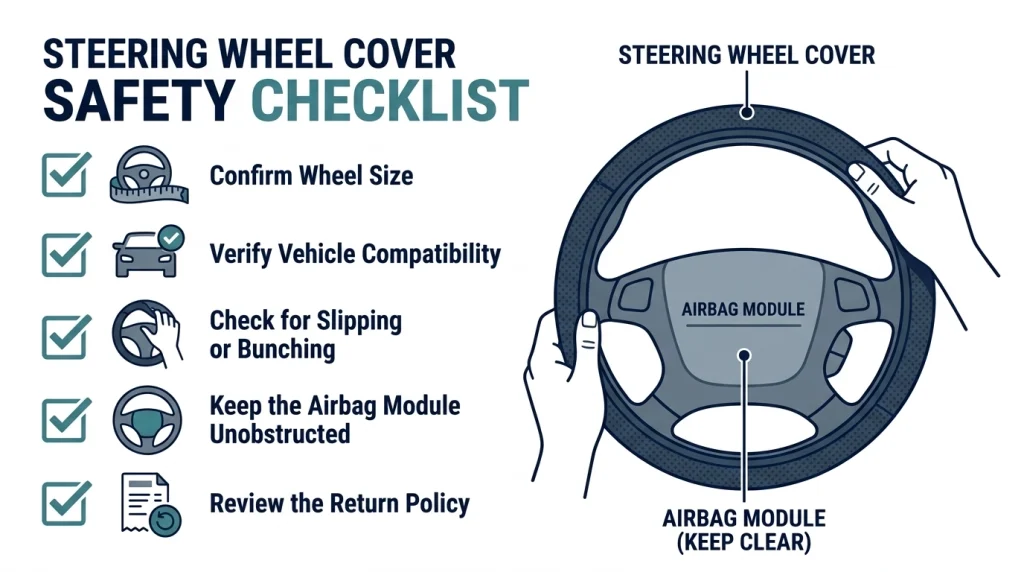
The KAFEEK Anti-Slip Steering Wheel Cover may be worth buying if it fits your wheel securely, feels comfortable, and meets your expectations for material quality and price. Its anti-slip marketing claim should never replace a careful fit check or a review of your vehicle manufacturer’s guidance.
Safety comes first. A cover that rotates, bunches up, or changes your ability to control the steering wheel is unsuitable, regardless of its appearance or price.
What safety issues should you consider?
A conventional steering wheel cover fits around the outer rim, but you should still check your vehicle’s owner’s manual for restrictions on accessories. Some vehicles have specialized steering wheel shapes, integrated controls, heating elements, or other features that may affect compatibility.
Airbag requirements deserve particular care. The driver’s frontal airbag deploys from the center of the steering wheel, so keep the airbag module and its cover free from unauthorized accessories, obstructions, or modifications.
The National Highway Traffic Safety Administration’s airbag guidance explains how airbags deploy and why correct positioning and proper safety-system operation matter. Follow the vehicle manufacturer’s instructions if they prohibit steering wheel covers or other accessories.
Pro tip: Check your owner’s manual before installation. Never cover the central airbag module, attach decorations to it, or modify the airbag system. If compatibility is uncertain, ask the vehicle manufacturer or a qualified technician.
Who should consider buying the KAFEEK cover?
This cover may suit you if you:
- Want to protect an original steering wheel from routine surface wear.
- Prefer a different grip texture or a slightly thicker steering wheel.
- Have measured your wheel and confirmed the exact model’s compatibility.
- Want a removable alternative to replacing or professionally retrimming the steering wheel.
- Can verify the product’s specifications and return terms before ordering.
Who should skip it?
Choose another option—or leave the original wheel uncovered—if you:
- Cannot confirm the cover’s dimensions or vehicle compatibility.
- Prefer the exact thin feel of your factory steering wheel.
- Have a heated or unusually shaped steering wheel and cannot confirm compatibility.
- Notice slipping, bunching, or interference with the wheel’s controls after installation.
- Need to repair a damaged steering wheel rather than conceal cosmetic wear.
If the steering wheel itself has structural damage, loose components, or a malfunctioning control, fix that problem first. A cover is an accessory, not a substitute for proper repair.
How do you decide whether the price is reasonable?
Compare the current selling price with other covers that fit your wheel and offer similar materials. Include shipping, return costs, warranty coverage, and the seller’s support when assessing overall value.
Do not pay extra solely for phrases such as “premium,” “anti-slip,” or “all-season.” Look for specific material descriptions, clear measurements, useful installation guidance, and a return policy that protects you if the fit is wrong.
My recommendation is conditional: consider KAFEEK if the specifications match your vehicle and you can return it if the fit or feel disappoints. If those details remain unclear, keep shopping rather than gambling on compatibility.
Section Takeaway: Buy the KAFEEK cover for verified fit, comfort, and practical protection—not as a guaranteed safety upgrade. A secure fit and compatibility with your vehicle matter more than cosmetic appeal.
Frequently Asked Questions
Is the KAFEEK Anti-Slip Steering Wheel Cover good quality?
It may be a suitable everyday cover, but quality depends on the exact model, material, stitching, and fit. Check the manufacturer’s specifications and recent verified buyer feedback before purchasing. Without independent testing of the specific model, its durability and grip performance cannot be guaranteed.
What size steering wheel does the KAFEEK cover fit?
KAFEEK lists certain steering wheel covers for medium-sized wheels measuring approximately 14.5–15 inches (37–39 cm) in outside diameter. Confirm that range against the exact model you intend to buy, and measure your own steering wheel before ordering because not every version has identical specifications.
Is the KAFEEK cover genuinely anti-slip?
KAFEEK markets some covers with anti-slip features, but that description does not prove that every model will remain secure on every steering wheel. Correct sizing, the inner gripping surface, and installation all matter. Remove the cover immediately if it rotates or shifts during inspection.
Can I install the KAFEEK cover myself?
Most conventional slip-on steering wheel covers are designed for DIY installation without removing the steering wheel. Clean and dry the rim, follow the supplied fitting instructions, and check for movement afterward. If installation requires disturbing the airbag or steering controls, consult a qualified technician.
Will the KAFEEK cover fit a heated steering wheel?
Do not assume compatibility with a heated steering wheel. The added material may affect how heat reaches your hands, and the exact result depends on the cover’s construction. Check the cover manufacturer’s guidance and your vehicle owner’s manual before using an accessory on a heated wheel.
Does a steering wheel cover protect the original wheel from wear?
Yes, a properly fitted cover can reduce direct contact with the original steering wheel surface and help protect against routine wear and stains. However, dirt trapped underneath may cause abrasion, and an unsuitable cover can create problems of its own. Clean the wheel before installation and inspect it periodically.
Should I buy the KAFEEK cover or replace my steering wheel?
A cover is usually the simpler option when the original wheel remains structurally sound and you want a different surface feel or cosmetic protection. Replacing or retrimming the wheel may be more appropriate when the original material is badly damaged or the wheel has a defect. Any work involving the airbag system should follow manufacturer procedures.
Final Verdict: Is the KAFEEK Anti-Slip Steering Wheel Cover a Good Choice?
The KAFEEK Anti-Slip Steering Wheel Cover is a reasonable option to consider for drivers who want a refreshed steering wheel surface, a different grip feel, and protection against everyday wear. Its real value depends on the exact model, verified dimensions, construction, and how securely it fits your vehicle.
I would prioritize three things before placing an order: confirm the wheel size, read the manufacturer’s material and care information, and check recent feedback alongside the seller’s return policy. Those steps are more useful than relying on promotional claims alone.
If the cover fits correctly and feels natural in your hands, it may be a practical, removable upgrade. If you cannot verify compatibility or it shifts on the wheel, skip it and choose a better-fitting alternative.
Ultimately, the KAFEEK cover is worth considering—but only when the fit, comfort, and product details check out. Never compromise steering control for appearance or convenience.

Daniel Brooks is an automotive writer and product researcher focused on car accessories, car tech, maintenance, and practical driving guides. At Plug-in Car World, he helps drivers make smarter automotive decisions through honest reviews and research-driven content.
