
Do Steering Wheel Covers Improve Grip?
Quick Answer
Yes, a well-fitting, textured steering wheel cover can improve grip, but material and fit matter more than the cover itself. A snug cover with texture gives your hands more friction, while a loose or slick cover can reduce control. For a safety baseline, check vehicle safety guidance before you change anything near the wheel.
When grip improves most
- Textured surface: Pebbled, perforated, or microfiber surfaces resist sliding better than smooth ones.
- Snug fit: A cover that stays put lets you steer with steady, even pressure.
- Clean surface: A clean cover holds friction better than one coated in oil or dust.
- Right thickness: A rim that fills your hand without forcing your fingers open feels easier to hold.
Watch out for
- Remove a cover right away if it rotates during a turn.
- Check that it does not block buttons, spokes, or the centre hub.
- Replace it once the surface feels smooth or the inner grip wears out.
If your wheel feels slick on a hot day, you notice it at the first turn. That small slip can make a long drive feel tiring and less controlled.
I wrote this guide to sort that feeling from the facts. You will learn what helps grip, what hurts it, and how to pick a cover that fits your hands and your car.
In This Guide
Do Steering Wheel Covers Actually Improve Grip?

Yes, a cover can improve grip, but only when three things line up: texture, fit, and condition. A textured, snug cover adds friction, while a loose or smooth cover can do the opposite.
A steering wheel cover is a sleeve that fits over the rim of your car’s steering wheel. It changes the surface your hands touch, and it can also protect a worn or cracked rim.
Grip comes from friction between your palm and that surface. Texture, pressure, and moisture all change that friction during a drive.
- Texture adds friction: Small bumps, holes, or fibres give your skin more to hold.
- Fit keeps pressure steady: A stable cover lets your hands stay in one place.
- Condition matters: A clean, intact surface grips better than a worn, shiny one.
Grip also depends on your hands and the drive. Sweat, lotion, cold, and gloves can each change how a surface feels.
Section takeaway: A cover improves grip when it adds texture and stays put, not simply because it is new or thick.
What Makes a Cover Grippy in Real Driving?
Three factors decide most of the result: surface texture, hand pressure, and moisture. Get those right, and even a simple cover can feel secure.
How does friction and texture work?
Texture creates small contact points that resist sliding. Pebbled leather, perforated surfaces, and microfiber tend to catch the skin more than a polished, smooth surface.
- Good grip signs: Your hand stays put without a hard squeeze.
- Weak grip signs: Your palm slides when you turn at low speed.
- Test while parked: Turn the wheel gently and check for any rotation of the cover.
How do thickness and hand pressure affect grip?
Thickness changes how much of your hand wraps the rim. A rim that fills your palm without forcing your fingers open often feels easier to hold.
Too much bulk can hurt control for small hands. Too little padding can feel hard on a long drive.
- Hand fit check: Your fingers should close around the rim with ease.
- Thumb check: Your thumbs should rest in a natural spot, not stretch or pinch.
- Control check: You should reach every button without shifting your grip.
What happens with dry hands versus wet hands?
Dry hands grip most textured surfaces well. Sweat can turn a smooth cover slick, while a perforated or absorbent surface may stay more usable.
Gloves change the match again. Test a cover with the gloves you wear most, and judge it on a short, safe drive first.
Picture this as an illustration: a driver with damp hands on a summer trip may favour perforation and texture, while a driver with dry hands in winter may favour warmth and a soft, even surface. The right pick follows the hands, not the trend.
Section takeaway: Texture, hand fit, and moisture control grip far more than colour, brand, or price alone.
Which Cover Material Grips Best?
No single material wins for every driver. Your climate, hand sweat, and cleaning habits should drive the choice.
| Material | Dry grip | Wet or sweaty grip | Feel and care |
|---|---|---|---|
| Textured genuine leather | Strong | Good if pebbled or perforated | Firm feel, wipe clean |
| Perforated leather | Strong | Better airflow, less clammy feel | Breathable, needs gentle cleaning |
| Suede or microfiber | Very strong at first | Good, but can mat when soaked | Soft feel, needs regular brushing |
| Silicone or rubberized | Good | Mixed, can feel tacky or slick | Easy to wipe, check for wear |
| Mesh or fabric | Good | Good airflow, less tack | Light feel, wash as directed |
| Smooth PU leather | Fair to good | Weakest when hands sweat | Low cost, can peel with age |
Perforated leather suits many drivers who want grip plus durability. Suede-like microfiber often feels grippiest, but it needs more care to stay clean.
- Sweaty hands: Favour perforation, texture, or microfiber over a smooth finish.
- Cold hands: Favour a soft, warm surface that does not feel hard at first touch.
- Low care: Favour textured leather or silicone that wipes clean with ease.
Consumer Reports can help you compare durability claims, but size and texture still matter more than brand hype.
Section takeaway: Pick the material for your hands and climate, then judge it by texture and fit, not by looks alone.
How Does Fit Affect Grip, and When Can a Cover Make It Worse?
Fit can matter more than material. A cover that rotates even a little breaks your trust in the wheel at the worst moment.
How do I measure before I buy?
Measure across the centre of the wheel, from one outer edge to the other. Match that number to the maker’s size chart, not to a guess based on car size.
- Diameter: Many cars use a wheel near 14.5 to 15.5 inches, or 37 to 39 cm.
- Rim thickness: Check the chart for rim size, since a thick rim needs a wider cover.
- Spokes and controls: Make sure the cover leaves buttons and spokes clear.
What are the signs of a bad fit?
- Rotation: The cover turns while the wheel stays still.
- Bunching: Extra material folds at the top or bottom of the rim.
- Blocked controls: Buttons, paddles, or thumb rests sit under the cover edge.
- Loose inner grip: The inside feels smooth and slides with light pressure.
A cover should sit evenly around the rim. It should not cover the centre hub, airbag area, or any control you need while driving.
Pro tip: Check your vehicle’s owner’s manual for steering and airbag guidance, and ask a certified mechanic about any steering concern you cannot trace to the cover.
A cover can also make grip worse when it is too thick for your hands. It can dull feedback, tire your fingers, and slow small steering inputs.
Section takeaway: Measure first, then choose texture, because a perfect material in the wrong size still slips.
How Do I Choose and Fit a Cover for Better Grip?
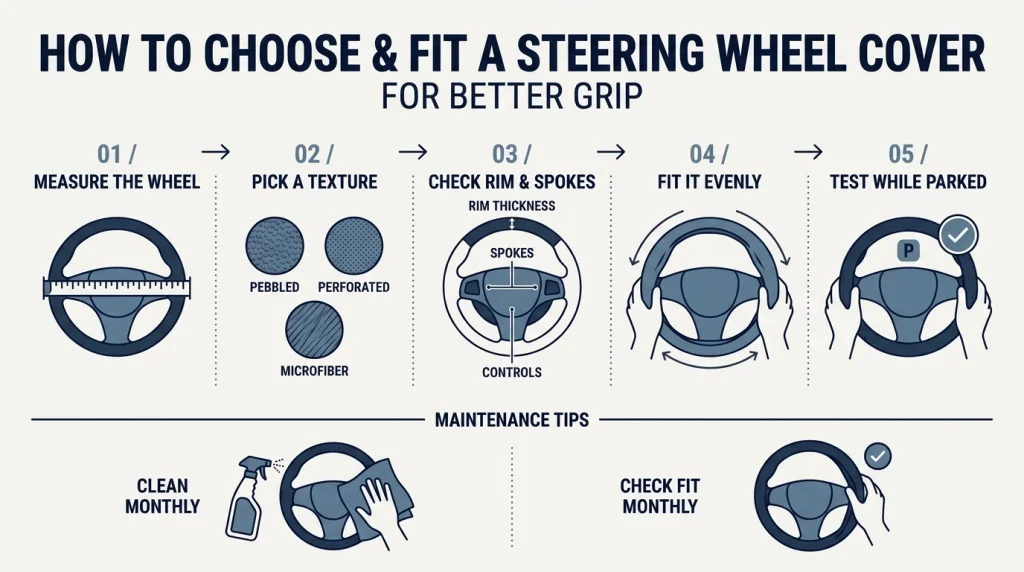
Start with size, then texture, then care. That order stops most grip problems before they start.
- Measure the wheel: Record the diameter and check the maker’s size chart.
- Pick a texture: Choose pebbled, perforated, or microfiber for the most friction.
- Check the rim: Match the cover to your rim thickness and spoke layout.
- Fit it evenly: Work it around the rim with steady pressure, not force.
- Test while parked: Turn the wheel and check for slip, bunching, or blocked controls.
As of 2026, many basic slip-on covers cost about $10 to $30, while leather or premium styles often run $25 to $60. Treat those ranges as shopping guides, since prices vary by seller and material.
Most slip-on covers take about 5 to 15 minutes to fit. Lace-on styles take longer, so leave extra time and follow the maker’s steps.
Edmunds shopping guides often list interior accessories by vehicle, which can help narrow size options before you buy.
Car and Driver reviews show how materials feel over time, but hand size and climate should decide the pick.
- Clean it monthly: Wipe leather and silicone, and brush microfiber as directed.
- Check the fit monthly: Look for stretch, wear, or a loose inner surface.
- Replace it early: A worn cover is a safety item, not a cosmetic one.
Section takeaway: The best cover is the one that fits snugly, stays textured, and lets you keep full control of the wheel.
Frequently Asked Questions
Do steering wheel covers improve grip for sweaty hands?
For many drivers, yes: a perforated, textured, or microfiber cover can absorb light moisture and add friction, while smooth leather or slick silicone can feel slippery once hands sweat. Choose texture first, and clean the cover often so sweat and oils do not smooth the surface.
Are leather or suede covers better for grip?
Suede and microfiber often feel grippier at first because their soft, matte surface creates more friction than smooth leather. Leather can still grip well when it has a pebbled or perforated texture, and it usually lasts longer with simple cleaning.
Can a cover make steering less safe?
A cover can reduce safety if it slips, rotates, or blocks your thumbs, buttons, or view of the wheel. Remove a moving cover right away, and get the steering checked by a certified mechanic if the wheel itself feels loose, stiff, or shaky.
What size steering wheel cover do I need?
Measure the diameter across the middle of your steering wheel, then match that number to the cover maker’s size chart. Many cars use a wheel near 14.5 to 15.5 inches, but trucks and older cars can differ, so do not guess from the car type alone.
Do thicker covers give better grip?
Thickness alone does not guarantee better grip. A thick cover can help if it fills your hand well and stays snug, but a thick, loose, or slick cover can make control worse than a thin, textured one.
How do I stop a steering wheel cover from slipping?
Start by checking the size, since most slipping covers are simply too large for the wheel. If the size is right, clean both surfaces, refit the cover evenly, and replace it if the inner grip has worn smooth.
Final Takeaway
A steering wheel cover improves grip when it is textured, snug, clean, and matched to your hands. It hurts grip when it is loose, slick, worn, or too bulky for your grip.
Measure your wheel, pick texture for your climate, and test the fit while parked before a long drive. If the wheel itself feels loose or shaky, skip the cover fix and get the steering checked promptly.

Daniel Brooks is an automotive writer and product researcher focused on car accessories, car tech, maintenance, and practical driving guides. At Plug-in Car World, he helps drivers make smarter automotive decisions through honest reviews and research-driven content.
