
Do Steering Wheel Covers Fade in Sunlight?
Quick Answer
Yes, steering wheel covers can fade in sunlight, particularly when they receive prolonged direct sunlight and heat through the windshield. The risk depends on the material, dye quality, protective finishes, and parking conditions. Choosing a UV-resistant cover, cleaning it correctly, and using a windshield sunshade can help preserve its color and texture.
What makes a steering wheel cover fade?
- UV exposure: Ultraviolet radiation can break down colorants and damage some material surfaces over time.
- Cabin heat: Repeated heating can accelerate aging, drying, discoloration, or surface deterioration.
- Material quality: Different leather, synthetic leather, rubber, silicone, and fabric covers respond differently to sunlight.
- Hand contact: Sweat, skin oils, dirt, and cleaning chemicals can change the appearance of frequently touched areas.
- Color choice: Some dyes and finishes show fading, staining, or uneven discoloration more visibly than others.
How can you prevent fading?
- Use a windshield sunshade and park in shade when practical.
- Follow the cover manufacturer’s cleaning instructions and avoid harsh chemicals.
- Check the manufacturer’s UV-resistance claims before buying a replacement.
Steering wheel covers can lose their original color, develop pale patches, or become dull after repeated exposure to sunlight. The change may happen gradually, so you might not notice it until the cover looks different from the day you installed it.
When evaluating a cover, I would look beyond its color and price. Material quality, surface finish, cleaning requirements, and how much direct sun reaches the cabin all influence how well it maintains its appearance.
In This Guide
- Why do steering wheel covers fade in sunlight?
- Which steering wheel cover materials resist fading best?
- How can you tell whether sunlight has damaged your cover?
- How do you prevent steering wheel covers from fading?
- Can you clean or restore a faded steering wheel cover?
- When should you replace a sun-damaged cover?
- Frequently asked questions
Why Do Steering Wheel Covers Fade in Sunlight?
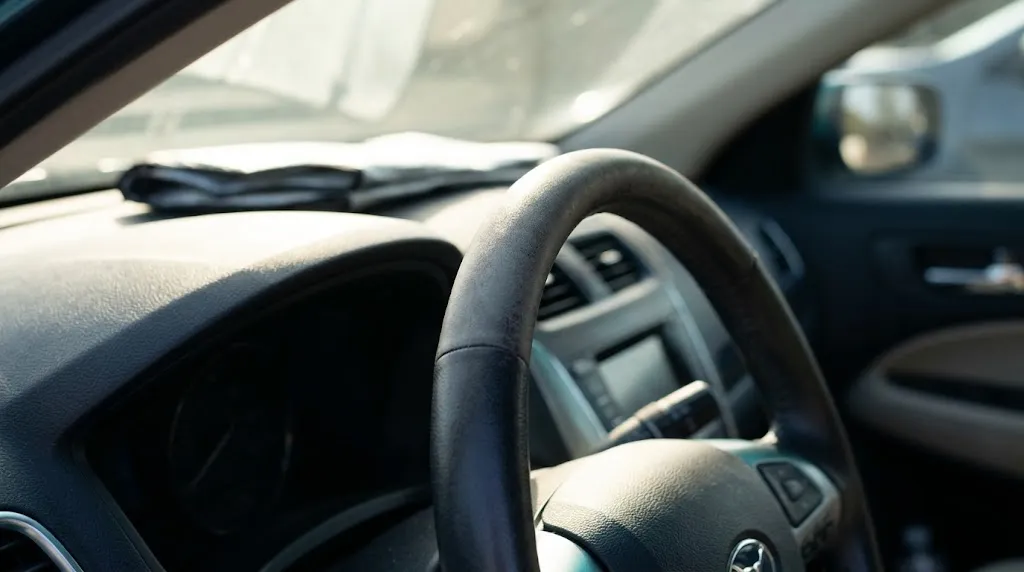
Steering wheel covers fade when sunlight and other environmental factors gradually change their dyes, pigments, coatings, or surface materials. Ultraviolet (UV) radiation is a major contributor, while heat, friction, skin oils, and unsuitable cleaning products can make the damage more noticeable.
UV rays gradually change the surface
Sunlight contains UV radiation that can trigger chemical changes in dyes and polymers. Depending on the material and its protective treatment, prolonged exposure may cause colors to lose intensity or become uneven.
Dark covers aren’t automatically more resistant to fading. A black synthetic cover with a weak dye or coating may age less gracefully than a lighter cover made with better-tested materials.
Heat accelerates material aging
A parked vehicle can become extremely hot in direct sunlight, especially when ventilation is limited. Repeated heating and cooling can contribute to cracking, stiffness, finish deterioration, or changes in synthetic materials.
Heat and UV exposure often occur together, making it difficult to identify one as the sole cause of discoloration. A cover may also feel sticky, brittle, or rough even when its color still looks acceptable.
Everyday contact adds to the wear
Sunlight isn’t the only reason a steering wheel cover changes appearance. Hands repeatedly transfer sweat, oils, dirt, and residue onto the areas used most often.
- Uneven fading: Sun-exposed sections may look lighter than shaded areas.
- Polished patches: Frequent hand contact can make textured surfaces appear shiny.
- Discoloration: Oils and cleaning residue may create darker or lighter spots.
- Surface breakdown: Aging coatings may peel, flake, or develop cracks.
These differences matter because discoloration doesn’t always mean the material has faded from sunlight alone. Identifying the likely cause helps you choose the right cleaning method or decide whether replacement makes more sense.
Section takeaway: UV radiation and repeated heat exposure can fade a steering wheel cover, but contamination and friction can produce similar changes.
Which Steering Wheel Cover Materials Resist Fading Best?
No steering wheel cover material is completely immune to sunlight. However, material formulation, dye quality, surface treatments, and manufacturing standards can make a substantial difference in long-term appearance.
A steering wheel cover is a removable or fitted layer placed over the original steering wheel rim to change its grip, comfort, appearance, or protection. Common options include genuine leather, synthetic leather, fabric, microfiber, silicone, and rubber-based materials.
Compare common steering wheel cover materials
| Material | Sunlight considerations | Care advice |
|---|---|---|
| Genuine leather | Can dry, discolor, or crack with prolonged heat and UV exposure. | Use leather-safe cleaners and suitable conditioners when recommended. |
| PU or synthetic leather | Pigments may fade, while surface coatings can deteriorate or peel. | Use a gentle cleaner approved for the specific synthetic finish. |
| Microfiber or suede-style fabric | Color can fade, and the nap may flatten or become uneven. | Use a material-appropriate brush or cleaner as directed. |
| Rubber or silicone | Formulations vary; UV and heat can cause discoloration or aging. | Clean with a compatible mild solution and avoid harsh solvents. |
| Fabric or woven covers | Dye fading and uneven color changes depend on fiber and dye quality. | Follow washing and drying instructions for the exact cover. |
This comparison describes general material behavior, not a guaranteed ranking. Two covers made from the same material can age differently because their coatings, pigments, and UV stabilizers may differ.
Does black or a light-colored cover fade faster?
Color alone doesn’t tell you how long a cover will last. Dark colors can show grayish fading, while pale colors may show stains, yellowing, or dirt more readily.
Instead of choosing solely by color, check whether the manufacturer specifies UV resistance, heat tolerance, and compatible cleaning products. If those details aren’t available, treat long-term fade resistance as unverified.
What should you look for when buying?
- Material details: Look for an explicit description of the cover’s surface and backing.
- UV-resistance information: Prefer documented claims over vague terms such as “premium” or “sunproof.”
- Fitment: Match the cover to your steering wheel diameter and rim thickness.
- Grip: Choose a surface that remains secure and comfortable in hot weather.
- Care instructions: Check whether the cover tolerates the cleaners you intend to use.
Section takeaway: Choose materials based on documented performance and care requirements, not assumptions about leather, silicone, or color alone.
How Can You Tell Whether Sunlight Has Damaged Your Cover?
A sun-damaged steering wheel cover may show uneven color, a dry or brittle texture, peeling coatings, or cracks in exposed areas. Comparing the upper and lower sections of the rim can help reveal changes that aren’t obvious at first glance.
Check for uneven color
Inspect the top of the steering wheel, where sunlight may reach most directly through the windshield. Compare its appearance with the lower rim and areas normally covered by your hands.
If the upper section looks noticeably lighter, UV exposure may have contributed to the change. However, previous cleaning, dirt, and differences in hand contact can also create uneven coloring.
Look for changes in texture
Color changes aren’t the only warning signs. Run your fingers gently across the cover while the vehicle is parked and the surface is cool.
- A rough or brittle feel may indicate material aging.
- Flaking or peeling may point to a failing surface coating.
- Cracks can expose the underlying material or create rough edges.
- A sticky surface may indicate deterioration or chemical residue.
Don’t use aggressive scraping or abrasive pads to investigate the damage. These can remove the finish and make the problem worse.
Separate fading from dirt or cleaning damage
Before deciding the cover is sun-faded, clean a small, inconspicuous area using the manufacturer’s approved method. If the color returns after removing grime, contamination probably contributed to the appearance.
If the area remains pale, patchy, cracked, or visibly different after proper cleaning, the material or finish may have changed permanently. Avoid repeated scrubbing in an attempt to restore the original color.
Section takeaway: Compare exposed and shaded areas, then inspect texture and finish; don’t assume every color change comes from UV exposure.
How Do You Prevent Steering Wheel Covers From Fading?
The most effective way to prevent fading is to reduce direct sunlight, keep the cover clean, and avoid products that damage its finish. These habits help whether your cover is leather, synthetic leather, rubber, silicone, or fabric.
1. Use a windshield sunshade
A reflective windshield sunshade reduces direct sunlight entering the cabin and can help limit dashboard and steering wheel heat buildup. Choose one that fits your windshield properly and use it whenever the vehicle is parked in strong sunshine.
A sunshade won’t eliminate all UV exposure or keep the cabin at outdoor temperatures. However, it adds a practical layer of protection without requiring you to replace the cover.
2. Park in shade whenever possible
Covered parking, a garage, or a shaded parking space can reduce the amount of direct sunlight reaching your steering wheel. If you park outdoors throughout the workday, even partial shade may help reduce prolonged exposure.
Remember that the sun moves, so a space that’s shaded in the morning may receive direct sunlight later. A windshield shade can provide more consistent protection when no covered parking is available.
3. Clean the cover correctly
Regular cleaning removes grime, sweat, and oils that can make a cover look dull or uneven. Use the method recommended for the exact material rather than applying one cleaner to every type of surface.
- Park safely: Switch off the vehicle and allow the steering wheel to cool completely.
- Remove loose dirt: Use a soft, clean microfiber cloth.
- Test the cleaner: Apply a small amount to an inconspicuous area first.
- Wipe gently: Follow the product instructions without soaking the cover.
- Remove residue: Use a clean cloth as directed by the manufacturer.
- Let it dry: Make sure the surface is completely dry before driving.
Don’t apply household bleach, strong solvents, abrasive powders, or unapproved dressings. These products can damage dyes, strip protective finishes, or leave a slippery residue.
4. Avoid unnecessary chemical treatments
Some interior sprays leave a glossy coating that changes how a steering wheel feels. Products designed for dashboards may not be suitable for a steering wheel cover.
Use a leather conditioner only when the manufacturer recommends it for your specific leather finish. Avoid conditioners on synthetic materials unless the product explicitly supports that use.
5. Check the manufacturer’s UV claims
If you’re replacing a badly faded cover, ask for documentation of UV resistance rather than relying on marketing language. A manufacturer may provide material specifications or test information that helps you compare options.
There is no universal replacement interval for steering wheel covers because exposure, material quality, and maintenance vary. Inspect yours periodically, especially after a hot season or extended outdoor parking.
Section takeaway: A sunshade, sensible parking, and material-appropriate cleaning are practical ways to slow fading without adding unnecessary maintenance costs.
Can You Clean or Restore a Faded Steering Wheel Cover?
You can often improve the appearance of a dirty cover, but cleaning won’t reverse genuine UV-related fading or repair a deteriorating coating. The right approach depends on whether the problem is surface contamination, a worn finish, or permanent material damage.
When cleaning may help
If the cover looks dull because of accumulated hand oils or dirt, a gentle cleaning may restore some of its original appearance. Work on a small area first and compare it with the surrounding surface after it dries.
For removable fabric covers, check the care label before washing. Some can tolerate gentle handwashing, while others may shrink, bleed dye, or lose their shape if washed incorrectly.
When restoration products are appropriate
Leather-specific restoration products may improve the appearance of certain worn leather surfaces when the manufacturer permits their use. They cannot reliably restore missing pigment, repair deep cracks, or reverse structural deterioration.
Be particularly cautious with recoloring dyes, spray paints, and aftermarket coatings. An unsuitable product can transfer onto your hands, create uneven patches, or make the grip less secure.
Don’t apply a treatment that leaves the steering wheel slippery. Reliable steering control matters more than achieving a like-new appearance.
When replacement is the better option
Replace the cover if it has loose sections, peeling material, deep cracks, or a surface that remains slippery or sticky after appropriate cleaning. A badly deteriorated cover can interfere with a secure grip.
If the original steering wheel underneath is also damaged, inspect it before fitting another cover. A new cover shouldn’t conceal a loose, cracked, or otherwise unsafe steering wheel.
Section takeaway: Clean away removable grime, but replace covers with serious deterioration instead of trying to hide damage with aggressive treatments.
When Should You Replace a Sun-Damaged Cover?
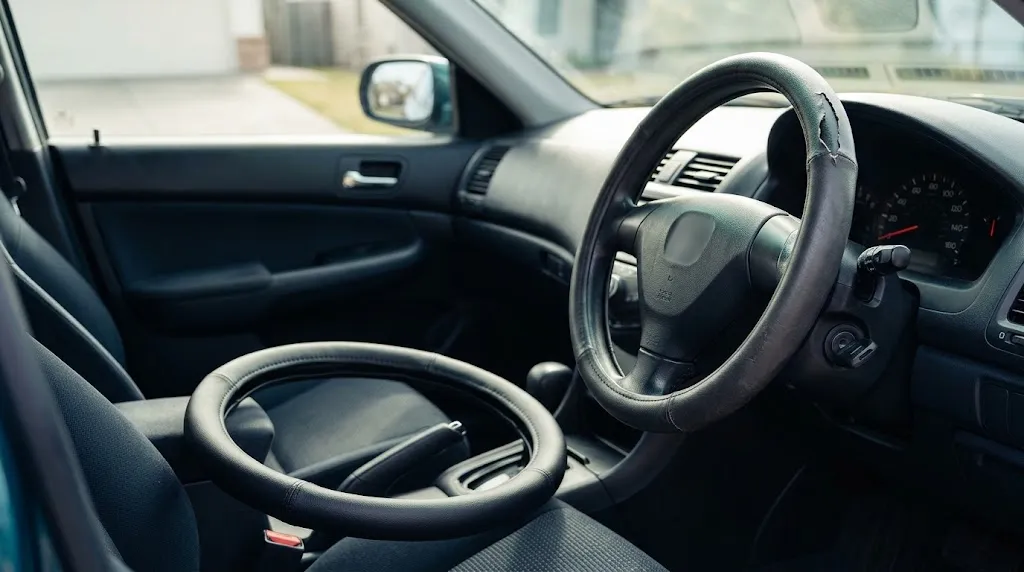
Replace a steering wheel cover when its condition affects grip, fit, comfort, or safe steering control. Fading by itself is generally a cosmetic issue, but the surface damage that accompanies fading can become a practical concern.
| Condition | Recommended action |
|---|---|
| Slight, even fading | Keep using it if the fit and grip remain secure. |
| Surface dirt or dullness | Clean with a compatible product and reassess. |
| Small areas of peeling | Replace it if the damage affects the grip or continues spreading. |
| Loose or slipping cover | Stop driving with it until you remove or correctly secure it. |
| Deep cracks or brittle material | Replace the cover and inspect the underlying wheel. |
Choose a replacement that fits properly
Before buying, measure the steering wheel diameter and check the rim thickness if the manufacturer specifies it. A cover that’s too large may shift, while one that’s too small may be difficult to install or may not fit correctly.
Also consider the vehicle’s original equipment. If your car has a heated steering wheel, confirm that the cover is compatible with that feature and won’t interfere with its intended operation.
Never remove the steering wheel or disturb airbag components simply to replace a slip-on cover. If a replacement involves the steering wheel assembly, wiring, or airbag system, consult the vehicle’s service information or a qualified technician.
Pro tip: Check your owner’s manual for steering wheel and heated-wheel guidance, and consult a qualified mechanic if the original wheel or its safety systems appear damaged.
Section takeaway: Cosmetic fading doesn’t automatically require replacement, but compromised fit, grip, or surface integrity should never be ignored.
Frequently Asked Questions
1. How long does it take for a steering wheel cover to fade in sunlight?
There is no fixed timeframe. A cover’s color may remain stable for years or begin changing sooner, depending on UV exposure, cabin heat, material quality, dye stability, and maintenance. Continuous outdoor parking generally creates more exposure than regular covered parking.
2. Do black steering wheel covers fade faster than other colors?
Not necessarily. Fading depends more on the colorant, material formulation, protective finish, and exposure conditions than on color alone. Black covers can show grayish discoloration, while lighter covers may show yellowing or stains more clearly.
3. Are leather steering wheel covers better in sunlight?
Not automatically. Genuine leather can dry, discolor, or crack under prolonged sunlight and heat, while synthetic leather may experience fading or peeling. Compare the manufacturer’s care instructions, finish quality, and documented UV-resistance information before choosing either material.
4. Does a windshield sunshade prevent steering wheel cover fading?
A windshield sunshade can reduce direct sunlight entering the cabin and help limit heat buildup, which may slow fading. It cannot eliminate every source of UV exposure or guarantee that the cover will retain its original color indefinitely.
5. Can I use dashboard polish on a faded steering wheel cover?
Only if the cover manufacturer specifically approves that product for the material. Some dashboard dressings leave a slick or glossy residue that can reduce grip. Use an appropriate cleaner instead, and replace the cover if deterioration affects safe handling.
6. Can I restore a steering wheel cover that has faded from UV exposure?
Cleaning may improve discoloration caused by dirt or oils, but it cannot reliably reverse UV-related pigment loss. Material-specific restoration products may help some surfaces, although badly cracked, peeling, brittle, or slippery covers are generally better replaced.
7. What is the best way to protect a steering wheel cover in a hot climate?
Use a windshield sunshade, park in covered or shaded spaces when possible, and clean the cover with a compatible product. Choose a well-fitting replacement with credible UV-resistance information, and inspect it periodically for changes in grip, texture, and surface condition.
Final Takeaway: Keep Your Steering Wheel Cover Looking Better for Longer
Steering wheel covers can fade in sunlight, but the extent of the damage depends on material quality, exposure, and everyday care. Genuine leather, synthetic leather, silicone, rubber, and fabric each have different strengths and limitations.
Start with the simplest protection: reduce direct sunlight with a windshield shade, clean the cover correctly, and avoid harsh chemicals. These habits can help preserve its color and feel without requiring expensive treatments.
If your current cover has become brittle, slippery, loose, or badly damaged, choose a properly fitted replacement rather than trying to conceal the deterioration. A good steering wheel cover should look right, feel comfortable, and maintain a secure grip in everyday driving.

Daniel Brooks is an automotive writer and product researcher focused on car accessories, car tech, maintenance, and practical driving guides. At Plug-in Car World, he helps drivers make smarter automotive decisions through honest reviews and research-driven content.
