
What Car Seat Cover Material Is Best? Materials Compared
Quick Answer
There is no single best car seat cover material for every driver. Leather wins for looks and easy wipe-downs, neoprene wins for waterproof protection, and canvas wins for dogs and work trucks. For most everyday drivers, PU leather is the best balance of comfort, durability, and price. If you want a shortlist first, start with our guide to the best car seat covers, then match the material to your car and your daily use.
Best material by use
- Best overall: PU leather, for comfort, easy cleaning, and fair cost.
- Best waterproof: Neoprene, for rain, sweat, spills, and wet gear.
- Best for dogs: Canvas, for claws, mud, and heavy daily wear.
- Best for heat: Mesh or perforated fabric, for airflow on hot days.
- Best for luxury: Genuine leather, for feel, looks, and long-term aging.
Before you buy
- Check side-airbag compatibility and seat controls before you fit any cover.
- Measure your seats first, because fit matters more than brand name.
I’ve fitted covers to my Honda Civic, my brother’s Ford F-150, and a friend’s Toyota RAV4. The same material felt great in one car and wrong in the next.
This guide compares the main car seat cover materials side by side. You’ll see how each one handles comfort, water, cleaning, wear, and heat, so you can pick with confidence.
In This Guide
- What Makes a Car Seat Cover Material Good?
- Car Seat Cover Materials Compared at a Glance
- Leather vs. Faux Leather: Which Is Best for Daily Driving?
- Neoprene, Canvas, and Polyester: Best for Work, Dogs, and Kids?
- Which Material Is Best for Hot Weather, Cold Weather, and Sweat?
- How Do You Choose the Right Material for Your Car?
- Frequently Asked Questions
What Makes a Car Seat Cover Material Good?
A good material fits your daily life, not just your car. It should feel right, last well, and stay easy to clean.
A car seat cover material is the outer fabric or hide that sits between you and your seat. It sets the grip, temperature, water resistance, and wear of the cover.
Comfort comes first for most drivers. A stiff cover can ruin a long drive, even if it looks smart.
Durability matters just as much. Kids, dogs, tools, and work boots test a cover every day.
- Comfort: soft touch, breathability, and grip when you shift in the seat.
- Durability: resistance to scuffs, tears, fading, and sagging seams.
- Water resistance: protection from spills, rain, sweat, and wet clothes.
- Cleaning: wipe-clean, machine-washable, or stain-prone and slow to dry.
- Fit and safety: snug fit, clear seat controls, and side-airbag clearance.
Every material trades one strength for a weakness. Leather looks premium but gets hot in summer.
Neoprene blocks water well but can feel warm and snug. Mesh breathes well but stains fast.
I learned this the hard way with a cheap vinyl set on my Civic. It looked fine in photos, yet it stuck to my back in July.
Section Takeaway: Pick the material that solves your biggest daily problem first, then check comfort, cleaning, and fit.
Car Seat Cover Materials Compared at a Glance
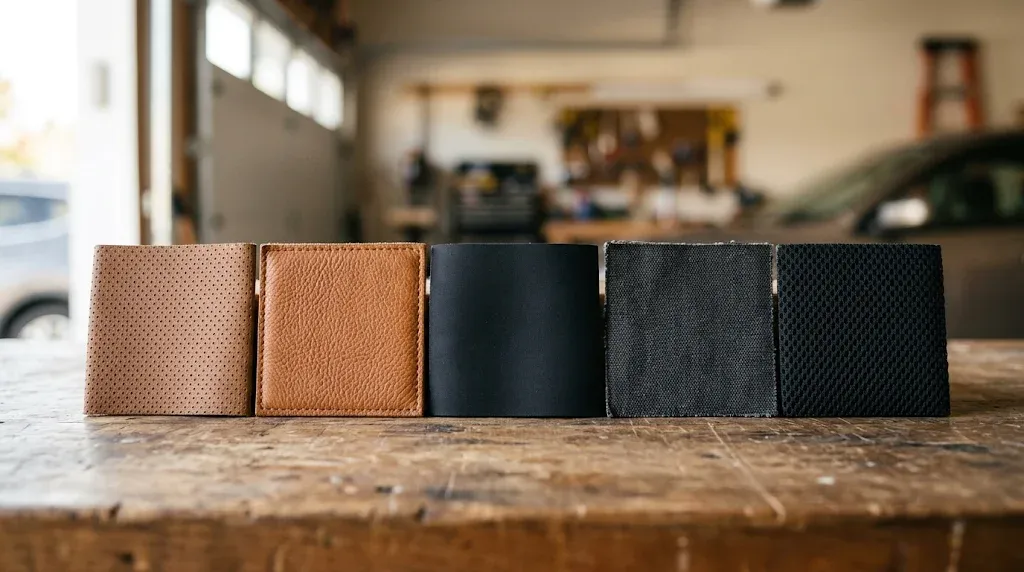
Use this table to narrow your choice in under a minute. Then read the section that matches your top use.
| Material | Best For | Comfort | Water Resistance | Cleaning | Durability | Price Tier |
|---|---|---|---|---|---|---|
| Genuine leather | Luxury feel, long-term use | High, softens with age | Medium, needs conditioning | Wipe clean, condition often | High, if cared for | $$$ |
| PU leather | Daily driving, easy care | High, smooth and firm | High, resists spills | Wipe clean | Medium to high | $$ |
| Neoprene | Water, sweat, outdoor use | Medium, snug and padded | High, near waterproof | Hand wash, air dry | High | $$ |
| Canvas / Cordura | Dogs, work trucks, heavy wear | Medium, firm and tough | Medium, often coated | Brush off, spot clean | Very high | $$ |
| Polyester / Oxford | Budget use, family cars | Medium, light and plain | Medium, varies by coating | Often machine washable | Medium | $ |
| Microfiber / suede | Grip, sporty feel, comfort | High, soft and grippy | Low to medium | Brush and spot clean | Medium | $$ |
| Mesh fabric | Hot climates, airflow | High in heat, light feel | Low, soaks up spills | Machine washable, often | Medium | $ |
| Sheepskin / plush | Cold weather, comfort | Very high, warm and soft | Low | Special care, slow to dry | Medium | $$$ |
The table shows a clear split. Smooth, coated materials win for cleaning and spills.
Soft, open fabrics win for breathability and comfort. Tough weaves win for dogs and work use.
Price tier is a rough guide only. Fit, stitching, and backing often matter more than the fabric name.
Car and Driver often notes the same trade-off in interior reviews: a premium feel can mean more care, while a tough fabric can feel plain. You can browse their car reviews at Car and Driver for context on factory seat materials.
Section Takeaway: No material leads on every row, so use the table to pick the strength you need most and accept its trade-off.
Leather vs. Faux Leather: Which Is Best for Daily Driving?
For most daily drivers, PU leather is the smarter buy. Genuine leather wins only if you love the feel and will care for it.
Is genuine leather worth it?
Yes, if you want a premium look and a cover that ages well. Real leather feels warm, smells rich, and softens over time.
It also wipes clean fast after a coffee spill. That makes it handy for commuters who eat or drink in the car.
The downsides are cost, heat, and care. Leather can feel hot in summer and cold in winter, and it needs regular conditioning.
I fitted a leather set to a RAV4 last year. It looked superb, yet the owner still used a towel on the seat in August.
When does PU leather make more sense?
PU leather, also called faux leather, gives you most of the leather look for less money. It resists spills, wipes clean, and needs little care.
It suits family cars, rideshares, and daily commutes. You get a tidy, smart cabin without babying the seats.
Cheap PU can crack or peel after years in strong sun. Good PU holds up far better, so check stitching and backing.
Look for thick backing, even seams, and a soft inner lining. Those details tell you more than the word “premium” on the box.
If you want brand ideas before you shop, compare the best car seat cover brands and check what materials each one uses.
Pro tip: check your owner’s manual and the NHTSA recall and safety pages before fitting any cover over a seat with side airbags.
Section Takeaway: Choose genuine leather for feel and long-term looks, and PU leather for easy daily care at a fair price.
Neoprene, Canvas, and Polyester: Best for Work, Dogs, and Kids?
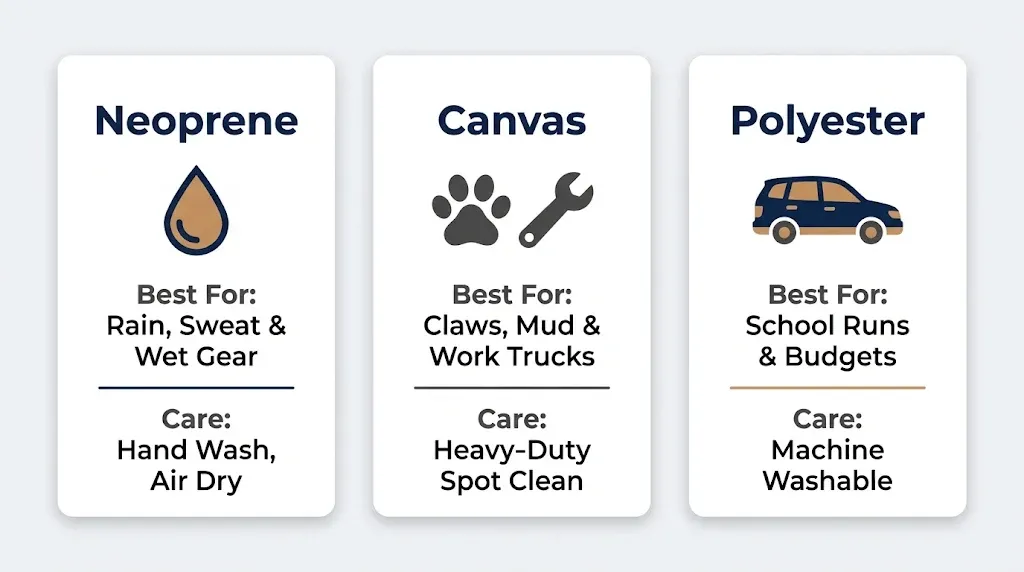
These three materials suit hard use. They each protect your seats in a different way.
Is neoprene best for water and sweat?
Yes. Neoprene is the wetsuit material, and it blocks water better than most seat fabrics.
It suits surfers, gym trips, rainy commutes, and sweaty summer drives. Spills sit on the surface instead of soaking in.
Neoprene feels snug and padded. Some drivers love that hug, while others find it warm on long trips.
Cleaning takes a little care. Hand wash it, rinse well, and air dry it flat.
Is canvas best for dogs and work trucks?
Yes, for claws, mud, and tools. Canvas and Cordura are tight, heavy weaves built to resist tears.
My brother’s F-150 runs canvas covers. His dog rides in the back seat every weekend, and the covers still look solid.
Canvas can feel stiff at first. It softens with use, yet it never feels as soft as leather or suede.
Many canvas covers have a water-resistant coating. That helps with mud, but it will not match neoprene in a downpour.
If your truck does hard work, start with our picks for the best car seat covers for trucks and filter by canvas or heavy-duty fabric.
Is polyester best for budget family use?
Polyester and Oxford fabric are the value picks. They are light, cheap, and often machine washable.
They suit kids, school runs, and second cars. You can wash them often without much fuss.
The trade-off is feel and lifespan. Thin polyester can look plain and wear faster at the seat edges.
Pick a thicker Oxford weave with reinforced seams if you want it to last. Avoid paper-thin covers that slide around.
Section Takeaway: Neoprene stops water, canvas stops claws and tools, and polyester keeps family use cheap and washable.
Which Material Is Best for Hot Weather, Cold Weather, and Sweat?
Climate changes the answer fast. A great winter cover can feel awful in July.
What works best in hot weather?
Mesh and perforated fabric win in heat. Air moves through them, so your back stays cooler.
Light-colored covers help too. Dark leather can burn your legs after a car sits in the sun.
PU leather is better than dark genuine leather in heat, yet it still traps warmth. A mesh insert or seat pad can fix that.
Consumer Reports often highlights heat and comfort in car interior testing. You can read their car guidance at Consumer Reports before you buy.
What works best in cold weather?
Sheepskin and plush covers win in cold weather. They feel warm at once, even on frosty mornings.
Leather feels cold at first, then warms up. Neoprene stays neutral, which suits drivers who hate icy seats.
Sheepskin needs more care and costs more. It also traps moisture, so dry it well after wet days.
What works best for sweat and long drives?
Breathable fabric wins for sweat. Mesh, microfiber, and perforated PU let air reach your back.
Neoprene blocks sweat from the seat, yet it can feel clammy on a long drive. A breathable top layer helps a lot.
I drove a Civic 300 miles in summer with a mesh-backed cover. My back stayed far drier than with a solid vinyl set.
If you drive long hours, compare the best car seat covers for long drives and look for breathable centers and padded support.
Section Takeaway: Mesh cools you in summer, sheepskin warms you in winter, and breathable fabric is best for sweat.
How Do You Choose the Right Material for Your Car?
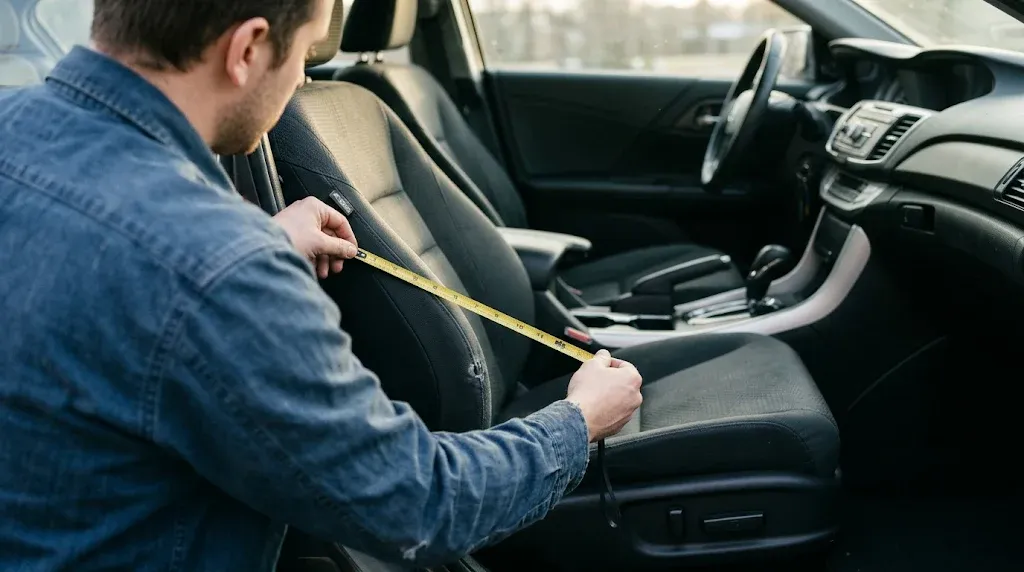
Start with your use, not the prettiest photo. Your daily routine will point to the right material.
- List your top problem: spills, dogs, kids, heat, sweat, or wear.
- Check your seats: note side airbags, seat heaters, and built-in controls.
- Measure your seats: check width, height, headrest type, and seat shape.
- Check cleaning: pick wipe-clean for spills and washable for kids and pets.
- Set your budget: pay more for fit and stitching, not just a fancy name.
Fit can make or break a good material. A loose cover slides, bunches, and hides seat controls.
Custom-fit covers cost more, yet they hug the seat and stay put. Universal covers work well if your seats are a common shape.
Safety comes before style. A cover must not block a side airbag, seat belt buckle, or seat adjustment.
Check the NHTSA site at NHTSA for safety and recall guidance if you are unsure about airbag clearance.
Cleaning is the part most buyers forget. A beautiful cover you hate to clean will look tired in months.
Learn how to wash a car seat cover without damaging it before you buy, so you know what care each material needs.
Budget is the last filter, not the first. A cheap cover that fits badly costs more in the long run.
If cost is tight, start with the best budget car seat covers and pick the best material in that range.
Edmunds also covers interior care and buying advice in plain terms. You can browse their guides at Edmunds for extra context.
Section Takeaway: Match the material to your use, confirm airbag and seat fit, then buy the best quality you can afford.
Frequently Asked Questions
What is the most durable car seat cover material?
Canvas and Cordura are the most durable for heavy use. They resist tears, claws, and scuffs better than soft fabrics, and they suit dogs, work trucks, and family cars.
Are leather seat covers hot in summer?
Yes, dark leather can get very hot in direct sun. Light colors, perforated leather, and a sunshade help, while mesh or light fabric stays cooler on hot days.
Is neoprene waterproof?
Neoprene is near waterproof for spills, sweat, and rain. It blocks most liquid from reaching your seat, though seams and straps can still let some water through.
What material is best for dog owners?
Canvas is best for most dog owners because it resists claws and mud. Pair it with a rear hammock or seat protector for full coverage on long trips.
Can you wash all car seat cover materials?
No, each material needs different care. Many polyester and mesh covers are machine washable, while leather needs wiping and conditioning, and neoprene needs hand washing.
Do seat covers affect side airbags?
They can if they block the airbag seam or fit too tight. Use airbag-compatible covers, check your owner’s manual, and test seat controls after fitting.
Final takeaway: PU leather suits most drivers, neoprene suits water and sweat, and canvas suits dogs and work use. Pick your top need, check fit and airbag clearance, and choose the material you will still like after a year of daily driving.

Daniel Brooks is an automotive writer and product researcher focused on car accessories, car tech, maintenance, and practical driving guides. At Plug-in Car World, he helps drivers make smarter automotive decisions through honest reviews and research-driven content.
