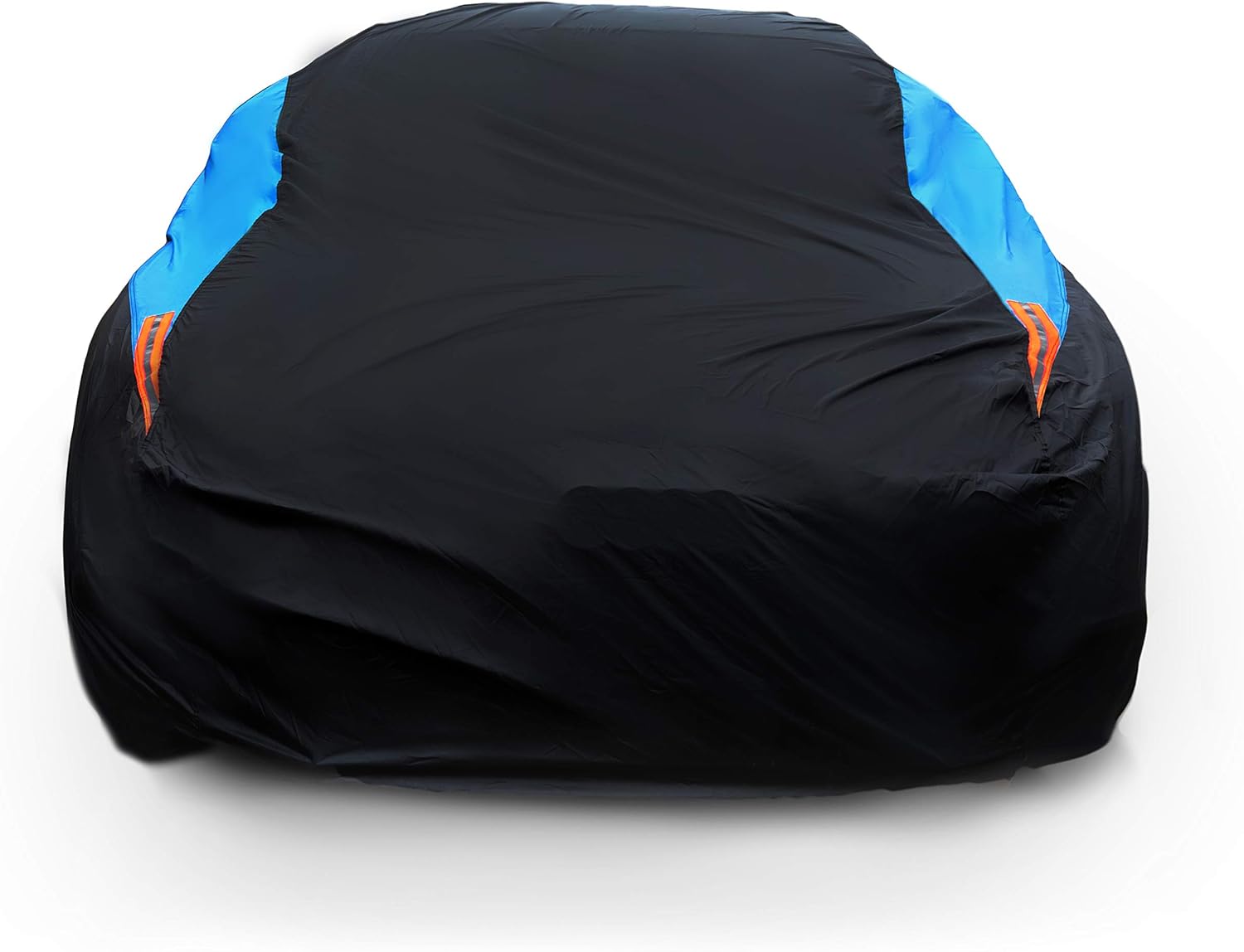
Why Was My Car Cover Warranty Claim Denied?
⚡ Quick Answer
Most car cover warranty claims get denied because the damage falls under a listed exclusion, not because the company is acting in bad faith. Normal fading, rips from over-tightening, missing receipts, and using the cover for something other than covering a parked car are the top four reasons. Reading the exclusion list before you file saves time either way.
Top reasons claims get denied
- No proof of purchase: warranty companies require the original receipt, not a guess at the date.
- Normal wear and weathering: fading, dust soiling, and slow color loss from UV exposure aren’t defects.
- Misuse or improper installation: over-stretching, dragging the cover, or using the wrong straps voids coverage.
Before you file again
-
✓
Pull up your original receipt or order confirmation email first. -
✓
Photograph the damage from multiple angles before contacting support. -
✓
Ask the company to cite the specific exclusion clause in writing.
You unzip the storage bag, pull out a cover that’s supposed to protect a paint job for years, and find a rip running the length of the roof. So you file a warranty claim, expecting a quick replacement. A few days later, an email lands in your inbox: claim denied.
Daniel Brooks here. I’ve spent enough time around car covers and the fine print that comes with them to know this denial isn’t usually a scam — it’s almost always tied to one specific clause buried in the warranty terms. Car covers take a beating from wind, sun, and clumsy installation, and most manufacturers wrote their warranties to cover defects in the cover itself, not the wear that comes from actually using it outdoors.
Below, I’ll walk through the exact reasons claims get rejected, what’s actually covered versus what’s excluded, and what to do if you think the denial was unfair.
📌 Key Takeaways
-
→
Fading and discoloration from sun exposure are excluded by nearly every car cover warranty on the market. -
→
Most warranties are prorated, meaning a replacement cover gets cheaper for you the closer it is to brand new — and more expensive the older it gets. -
→
A missing receipt is one of the single most common reasons a legitimate defect claim still gets turned down. -
→
Federal law requires warranty terms to be written in plain language and disclosed before you buy, under the Magnuson-Moss Warranty Act.
What Are the Most Common Reasons Car Cover Warranty Claims Get Denied?
Every car cover warranty denial traces back to one of a handful of standard exclusions. Manufacturers write these warranties to cover defects in materials and workmanship — not the everyday wear that comes from leaving fabric outside in the sun, wind, and rain.
Brands like Covercraft and CarCovers.com publish nearly identical exclusion lists. Cuts, punctures, and abrasions from contact with sharp surfaces aren’t covered. Neither are pulled grommets, burst seams from over-tightening, or damage from dragging the cover across rough ground during installation.
Here’s how the most common denial reasons stack up against what’s actually covered.
If your damage matches the right-hand column, expect a denial — the fix is usually a self-adhesive patch kit, not a free replacement.
Why Doesn’t Fading or Weathering Count as a Defect?
Fading happens because every outdoor fabric absorbs UV light over time, and that absorption breaks down dye molecules. It’s chemistry, not a flaw in how the cover was sewn together.
Covercraft states this directly in its own warranty language, noting that fading is inherent to any product that lives outside in the sun. CarCovers.com draws the same line, excluding “discoloration or cracking of the outside layer” because it doesn’t affect how well the cover still performs.
That distinction matters more than it sounds. A faded cover that’s still waterproof and intact is doing its job — it’s just no longer showroom-bright. Warranty reviewers check function, not appearance, when they decide whether something counts as a defect.
So what does that mean for you? If your cover looks chalky or has gone a shade lighter after two summers outside, that’s expected aging, not grounds for a free replacement.
⚠️ Warning
A faded cover still offers UV protection for the paint underneath, but a cracked or brittle outer layer can let water through. If the fabric feels stiff or chalky to the touch, check the seams for leaks before assuming it’s just cosmetic.
What If I Lost My Receipt — Can I Still File a Claim?
Almost every manufacturer requires the original sales receipt before they’ll process a warranty claim at all. Covercraft says it directly: no claim can be honored without a copy of the original sales receipt, since that’s the only document that proves when the warranty period started.
This isn’t a formality the company can waive on request. The receipt date is the anchor point for everything else — how much of the prorated warranty is left, whether you’re the original purchaser, and whether the claim falls inside the coverage window.
✅ Tip
Forward your Amazon or store order confirmation email to a dedicated folder the day you buy a cover. It has the date, price, and exact product — everything a warranty department asks for.
If you genuinely can’t find a receipt, check your Amazon order history or email confirmation first — that record usually satisfies the requirement just as well as a paper copy.
Which Installation Mistakes Void Car Cover Coverage?
How you put the cover on and take it off matters as much as the fabric itself. Warranty reviewers look closely for damage patterns that point to handling, not manufacturing.
🔢 Mistakes That Get Claims Rejected
-
1
Dragging the cover across the ground
Pulling it across pavement or gravel causes abrasion that’s classified as improper handling, not a defect.
-
2
Over-stretching during fitting
Forcing a snug cover over a slightly larger vehicle than it’s sized for puts constant stress on seams and grommets.
-
3
Using the wrong straps or tie-downs
Aftermarket cable locks or bungee cords not made for the cover can tear grommets out entirely.
-
✓
Use the included straps, only as tight as needed
A snug, not stretched, fit keeps both the cover and its warranty intact.
Do Modifications or Chemical Exposure Void the Warranty?
Yes, in nearly every case. CarCovers.com lists exposure to solvents, petrochemicals, paints, acids, and alkaline cleaners as flat exclusions, because these substances actively break down the cover’s protective coatings.
Covercraft goes further and voids the warranty outright if the purchaser modifies the cover in any way — cutting it, adding patches that weren’t supplied by the company, or altering the strap system.
You might be thinking: what counts as “exposure”? It’s broader than spraying chemicals directly on the cover. Parking near fresh asphalt sealant, storing the cover next to pool chemicals, or using a strong degreaser to clean it can all count.
Why Did My “Lifetime Warranty” Still Cost Me Money?
Most “lifetime” car cover warranties are prorated, not free-for-life. That detail is easy to miss in marketing copy and easy to find once a claim comes back with a price tag attached.
A prorated warranty works on a sliding scale. The newer the cover, the smaller the percentage you pay toward a replacement. The older it is, the bigger that percentage gets — because you’ve already gotten years of use out of the original purchase.
Customer complaints collected by ConsumerAffairs show how that scale plays out in practice.
60%
Cost share reported by one buyer at 1–2 years of ownership
$35–$104
Range customers reported paying for a “free” replacement
Always ask for the exact proration percentage in writing before you agree to a replacement — verbal quotes have been disputed after the fact.
What Most People Get Wrong About Car Cover Warranties
“Lifetime warranty” means a free replacement, forever. In reality, most lifetime car cover warranties are prorated and non-transferable, so a replacement years in often comes with a partial charge rather than zero cost.
A warranty covers any damage that happens while the cover is on the car. It only covers defects in materials or workmanship. Damage from wind, misuse, chemicals, or normal weathering falls outside that scope, even if it happened while the cover was doing its job.
Filing a claim without a receipt is just a formality. It’s not. Warranty departments treat the receipt as the legal proof of purchase date, and most state plainly that no claim can be processed without one.
What Should I Do If I Think My Claim Was Wrongly Denied?
Start by asking the company, in writing, for the specific clause the denial is based on. The Magnuson-Moss Warranty Act requires written warranties to be disclosed in plain, simple language, and a legitimate denial should be able to point to one exact line.
🎯 Next Step Based On Your Situation
If you are…
Missing your receipt
→ Pull your order history from Amazon or the retailer instead
If you are…
Disputing the cause of the damage
→ Request the denial reason in writing and reply with dated photos
If you are…
Still stuck after that
→ File a complaint with the FTC’s Consumer Sentinel Network
The FTC’s consumer guide to warranties breaks down what a written warranty legally has to disclose, and what your implied-warranty rights are even when a written one denies you. For the legal backbone behind those disclosure rules, the FTC’s guide to the Magnuson-Moss Warranty Act explains what every warrantor is required to put in writing.
Recommended Product
EzyShade 10-Layer Car Cover, Waterproof All Weather
★★★★☆ Rated 4 stars and up on Amazon, with thousands of reviews
Click-tight buckles and a soft inner lining mean fewer of the strap and abrasion issues that lead to warranty disputes in the first place — and it comes with its own 12-month manufacturer warranty against defects.
As an Amazon Associate, we earn from qualifying purchases.
A denied warranty claim usually means the damage fell into a standard exclusion, not that you were treated unfairly. Read the exclusion list before you buy, keep your receipt somewhere you won’t lose it, and use the included straps the way they’re designed to be used. If a claim still gets denied and you genuinely think it shouldn’t have, ask for the exact clause in writing — right now, while the details are fresh, go find that receipt and save it somewhere permanent.
Frequently Asked Questions
How long does a car cover warranty usually last?
It depends on the brand and fabric tier. Budget covers often carry 90 days to 2 years, mid-range fabrics run 3 to 5 years, and premium materials like Covercraft’s top tier or CarCovers.com’s Platinum Shield can carry limited-lifetime coverage tied to how long you own the cover or the vehicle.
Is wind damage covered under a car cover warranty?
Usually not. Several major brands specifically exclude damage from excessively high winds, treating storm-related tearing as an environmental event rather than a manufacturing defect. Heavier-gauge fabric and properly cinched straps reduce the risk significantly.
Can I transfer my car cover warranty to a new owner?
No. Nearly every car cover warranty is non-transferable and applies only to the original purchaser. If you sell your car or give the cover away, the new owner has no warranty claim, even if coverage time is left on the clock.
What’s the difference between a prorated and non-prorated warranty?
A non-prorated warranty replaces the cover at no cost throughout the coverage period. A prorated warranty charges you a rising percentage of the replacement cost the longer you’ve owned the cover, so a “lifetime” prorated warranty can still mean a real bill years in.
Do I need to register my car cover to activate the warranty?
Most brands say no — the warranty period starts automatically from your purchase or ship date. What you do need is proof of that date, typically your original sales receipt or order confirmation, since no claim is processed without it.
Will a warranty cover a cover that no longer fits after a vehicle change?
No. Car cover warranties cover defects in the product itself, not a fit mismatch caused by switching vehicles. Some brands offer a separate short-window fit guarantee, usually 30 to 90 days, for sizing errors made at the time of purchase.
Can I dispute a denied claim with the FTC?
You can file a complaint with the FTC if you believe a written warranty’s disclosure terms or the denial itself violate the Magnuson-Moss Warranty Act. The FTC won’t resolve individual disputes directly, but complaints feed into its enforcement and investigation process.

Daniel Brooks is an automotive writer and product researcher focused on car accessories, car tech, maintenance, and practical driving guides. At Plug-in Car World, he helps drivers make smarter automotive decisions through honest reviews and research-driven content.