
What to Do When Car Seat Straps Are Too Loose
Quick Answer
If car seat straps are too loose, tighten them before driving. Buckle the harness, move the chest clip to armpit level, then pull the adjuster strap until the harness passes the pinch test at the collarbone. Loose harness straps can let a child move too far forward in a crash, so a snug fit matters on every ride. Vehicle covers are a separate topic, so this cooling car seat cover review explains cover fit rather than child harness fit.
Fix it in minutes
- Pinch test first: Try to pinch the strap webbing at the collarbone after buckling.
- Chest clip position: Keep the clip centered at armpit level, not on the belly.
- Remove bulky layers: Take off thick coats before buckling, then add warmth over the harness.
- Flatten twisted straps: Straighten any fold or twist before you tighten.
- Recheck after settling: Check the fit again once the child sits back and relaxes.
Do not drive loose
- If the adjuster will not hold tension, check the manual and do not use the seat for travel until you find the cause.
- If the harness looks damaged, stop and get help from the manufacturer or a certified technician.
Loose straps are one of the most common car seat mistakes, and they are also one of the easiest to fix.
This guide walks through the checks in order, so you can tell a simple slack problem from a fit problem that needs a manual check.
It covers the pinch test, chest clip position, harness height, clothing, and the signs that mean stop and get help.
As of 2026, the core rule is unchanged: the manual for your exact seat wins over any general guide.
In This Guide
How Do You Know the Straps Are Too Loose?
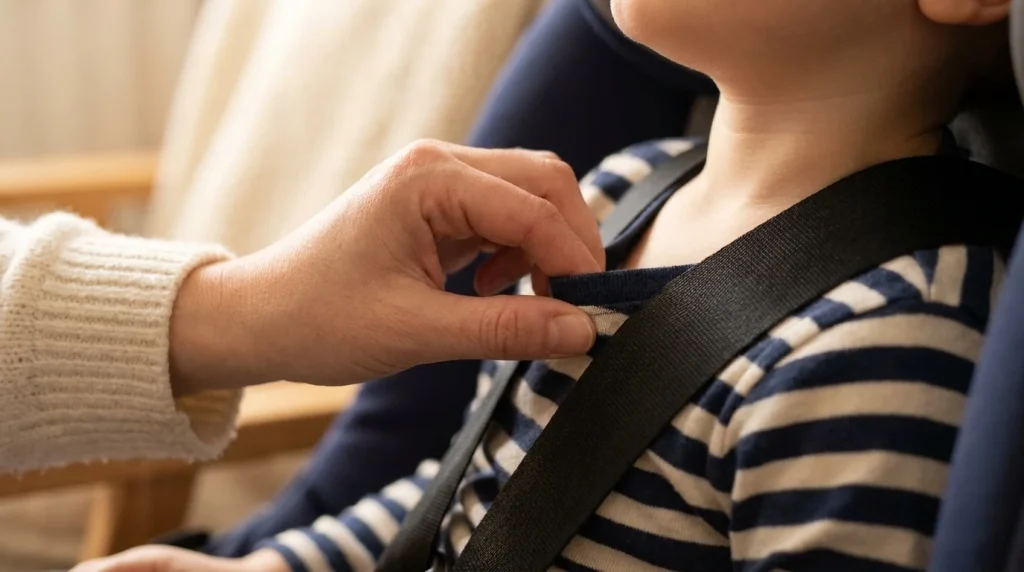
A car seat harness is the strap system that holds a child in a child restraint.
It usually includes two shoulder straps, a chest clip, a buckle, and an adjuster strap that pulls slack out.
What is the pinch test?
The pinch test checks harness snugness at the collarbone after buckling.
Try to pinch the strap webbing between your thumb and finger, then slide your fingers up the strap.
If you can pinch a fold of webbing, the harness needs tightening.
If the webbing stays flat and you cannot pinch a fold, the harness is snug enough at that spot.
What are the clear signs of loose straps?
- You can pinch webbing at the collarbone after buckling.
- The shoulder straps slide off the shoulders or sit far from the body.
- The chest clip sits low on the belly or high near the neck.
- The child can lean forward or wiggle an arm out of a strap.
- The straps feel tight over a coat but loose once the coat comes off.
Do not judge tightness by how the straps look from the front alone.
Hands on the straps give a clearer answer than a quick glance.
Section Takeaway: If you can pinch webbing at the collarbone, the straps are too loose, and you should tighten them before driving.
What Should You Check First Before Tightening?
Tightening alone will not fix a harness routed through the wrong slot.
Start with fit, then pull out the slack.
Is the harness height correct?
For a rear-facing seat, the shoulder straps should come from slots at or just below the shoulders.
For a forward-facing seat, the shoulder straps should come from slots at or just above the shoulders.
Check the manual for your seat, because slot rules can vary by model.
A child who has grown may need a higher slot before the straps can sit snugly.
Is the recline and seating position right?
The child should sit with their back flat against the seat back.
A slumped or sideways position can make even a snug harness feel uneven.
Use the recline guide on your seat, not a guess, to set the angle.
Your vehicle manual also matters for installation points, and a general car guide such as Edmunds cannot replace either manual.
Quick pre-tightening checklist
- Harness slots match the facing direction and the child’s shoulders.
- Straps lie flat, with no twists or folds.
- The buckle clicks fully shut.
- The chest clip sits at armpit level.
- No bulky coat, blanket, or unapproved insert sits under the harness.
Fix any item on that list first.
Tightening over a twist or a thick coat only hides the real problem.
Section Takeaway: Correct slot height, flat straps, and a fully latched buckle must come before tightening, or the snugness will not hold.
How Do You Tighten Car Seat Straps Correctly?
Most seats use a pull strap near the front of the seat to remove slack.
The exact location varies, so check the manual if you cannot find it at first.
- Place the child flat against the seat back, with no bulky coat under the harness.
- Buckle both harness tongues fully, then listen and feel for a firm click.
- Move the chest clip to armpit level and center it on the chest.
- Pull the adjuster strap steadily until the harness feels snug on both shoulders.
- Run the pinch test at the collarbone on each side.
- Straighten any strap that twisted during tightening, then recheck the pinch test.
- Let the child settle for a moment, then check the fit one last time.
Pull steadily rather than yanking the adjuster strap.
A hard yank can pull one side tighter than the other.
Check both shoulders, not just the side nearest you.
Uneven tension often points to a twist, a caught strap, or a wrong slot.
If the adjuster feels stuck, stop and check for a trapped strap or a jammed mechanism.
Forcing it can damage the harness or hide a fault that needs repair.
Section Takeaway: Buckle, set the chest clip at armpit level, pull steadily, and confirm the result with the pinch test on both sides.
Why Do Car Seat Straps Keep Getting Loose?
Loose straps do not always mean you forgot to tighten them.
Growth, clothing, and small fit changes can undo a good fit fast.
What causes straps to loosen again?
- The child grew, so the harness slot no longer matches the shoulders.
- A thick coat or sweater compressed under the harness during the ride.
- A strap twisted, which can change how tension spreads across the shoulders.
- An insert, cover, or pad shifted and changed the child’s seating position.
- The adjuster slipped back because a strap caught or the mechanism did not lock.
Look for a pattern before you assume the seat is faulty.
Straps that loosen only on cold mornings often point to clothing, not the adjuster.
| Loose strap sign | Likely cause | What to check |
|---|---|---|
| Loose after a coat comes off | Bulky clothing compressed under the harness | Buckle without the coat, then add warmth over the harness |
| Straps slide off the shoulders | Wrong harness slot or low chest clip | Slot height, clip position, and strap routing |
| One side looser than the other | Twist, caught strap, or uneven tightening | Flatten both straps and retighten slowly |
| Slack returns during a ride | Adjuster not locked or strap caught | Manual steps, strap path, and adjuster function |
Covers and inserts can change how straps sit, so compare only vehicle-cover guides with your seat manual before adding anything.
For one example, this Sprints car seat cover review covers a vehicle cover, not a child-restraint part.
Do not let a vehicle cover bunch under the harness or push the child forward.
Anything that changes the child’s position can also change harness fit.
Section Takeaway: Find the pattern first, because clothing, growth, and a shifted insert each need a different fix.
What Mistakes Make Loose Straps Worse?
Small shortcuts can make a loose harness less safe, even when the intent is comfort.
Watch for these common errors on every ride.
- Leaving a bulky coat under the harness.
- Moving the chest clip to the belly to stop fussing.
- Adding padding behind the child that the seat maker did not approve.
- Routing straps through the wrong slots after a wash or refit.
- Tightening one shoulder strap and leaving the other slack.
- Letting a vehicle seat cover bunch under the harness.
Aftermarket inserts can feel like an easy fix for a small child.
They can also change strap height, chest clip position, and crash performance.
Use only inserts approved by your seat manufacturer for your exact model.
When in doubt, remove the extra item and check the fit without it.
Vehicle covers need the same caution, and this Astonish car seat cover review covers a vehicle cover, not a child-restraint part.
Do not use a vehicle cover guide to change harness routing or slot choice.
Pro tip: Check your seat manual first, and use NHTSA recall lookup for safety and recall information rather than relying on general advice alone.
Section Takeaway: Never fix loose straps with an unapproved insert, a low chest clip, or a bulky layer under the harness.
When Should You Stop and Get Help?
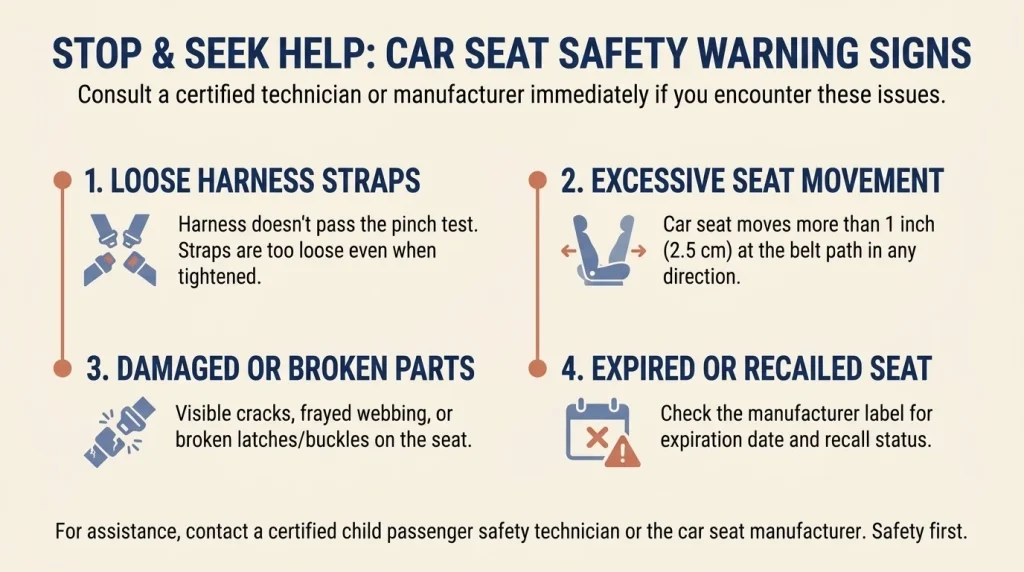
Most loose straps respond to correct routing and tightening.
Some signs point to a fault that a quick tighten cannot fix.
- The harness webbing looks frayed, cut, torn, or worn thin.
- The adjuster pulls freely but will not hold tension.
- The buckle will not latch firmly or releases too easily.
- The straps stay uneven after correct routing and slow tightening.
- The seat has crash damage, a recall, or an expired date.
- The manual steps do not match the parts on your seat.
Stop using the seat for travel if any item on that list applies.
Contact the seat manufacturer for model-specific guidance and replacement parts.
A certified child passenger safety technician can also check the fit in person.
Local inspection events often offer that check, and Consumer Reports provides general child seat safety guidance for parents weighing options.
Bring the manual and the seat to the check if you can.
A technician can spot routing errors that are hard to see in photos.
Section Takeaway: Damaged webbing, a failing adjuster, or a buckle that will not hold means stop, get help, and do not drive with a loose harness.
FAQ
How tight should car seat straps be?
Snug enough that you cannot pinch any horizontal fold of webbing at the collarbone after buckling and setting the chest clip at armpit level. The straps should lie flat on the shoulders without digging in, and the fit should be checked on every ride.
Why do straps feel loose after I remove a coat?
A bulky coat creates space under the harness, so the straps feel tight over the coat but loose once it compresses. Remove the coat, buckle the harness snugly, then place the coat over the child if warmth is needed.
Should the chest clip sit on the belly?
No. Keep the chest clip centered at armpit level, with the harness straps over the shoulders. A low clip can let straps slide off the shoulders, while a high clip can press on the neck.
What if one strap is looser than the other?
First check for a twist, a wrong slot, or a strap caught under a cover or insert. If both straps still sit unevenly after re-routing them as the manual directs, stop using the seat for travel until the cause is found.
Can I add padding behind my child to tighten the fit?
Only use inserts or padding approved by your seat manufacturer for your exact model. Unapproved padding can change harness position and crash performance, even if it makes the straps feel snugger at first.
When should car seat straps be replaced?
Replace a harness if it is frayed, cut, damaged, or will not hold tension after correct routing and tightening. Do not use a seat after a crash or past its expiry date unless the manufacturer guidance for that seat clearly says otherwise.
Final Check Before Every Ride
Loose straps are a fixable problem, but only if you check them every time.
Growth and clothing changes mean last week’s perfect fit may not fit today.
- Buckle fully and set the chest clip at armpit level.
- Pull the adjuster steadily and run the pinch test on both sides.
- Check slot height, flat straps, and seating position.
- Remove bulky layers and unapproved inserts from under the harness.
Make that short check part of your driving routine.
If the fit will not hold, check the manual first and get expert help before the next trip.

Daniel Brooks is an automotive writer and product researcher focused on car accessories, car tech, maintenance, and practical driving guides. At Plug-in Car World, he helps drivers make smarter automotive decisions through honest reviews and research-driven content.
